
Pet Bird Birthday Party Ideas for Every Species
How to throw a bird birthday party: the foraging setup that works for any species, the toxic foods and PTFE fumes that kill birds, and where cockatiels, lorikeets and finches stop being interchangeable.
As an Amazon Associate we earn from qualifying purchases.
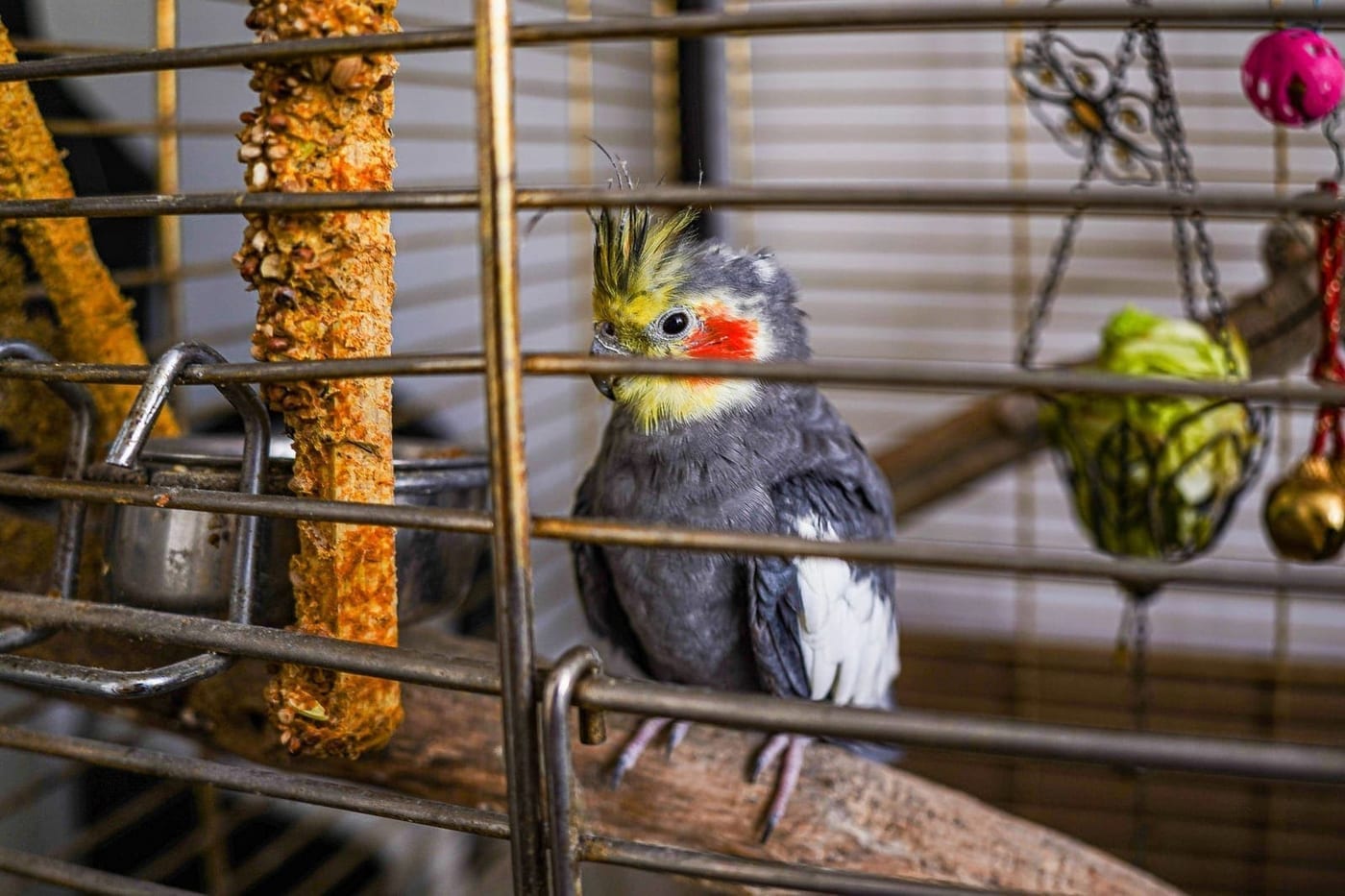
A pet bird birthday party is a foraging session with better food in it. Hide treats inside shreddable paper, hang one new destructible toy, serve fresh fruit and vegetables instead of cake, and get every scented candle, aerosol and non-stick pan out of the house for the day. Those four moves work on a budgie and on a macaw.
Everything after that is species-specific, and the gap is wider than most bird owners expect. A lorikeet cannot digest the seed a canary lives on. A finch does not want to be held at all. A duck’s party happens outdoors in water. This page covers the part that generalises, then hands you off to the bird you actually own.
What Does Every Pet Bird Actually Want on Its Birthday?
Work. Specifically, work that ends in food.
The number that reframes bird keeping: wild Puerto Rican Amazon parrots forage 4 to 6 hours a day. Captive orange-winged Amazons, watched on video, spent 3 to 4 minutes an hour eating, totalling 30 to 72 minutes across the whole day, according to research summarised by LafeberVet. A bowl of pellets solves nutrition and deletes five hours of a bird’s job.
That deleted job goes somewhere. In the same body of research, enriching young orange-winged Amazons with foraging substrate and physical complexity prevented and reduced psychogenic feather picking, and foraging was associated with significantly improved feather scores. Feather damage is often redirected foraging. Which means the birthday foraging toy is not a novelty gift. It is a partial refund on something the bird lost when it moved indoors.
So the party format is simple. Take the food your bird would normally get in a dish and make it hard to reach. Wrap a piece of mango in a twist of parchment. Push millet into the folds of a paper cup. Bury pellets in a cardboard box packed with shredded paper. Weave greens through the cage bars instead of dropping them in a bowl.
Two other things generalise. Birds are flock animals, and the flock on a birthday is you. A contact call, that loud repeated whistle when your bird cannot see you, is a request, not noise. Answer it. And birds destroy things, cheerfully and constantly, so the best gift is usually the one that will be in pieces by Thursday. Palm fibre, soft wood, plain paper, cardboard, untreated wicker.
Which Birthday Foods Are Safe for Every Bird, and Which Are Lethal?
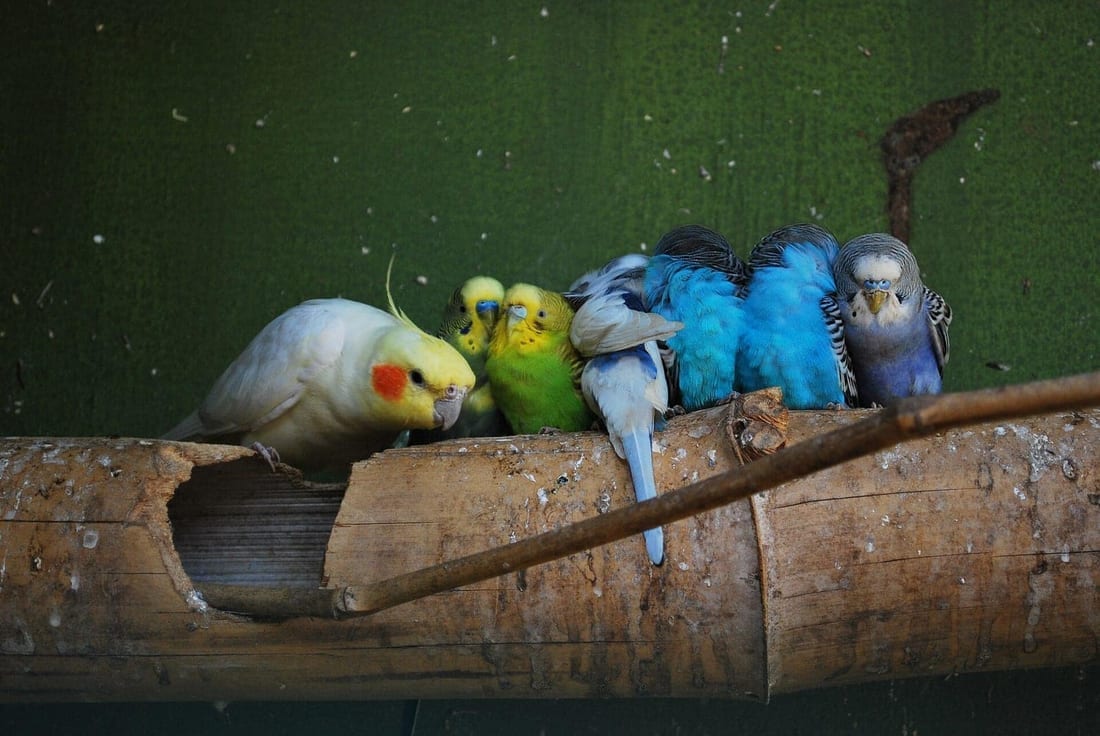
Fresh produce is the safe universal. Berries, mango, papaya, pomegranate seeds, cooked sweet potato, cooked carrot, leafy greens, and small amounts of cooked egg work across nearly every companion species, in the same quantities you would use for any treat. Portion matters more than variety: treats stay a fraction of the diet, and the base diet does not change because it is someone’s birthday.
Skip the cake. Not because a bird-safe cake is impossible, but because a bird gets far more out of picking apart a pomegranate than out of anything baked. A pile of arils takes a cockatiel twenty minutes and looks better in photos than a muffin does.
The toxic list is short and absolute. It does not scale with bird size, and there is no safe nibble of any of it.
| Keep out of the room | What it does | Source |
|---|---|---|
| Avocado | All parts are toxic, leaves worst. Causes difficulty breathing, heart problems, agitation | VCA |
| Chocolate | Toxic in small amounts, not just large ones | VCA, Merck |
| Caffeine | Coffee, tea, soda, energy drinks. Cardiac effects | VCA, Merck |
| Alcohol | Fatal at volumes a person would call a splash | VCA, Merck |
| Onion and garlic | Whole allium family | VCA |
| Apple seeds and stone-fruit pits | Amygdalin, a cyanide precursor. The flesh is fine | VCA |
| Salty, fatty processed human food | Wrong on sodium and fat for a body this small | VCA |
Two guest-management notes that follow from that table. Somebody will bring guacamole. Somebody else will set a wine glass down within beak reach. Decide before the door opens where human food is allowed to be, and make it a different room from the bird.
Why Is the Kitchen the Most Dangerous Room on Party Day?
Because of a gas you cannot smell.
PTFE, the non-stick coating sold most famously as Teflon, releases toxic particles and acidic gases when overheated. VCA’s household hazards guidance puts the threshold at 280°C, roughly 536°F, and its dedicated PTFE page adds that poisonings have also been reported from products used at recommended temperatures. The clinical picture, per VCA and the Merck Veterinary Manual, is agitation, laboured breathing, wheezing, incoordination, weakness, then collapse. Small birds often die suddenly with minimal exposure, and sudden death may be the only sign there ever was.
The part people miss is how many household items carry PTFE. VCA and Merck between them name non-stick pans, drip pans, waffle irons, clothing irons, ironing board covers, self-cleaning oven cycles, heating elements, and some heat lamps. A birthday means an oven running, a shirt getting pressed, a room getting tidied. That is three of the list in one afternoon.
The workable plan: cook the human food before the bird comes out, ventilate hard, then bring the bird into a room that is not the kitchen. Or order the food and remove the question.
The same lungs that make PTFE so fast also make everything else in the air a problem. VCA’s own rule of thumb is the one worth memorising: if you can smell it, it may harm your bird’s respiratory tract. That covers scented candles, incense, air fresheners, fabric sprays, essential oil diffusers, hairspray, aerosol deodorant, cleaning product fumes, fireplace smoke, and cigarette or vape smoke. A birthday is exactly the occasion when someone lights a candle. Say so in advance.
Where Do the Species Stop Being Interchangeable?
At diet, at handling, and at what a bird considers a good time.
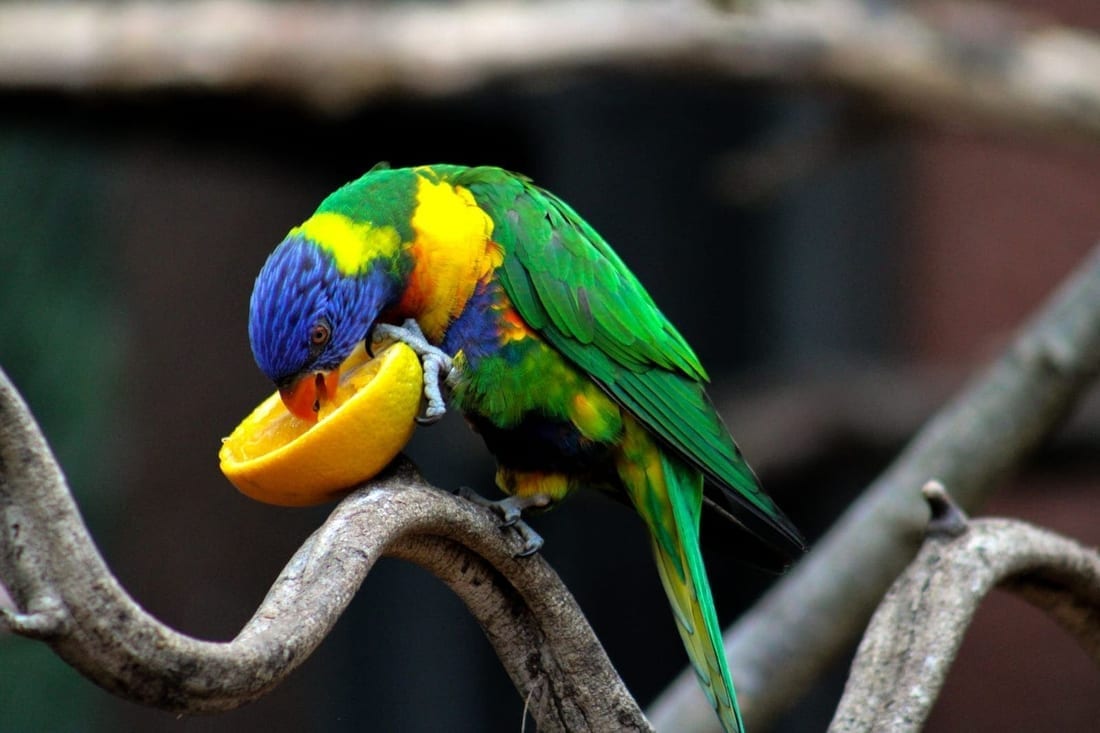
Diet is the sharpest split. Lories and lorikeets have brush-tipped tongues built for nectar and pollen, and their gizzards cannot crush seed at all, per VCA. A seed-based birthday treat that delights a budgie is the wrong food group for a lorikeet, whose nectar mix also spoils fast enough that it needs mixing fresh at each feeding. Meanwhile a cockatiel or budgie is usually being weaned away from seed toward pellets, so a millet spray is a treat precisely because it is not the daily diet.
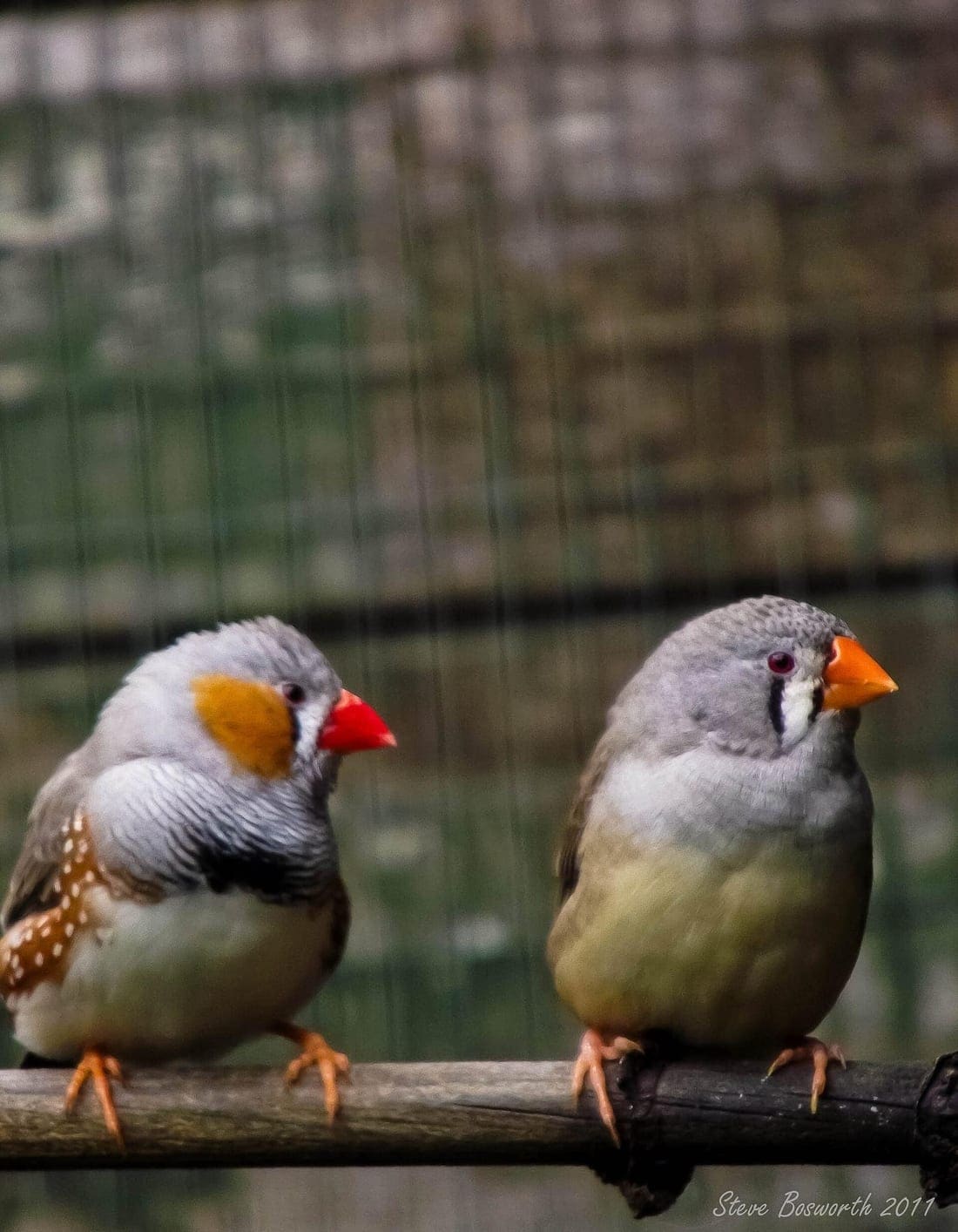
Handling splits next. Canaries and finches are watch-not-hold birds. A finch party is a new perch arrangement, a millet spray, and you sitting nearby doing nothing, and the absence of hands is the gift. A caique, by contrast, will climb into your sleeve. Handing a finch to a guest is not a party, it is a stressor with a hat on.
Then there is the noise and the room. A macaw or a cockatoo can produce a call that fills a house, and a cockatoo bonded to one person may not enjoy a crowd at all. A conure is louder than its size suggests. Ducks, geese, chickens and turkeys are outdoor birds whose party is a foraging scatter in the grass and, for waterfowl, water deep enough to swim.
Which Bird Do You Have?
| Group | What changes for the party | Guides |
|---|---|---|
| Small hookbills | Millet is the reliable treat. Short attention, high shred appetite | Cockatiel, Budgie or parakeet, Lovebird, Parrotlet |
| Medium parrots | Puzzle-grade foraging, real chew strength, loud | Conure, Caique, Indian ringneck, Eclectus |
| Large parrots | Long sessions, destructible hardwood, one-person bonds | African grey, Macaw, Cockatoo, Amazon |
| Nectar feeders | Nectar mix, not seed. Fresh at every feeding | Lorikeet |
| Softbills and finches | Watch, do not handle. Habitat change is the gift | Canary, Finch, Dove |
| Poultry and waterfowl | Outdoors, scatter feed, water to swim in | Chicken, Duck, Duck, goose and quail, Turkey |
Do Toy Hardware and Decorations Really Matter?
More than the toy does.
Zinc and lead poisoning in birds is not exotic. VCA notes that simply chewing on galvanised wire cages or metal toys has caused zinc poisoning, and that certain imported toys are a known source. Zinc starts as gut irritation, ulceration and appetite loss, then damages red blood cells into anaemia. Lead has its own long household list: curtain weights, fishing weights, solder, ceramic glazes, stained glass and Tiffany lamps, wine bottle foil, costume jewellery, zipper teeth. VCA adds a detail that explains why birds keep finding it. Lead smells and tastes sweet.
A bird chews everything it can reach, and a party puts new things in reach. So the decoration rules are short. Paper bunting, plain cardboard and untreated wood are fine and will be eaten. Metallic and foil decorations, tinsel, plated hardware and cheap unbranded metal toys stay out. Ribbon and string are an ingestion and crop risk. Balloons combine a latex hazard with a bang that will terrify a prey animal.
For anything that holds food, stainless steel is the material to insist on. A plated skewer or a plated quick-link is the exact object a bird will spend an hour working on with its beak.
How Long Should a Bird’s Birthday Actually Run?
Shorter than you want it to.
Out-of-cage time is stimulating rather than restful, and most companion birds do their best work in a focused 45 to 90 minute window. Small birds tire faster than that. The tell is behavioural: a bird that was investigating the new toy and has now stopped, fluffed up, and gone quiet is finished, and pushing past that turns a good day into a bad association with the setup.
Introduce guests one at a time and let the bird come to them. Never the reverse. A bird that is comfortable meeting new people will show you within a minute. A bird that hisses, beak-clicks, pins its eyes rapidly or flies off in a panic has answered the question, and the answer is a quieter party.
End on something the bird liked rather than running the session until it sours. If the whole thing collapses in the first ten minutes, put the bird back, wait twenty minutes, and reintroduce one new item instead of five.
If your bird came from a rescue or a rehoming with no hatch date on the paperwork, use the day you brought them home. Our gotcha day party ideas guide covers building the tradition around an adoption anniversary, and the general pet birthday party guide covers the setup logistics that apply to any species.
Bird Birthday Supplies
Three things cover almost any bird party, and none of them is a decoration.
- Living World Millet Spray for Birds, 3.5 oz. Around $5. The default treat for budgies, cockatiels, canaries and finches, and the easiest thing to hide inside a foraging setup. Not the right treat for a lorikeet.
- Stainless steel fruit and vegetable skewer, 2 pack. Around $9. Turns a fruit plate into a foraging puzzle, and stainless rather than plated means the birthday display is not also a zinc source.
- Planet Pleasures natural palm shredder roll, 1 inch by 30 feet. Around $8. A roll rather than a finished toy, so you cut the length to your bird and build the shreddable yourself. It goes further than any single toy at the price.
For the full breakdown of what a foraging toy actually has to do before it earns a place in the cage, see our bird foraging toys review. Prices checked August 1, 2026.
As an Amazon Associate we earn from qualifying purchases.
Sources
- VCA Animal Hospitals: Household Hazards and Dangers to Birds
- VCA Animal Hospitals: Teflon (Polytetrafluoroethylene) Poisoning in Birds
- VCA Animal Hospitals: Feeding Lories and Lorikeets
- Merck Veterinary Manual: Toxicoses of Pet Birds
- LafeberVet: Foraging as a Means of Behavior Modification
All veterinary guidance above verified August 1, 2026.
- You
- Your pets
- Confirm