
Cockatiel Birthday Party Ideas: An Enrichment Session With Candles (Technically Without Candles)
How to throw a cockatiel birthday party: safe foods, foraging setups, shreddable toys, the PTFE warning every tiel owner needs to know, and how to get a tielfie that isn't blurry. VCA-verified.
As an Amazon Associate we earn from qualifying purchases.
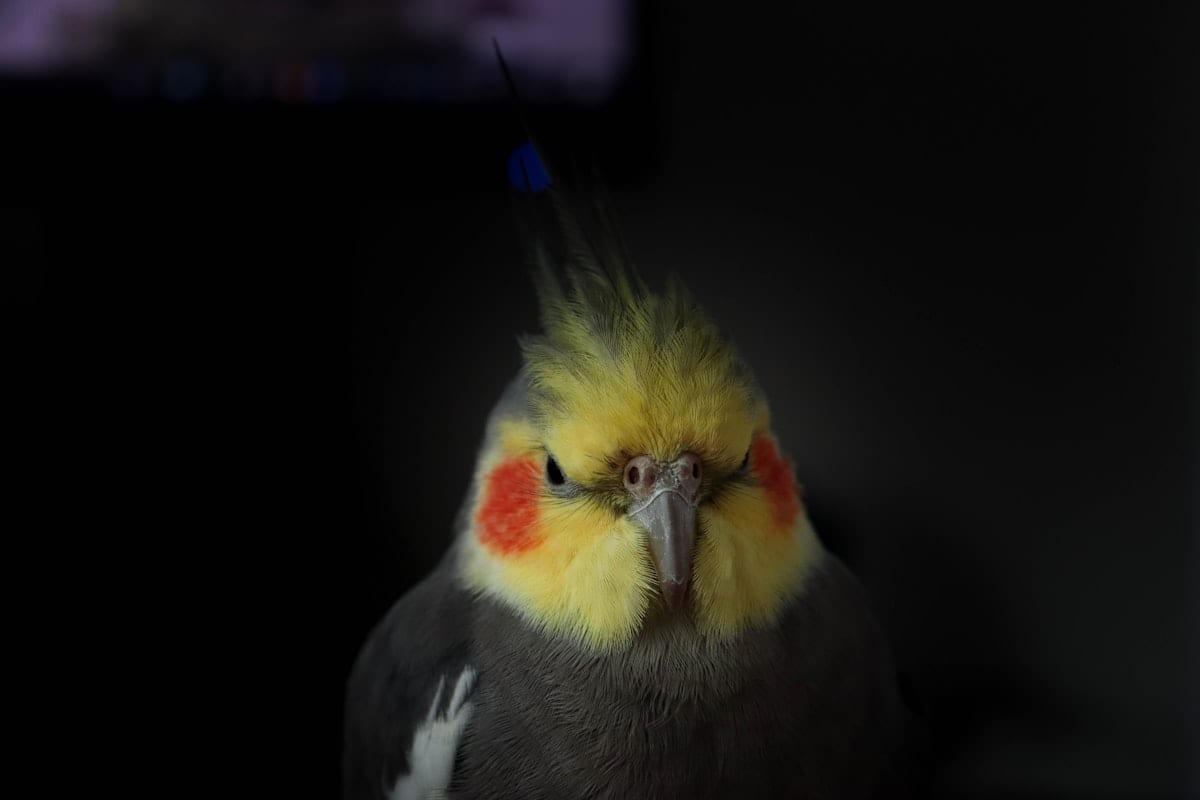
A cockatiel birthday party is an enrichment session with a theme. Your tiel isn’t going to appreciate streamers, but they will spend 40 minutes methodically destroying a new foraging toy, whistle dramatically when you offer a piece of mango, and then sit on your shoulder with their crest at half-mast looking very pleased with themselves. That’s the party. You set up interesting things to explore, you offer special safe foods, you give them time outside the cage with you. They provide the commentary. Your cockatiels can live 15 to 25 years, which means this is a tradition worth building.
Not every tiel comes with a documented start date, either. Breeder birds usually ship with a hatch date on the paperwork. Rescues and rehomed birds often don’t, and that’s fine: the day you brought them home works just as well as an annual date. If that’s your situation, our gotcha day party ideas guide covers building a tradition around an adoption anniversary instead.
What Cockatiels Actually Want at a Party
Cockatiels are companion birds. The relationship they want is with you, specifically. A birthday party that involves strangers trying to handle your tiel or a room full of noise and chaos is the opposite of what they want and will just result in an alarmed crest, some aggressive beak contact, and a bird who wants to go back to their cage.
What they actually want: undivided time with their person, something new to investigate and destroy, and food that is better than the usual pellets. That’s the whole brief.
That doesn’t rule out having people over. Introduce guests one at a time and let your tiel approach on their own terms. A crowd of strangers reaching for a bird who’s never met them is exactly the stress the paragraph above describes. A social cockatiel who already likes meeting new people can handle a small gathering just fine. A bird who’s bonded tightly to one person, which happens a lot with cockatiels who’ve spent time as solo pets, does better with an intimate party. That same bond is also why one-on-one birthday time lands so well with them. If your bird is alone for long stretches on the days that aren’t a party, though, that’s worth flagging to an avian vet. Not a birthday issue. A bigger one.
Cockatiels communicate constantly through their crest position. Crest all the way up means excited or alarmed: something is new and they’re deciding what to think about it. Crest flat against the head means relaxed or content. Crest at a gentle angle, not fully raised or fully flat, means they’re comfortable and curious. Read the crest throughout the party. It tells you exactly how things are going.
Other signals: contact calling (the loud whistle they do when they can’t see you) means they need reassurance, not silence. Respond to it. Head-bobbing in males often means they want to show off. A male cockatiel showing off for his person on his birthday is genuinely charming content.
Safe Birthday Foods and Treats
Cockatiels’ primary diet should be 75 to 80% high-quality pellets, per VCA Hospitals guidelines. The remaining 20 to 25% is fresh fruits and vegetables, which is exactly where birthday treats come from. Seeds, despite what older pet store advice suggested, are high in fat and low in nutrients. A seed-heavy diet is one of the leading causes of nutritional deficiency in pet cockatiels. Birthday treats should not be mostly seeds.
Verified safe birthday foods (per VCA Hospitals):
- Fresh mango: Most cockatiels react to mango the way people react to a really good meal. Small piece, no pit, no peel.
- Papaya: Another tiel favorite, vitamin A-rich, great for the respiratory system
- Pomegranate seeds: Tedious to prepare but birds love picking them apart, which is excellent enrichment
- Berries (strawberry, blueberry, raspberry): Small, easy to hold, easy to eat, minimal mess (relative to mango)
- Cooked sweet potato: High in vitamin A, a nutrient cockatiels are frequently deficient in. Can be served warm but not hot.
- Cooked carrot: Another vitamin A source. Can be raw or cooked.
- Leafy greens (romaine, kale, chard, spinach in small amounts): Good routine additions, fine as birthday extras
- Small amount of cooked egg: High protein treat, occasional only
- Hard-boiled egg with shell (crushed): The shell provides calcium
What is absolutely toxic to cockatiels (per VCA Hospitals and AAV guidance):
Avocado: toxic to all birds, all varieties, all parts of the plant including the skin and pit. This is non-negotiable. Keep avocado out of any space your birds can access.
Onion and garlic: cause hemolytic anemia in birds. This includes all allium family plants.
Chocolate: toxic. Not “avoid in large amounts” — genuinely toxic in small amounts. Keep it out of the room.
Caffeine: coffee, tea, soda, energy drinks. Causes cardiac arrhythmias. The party is for the bird, not in front of the bird with your afternoon coffee.
Alcohol: even small amounts can be fatal to birds this size. No wine near the cage, no wine glass left unattended.
Apple seeds: contain amygdalin, a cyanide precursor. Apple flesh is fine. Remove every seed.
Fruit pits (cherry, peach, plum, apricot): same issue as apple seeds. Flesh is safe; the pit is not.
Processed human food (chips, crackers, cookies): too much salt, too much fat, wrong everything for a bird.
Skip the idea of an actual baked cake entirely. A plate of mango pieces, a scatter of pomegranate seeds, and a few berries arranged on their play stand does the job better. No oven required, nothing to worry about. Cockatiels get more out of a food display they can pick apart than anything that comes out of a pan.
The Crucial Safety Warning: PTFE and Your Birds
This section comes before the fun stuff because it matters more.
Non-stick cookware coated with PTFE (polytetrafluoroethylene, sold under brand names including Teflon) releases fumes when overheated that are odorless, colorless, and acutely lethal to birds. The fumes can kill a cockatiel within minutes. Birds have highly efficient respiratory systems built for altitude, and that efficiency means they absorb airborne toxins faster than any other pet.
If you’re baking a birthday cake for yourself in the kitchen, your bird cannot be in the same house while the oven is on unless you are 100% certain no non-stick surfaces will overheat. This includes non-stick baking pans, non-stick muffin tins, and non-stick oven liners. The Association of Avian Veterinarians has documented this repeatedly. It is not a rare or theoretical risk.
Birthday party logistics for bird households: cook beforehand, air out the kitchen, then bring the bird out for the celebration. Or order food. Order food and eliminate the risk entirely.
Other respiratory hazards to keep away from cockatiels:
- Scented candles and incense: particulates and fragrance compounds
- Air fresheners and fabric sprays (Febreze and similar products)
- Essential oil diffusers
- Cigarette and vape smoke
- Strong cleaning product fumes
Cockatiels are also dusty birds. They produce a fine white powder from a gland near their tail that they spread through preening. This is normal and healthy for them. It means the air around a cockatiel already has bird dander in it. Don’t add anything else that makes the air harder to breathe.
The Birthday Enrichment Setup
A cockatiel birthday party is an enrichment session, and the centerpiece is toys: specifically, things to shred, things to forage through, and things to investigate.
Shreddable toys: Cockatiels love destruction. A toy made from natural palm fiber, paper, or soft wood gives them something to systematically dismantle, which is satisfying in the same way that bubble wrap is satisfying for humans. A fresh shreddable toy on the birthday perch is the gift the bird will actually use. Natural palm fiber “shredder” toys run $5 to $10 and occupy most cockatiels for well over an hour.
Foraging toys: Hide small pieces of mango or berries inside a foraging toy, a twisted rope perch with food woven in, or a rolled paper cone. Cockatiels are cognitively advanced enough to work through foraging puzzles, and the effort of getting to the food is part of the reward.
Novel perches: A new perch (rope, natural wood, or a manzanita branch) in an unfamiliar location is extremely interesting. Cockatiels explore new perches thoroughly before deciding they’ve always liked them. Adding one for the birthday gives them new terrain.
Paper and cardboard: Cockatiels love paper. A stack of folded paper squares, a paper cup stuffed with food, an empty tissue box to investigate: all excellent and free. They will chew these thoroughly and look very satisfied doing it.
For a full birthday enrichment station, a dedicated play stand with a foraging bowl, a new shreddable toy hung from the top, and a fresh twig of washed apple wood for chewing hits everything cockatiels want from a session.
Decorations Around a Cockatiel
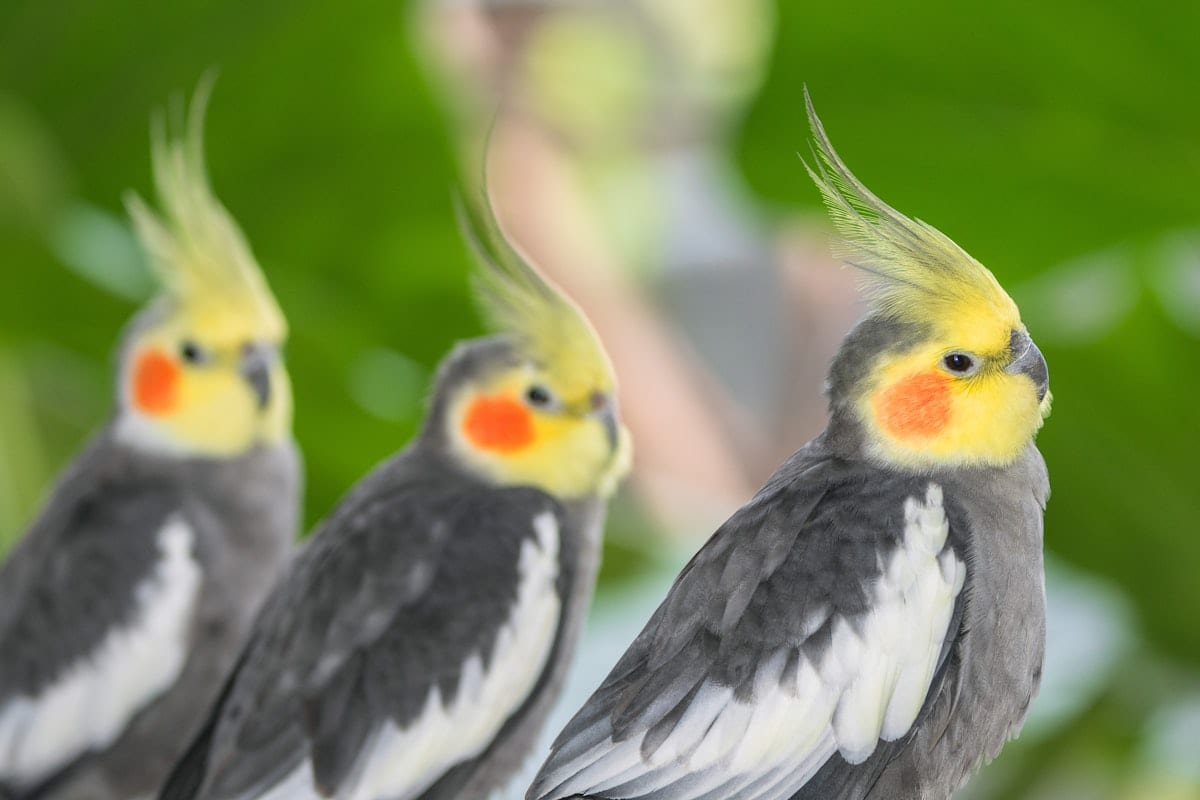
Cockatiels will investigate, bite, and potentially eat any decoration within reach. Keep this in mind before you put anything near them.
Safe: Paper bunting, cardboard props, natural wood elements. All of these can be chewed without harm and will be.
Skip entirely:
Metallic or foil decorations: many contain zinc compounds that cause heavy metal toxicity in birds. This is not a small risk. Zinc toxicity is a genuine bird emergency.
Plastic decorations: ingested plastic pieces are an obstruction risk.
Ribbon and string: ingestion hazard, potential crop impaction.
Balloons: latex pieces if chewed, and the sound of a balloon popping will stress your bird significantly.
Candles, even unlit: wax pieces are a hazard and most scented candles contain fragrance compounds that affect bird respiratory systems.
The cleanest approach: make the “decoration” the enrichment. A new foraging toy as the birthday centerpiece, a colorful arrangement of safe fruits in a bowl on their play stand, a fresh bunch of leafy greens draped over the perch. Everything in the setup is something they can interact with. Nothing requires keeping them away from it.
Getting the Tielfie
“Tielfie” is exactly what it sounds like: a selfie with your cockatiel. The birthday tielfie is the content.
Getting a good one requires understanding that cockatiels move fast and make decisions faster. Burst mode. Natural light. Phone held steady, not at arm’s length.
The setup that works: get your tiel settled on your shoulder or your hand (whichever they prefer), let them calm down for a minute, then offer a piece of birthday food. They’ll take it and hold it for a moment before eating. That 2-second window where they’re holding the mango and looking slightly pleased is the shot.
Backdrop matters more than people think. A plain wall or a window with natural light behind you will produce a cleaner photo than the busy background of a cage, cables, and furniture. If you can get a white or neutral backdrop, the colors on a cockatiel (especially the orange cheek patches and yellow crest, if you have a grey bird) will pop.
Don’t use flash. Cockatiels don’t like sudden bright light and it stresses them. Natural light is better anyway.
Reading Your Tiel’s Party Signals
Cockatiels are expressive enough that reading the party is not difficult once you know the vocabulary.
Things going well:
- Crest at a comfortable angle (not flat, not fully raised): relaxed curiosity
- Contact calling and waiting for your response: they want interaction, the bond is active
- Actively investigating new toys or food
- Whistling or humming: content
- Head-scratching requests (leaning toward your hand with crest raised slightly): very comfortable
Things not going well:
- Crest flat and body fluffed: cold, sick, or scared
- Hissing or beak-clicking at the new setup: alarmed, needs time
- Biting: they’ve told you they need space
- Eyes pinning rapidly (pupils dilating and contracting): overstimulated or excited in a tense way
- Flying repeatedly in distress: something in the environment is wrong
If the party is going badly, don’t push through it. Put them back in their cage, wait 20 minutes, try again with fewer new things at once. Some birds want the whole setup introduced gradually. Others will immediately approve of everything. Know your bird.
On timing: a focused session of 45 to 90 minutes suits most birds. Out-of-cage time is stimulating, not restful, and tiels need to decompress afterward. End the party on a positive interaction rather than running it until they’ve already started signaling they’re done.
For more on planning multi-species celebrations and managing anxious pets during parties, the general pet birthday party guide has useful setup principles.
Cockatiel Birthday Supplies
Cockatiel birthdays run on foraging enrichment and fresh millet:
- Millet Holder 2-Pack (Stainless Steel), fresh millet is the one treat cockatiels reliably love. Hang a new spray for the birthday.
- CIEZZU Bird Foraging and Chewing Toy Set, colorful foraging and chewing toys. Works for cockatiels and similar birds.
- PBIEHSR Bird Foraging Toys Seagrass Mat, seagrass climbing and shredding toy.
Sources
- VCA Hospitals: Cockatiels: Feeding
- Association of Avian Veterinarians: Bird Safety and Husbandry Resources
- You
- Your pets
- Confirm