
Parrotlet Birthday Party Ideas: Celebrating the Pocket Parrot With the Giant Attitude
Parrotlet birthday ideas from keepers who know these small, fierce parrots: the birthday feast for a Pacific or Celestial parrotlet, safe treats, enrichment for a bird with full macaw attitude in two ounces of body weight.
As an Amazon Associate we earn from qualifying purchases.
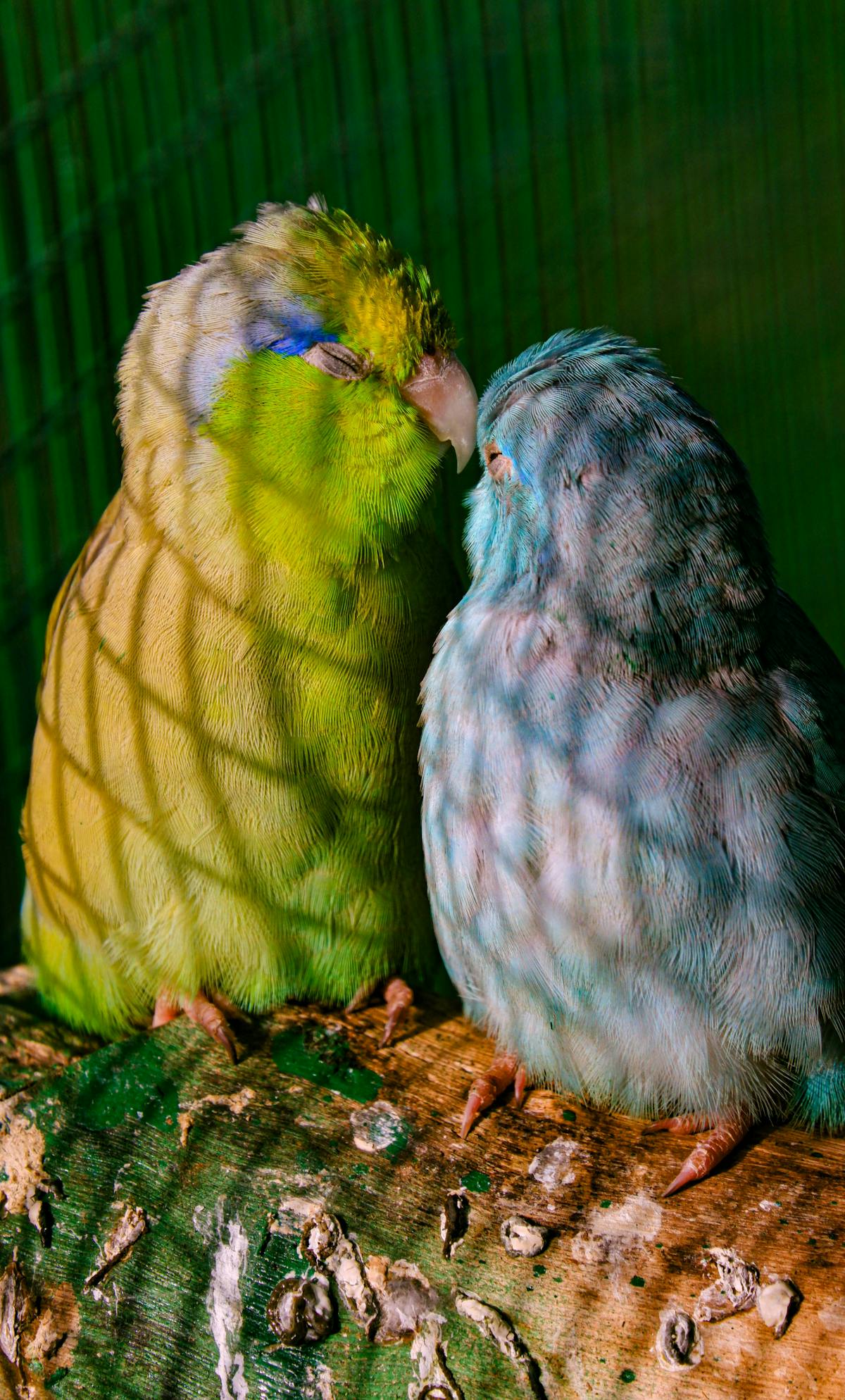
Parrotlets are the smallest true parrots commonly kept as pets, and they carry their size with zero awareness of it. A Pacific parrotlet (Forpus coelestis) will challenge a bird three times its size, claim territory with absolute conviction, and then accept a head scratch from its primary keeper as if that’s the natural order of things. The birthday celebration is a fine-chopped vegetable feast, a safe fruit treat, enrichment scaled appropriately for a bird that weighs 28 grams but acts like it weighs a pound, and a photo session that captures why the parrotlet community is so fiercely devoted to what is, objectively, an extremely small bird.
Teflon Fumes Are Lethal
Non-stick cookware fumes from overheated polytetrafluoroethylene (PTFE) coatings kill parrots, including parrotlets. A parrotlet’s small body mass means the exposure threshold may be even lower relative to body weight. Per VCA Hospitals and the ASPCA, Teflon toxicity is a primary preventable cause of bird death. All birthday food preparation is in stainless steel, cast iron, or ceramic cookware only.
Species Note
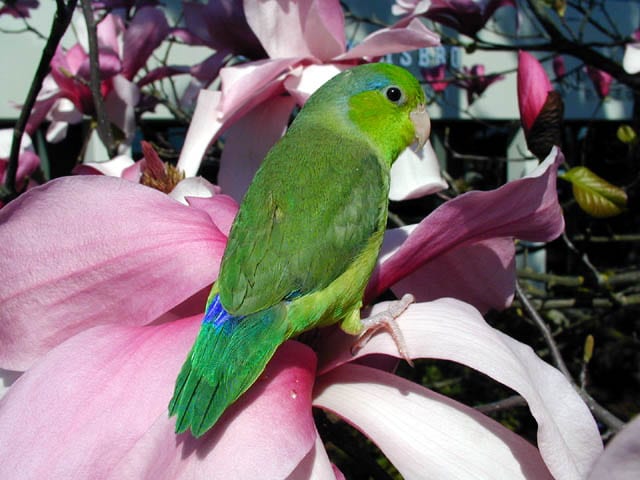
The Pacific parrotlet (Forpus coelestis, also called the Celestial parrotlet) is the most common in captivity. Mexican parrotlets (Forpus cyanopygius), Spectacled parrotlets (Forpus conspicillatus), and several other species are also kept but less frequently. The care requirements and birthday format are similar across all Forpus species, with minor adjustments for size.
Parrotlets have a significant color morph market. Blue, American yellow, American white, and various combinations are widely bred. The birthday photo for a mutation parrotlet should document the specific morph.
Housing is worth deciding before the invite list, not during it. Two male parrotlets together often ends in real fighting, sometimes fatally, so that pairing isn’t recommended. A male-female pair works better but still needs monitoring, and plenty of experienced keepers just house their birds singly rather than manage the risk. If your parrotlet is going to be around people it doesn’t know at the party, expect some territorial defensiveness, especially during breeding season. That’s normal behavior, not a training failure, and the easiest fix is letting the bird set the pace instead of forcing an introduction.
The Birthday Feast
Parrotlets eat high-quality pellets as the base of their diet, supplemented with fresh vegetables and a very small amount of seeds. Per VCA Hospitals’ parrotlet care guide, an all-seed diet is inadequate and contributes to health problems.
Birthday chop (finely chopped, very small pieces). Parrotlets have small beaks and prefer food in appropriately tiny pieces. Finely shredded leafy greens, minced bell pepper, shredded carrot, tiny pieces of broccoli, corn. The same bird-safe vegetables used for other parrots, but cut smaller.
Safe birthday treats. A sliver of mango, a few blueberries, a small piece of apple (seeds removed), a few pomegranate arils. Very small quantities.
Seeds as treats. A small seed mix with millet, canary grass seed, and a few sunflower seeds as the birthday treat component alongside the primary pellet and chop diet.
What never appears. Per ASPCA: avocado. Chocolate. Caffeine. Alcohol. Onion and garlic. Apple seeds. Cherry pits. Xylitol. Salt. High-sodium processed food. Raw beans. Mushrooms.
Birthday Enrichment
Parrotlets are active, curious, and territorial. They need enrichment that reflects this.
A small foraging toy. Scaled for their size. Many “small parrot” toys are actually too large for parrotlets. Look for finch-scale or budgie-scale foraging toys. A simple paper-wrapped seed packet to unwrap is appropriate.
A new perch or swing. Parrotlets immediately investigate and claim new items in their space. A birthday perch becomes their new favorite territory.
Supervised flight time. In a fully bird-safe room (no fans, no non-stick cookware active, no open windows or doors), supervised free-flight is meaningful enrichment. Parrotlets fly well and actively explore.
Mirror use (with caution). Some parrotlets are interested in mirrors. Others become obsessed and show stress behavior. Know your individual bird before adding a mirror as a birthday enrichment item.
Birthday Photography
Parrotlets are challenging to photograph because of their small size and constant movement. Macro mode is essential for the face portrait.
The close-up face portrait. A parrotlet face at macro distance shows the eye ring, the facial coloring, and the beak detail that most people don’t see in casual observation. For mutations, this photo documents the specific color pattern.
The perch portrait. A parrotlet fully in frame on a natural perch, in good light, showing the full body. Their compact, bullet-shaped body is distinctive.
The action shot. A parrotlet mid-movement: climbing, investigating something, or responding to a treat. These require burst mode and patience.
Community posting. r/parrots and parrotlet-specific Facebook groups have birthday communities. The morph documentation post, clear photo with the color mutation named, the age, and a personality note, is the standard format.
How Long Do Parrotlets Live?
In captivity with proper care, Pacific parrotlets typically live 15 to 20 years. Some individuals have reportedly reached 25+ years. A 15-year parrotlet birthday represents excellent consistent care over a meaningful span.
Parrot Birthday Supplies
Parrot birthdays are about foraging enrichment and treat variety:
- Litewoo Bird Foraging Feeder (Stainless Steel), fruit, vegetable, and seed holder. Works for African greys, macaws, conures, and similar birds.
- CIEZZU Bird Foraging and Chewing Toy Set, multiple foraging elements for medium and large parrots.
- Bird Spinner & Foraging Basket Set, mental enrichment basket plus spinning rattle toy.
Sources
- VCA Hospitals: Parrotlets
- ASPCA Animal Poison Control: People Foods to Avoid Feeding Your Pets
For the lovebird birthday (similarly small and fierce): Lovebird Birthday Party Ideas
For the conure birthday (larger with comparable personality intensity): Conure Birthday Party Ideas
- You
- Your pets
- Confirm