
Pet Birthday Party Games: Activities Every Species Can Actually Play
Pet party games that work across species: scatter-feeding, scent games, wand play and shred toys for dogs, cats, birds, small mammals and reptiles, plus the games to skip and why cats refuse food puzzles.
As an Amazon Associate we earn from qualifying purchases.
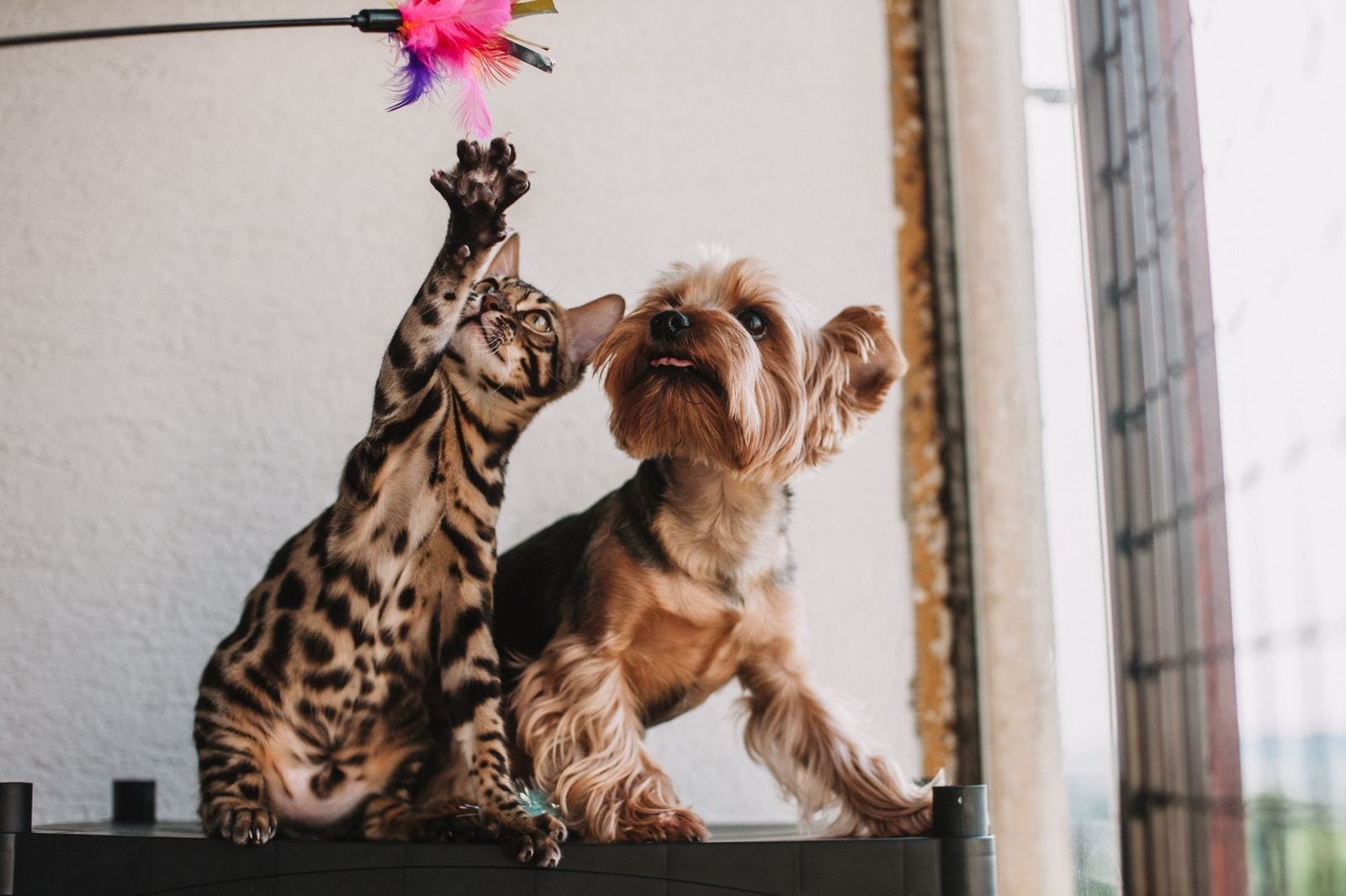
The party game that travels furthest across species is the simplest one: hide the food and make them find it. Scatter treats in grass for a dog, in hay for a guinea pig, in a shreddable foraging toy for a parrot. Cats are the documented exception. They’d rather chase a wand than solve a puzzle.
That one rule, and its one exception, covers most of what follows. The rest is a matter of matching the game to what the animal’s body was built to do.
What Makes a Pet Party Game Actually Work?
Three tests. A game passes if it clears all three.
It’s a behavior the animal already does. Dogs sniff. Cats stalk and pounce. Rabbits and guinea pigs forage and chew. Parrots destroy things with their beaks. Rats investigate. You are not teaching a new skill at a party; you’re giving an old skill somewhere fun to go.
It works without training. If the game requires the animal to understand rules, it isn’t a game, it’s a class. Musical chairs does not work. A tennis ball works.
The animal can quit. Every good pet game has an exit. The animal walks away, the game is over, nobody drags them back for a photo.
That’s the whole test, and it eliminates most of what gets suggested in pet party listicles. Costume contests fail all three.
Which Game Works for the Most Species?
Scatter feeding, comfortably. It’s the same game in ten different substrates.
| Species | Where you hide it | What you hide |
|---|---|---|
| Dog | Grass, snuffle mat, cardboard boxes | Small training treats, kibble |
| Rabbit | Hay pile, paper bag, cardboard tube | Herbs, a few pellets, a leaf of romaine |
| Guinea pig | Hay rack, hay-stuffed tube | Bell pepper strips, a small piece of cucumber |
| Rat | Ball pit, crumpled paper, dig box | Peas, seeds, small bits of cooked pasta |
| Ferret | Rice-free dig box, tunnel ends | Freeze-dried meat pieces |
| Parrot | Shreddable foraging toy, folded paper cups | Nuts, seed, a piece of pellet |
| Chicken | Straw, dirt patch | Scratch grains, mealworms |
| Bearded dragon | Bio-active substrate, a shallow bowl in a new spot | Live insects, greens |
| Hermit crab | Buried in the substrate | Freeze-dried shrimp |
| Cat | See below. Cats vote no. |
There’s real research under this. Duranton and Horowitz published a controlled study in Applied Animal Behaviour Science in 2019: twenty dogs, ten doing two weeks of nosework games and ten doing heelwork, then tested on a cognitive bias task. The nosework dogs approached an ambiguous food bowl faster afterward, the standard behavioral read for optimism in animals. The heelwork dogs showed no change. A dog who spends fifteen minutes finding treats in the lawn at a party is getting something measurably different from a dog who spends fifteen minutes being walked politely.
What Games Do Dogs Actually Enjoy?
Four formats, roughly in order of how reliably they land.
Treat hunt. Twenty to thirty small treats scattered in the yard or hidden around one room before guests arrive. Zero setup, zero explanation, and it burns dogs out faster than a run does.
The shell game. Three upturned boxes or paper bags, treat under one, shuffle. Dogs solve this with their nose in about four seconds, which is fine. Getting it right is the fun part.
Flirt pole. A pole, a rope, a lure on the end. You drag it, they chase it. This is the highest-intensity game on the list and the one to use for a dog with too much energy for a room full of people. Keep sessions to a minute or two and let the dog win the lure at the end, otherwise it’s just frustration with extra steps.
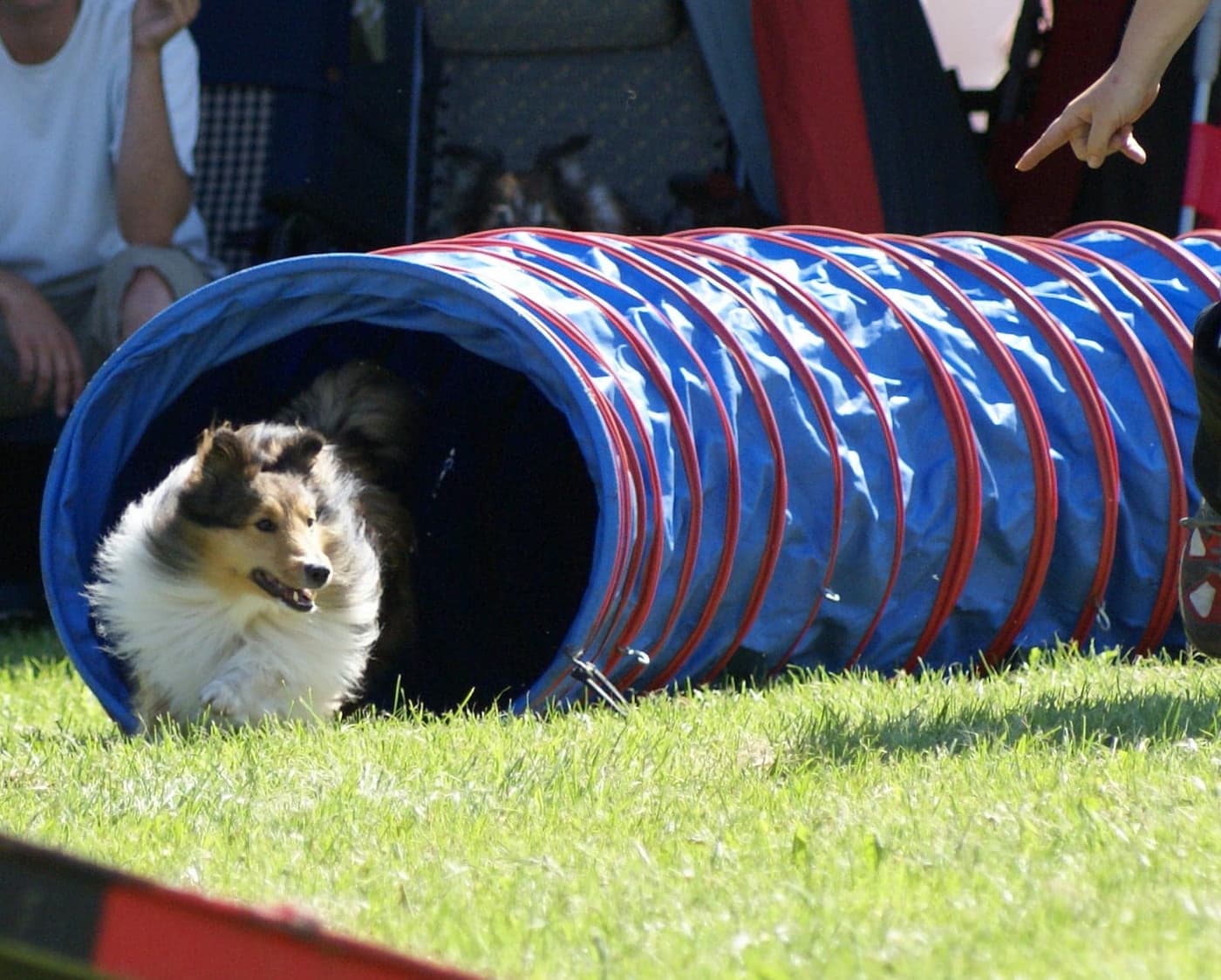
A tunnel. Not a full agility course, which requires training nobody at a birthday party has done. One collapsible tunnel, treats thrown through it, and most dogs will run it repeatedly on their own for the novelty.
Skip the ones that need cooperation between dogs who met eleven minutes ago. Tug-of-war between two guest dogs is a resource dispute with a rope in the middle. Dog birthday party ideas has the full format list, including the calmer versions for dogs who find guests stressful.
What Games Will a Cat Play?
Wand play. That’s the answer, and there’s a good reason the food games don’t transfer.
Most animals will work for food even when identical free food is sitting right there. It’s called contrafreeloading, and the species it’s been shown in include, per the paper below, humans, chimpanzees, macaques, chickens, jungle fowl, pigeons, grizzly bears, maned wolves, rats, giraffes and pigs. Cats don’t do it. Mikel Delgado and colleagues at UC Davis published the test in Animal Cognition in 2021: seventeen indoor cats, ten thirty-minute trials each, a food puzzle and an open tray of the same food side by side. The cats ate more from the tray. Only four of the seventeen ate most of their food from the puzzle. The paper’s own conclusion is that further research is needed to understand why domestic cats, “unlike other tested species,” don’t prefer to work for food.
So a food puzzle is a fine long-term enrichment object for a cat and a mediocre party game. What a cat will do on demand is hunt something that moves like prey:
- Wand toy, played correctly. Drag the lure away from the cat and around corners, never toward her face. Prey flees; it doesn’t charge. Let her catch it every few passes or she’ll disengage.
- The paper bag and the box. Free, and better than most purchased toys. A grocery bag with the handles cut off (handles are a strangulation risk) and a cardboard box with two holes cut in it will outperform a $30 toy.
- Ping pong ball in a dry bathtub. Sounds too simple. Cats play it for twenty minutes.
- Silvervine or catnip, then play. Give the plant first, start the wand game while she’s still activated.
Cat parties run on the cat’s schedule, which is usually eleven good minutes and then a nap. Cat birthday party ideas covers the rest of the format.
What Do Birds Do at a Party?
They destroy things, and you should let them.
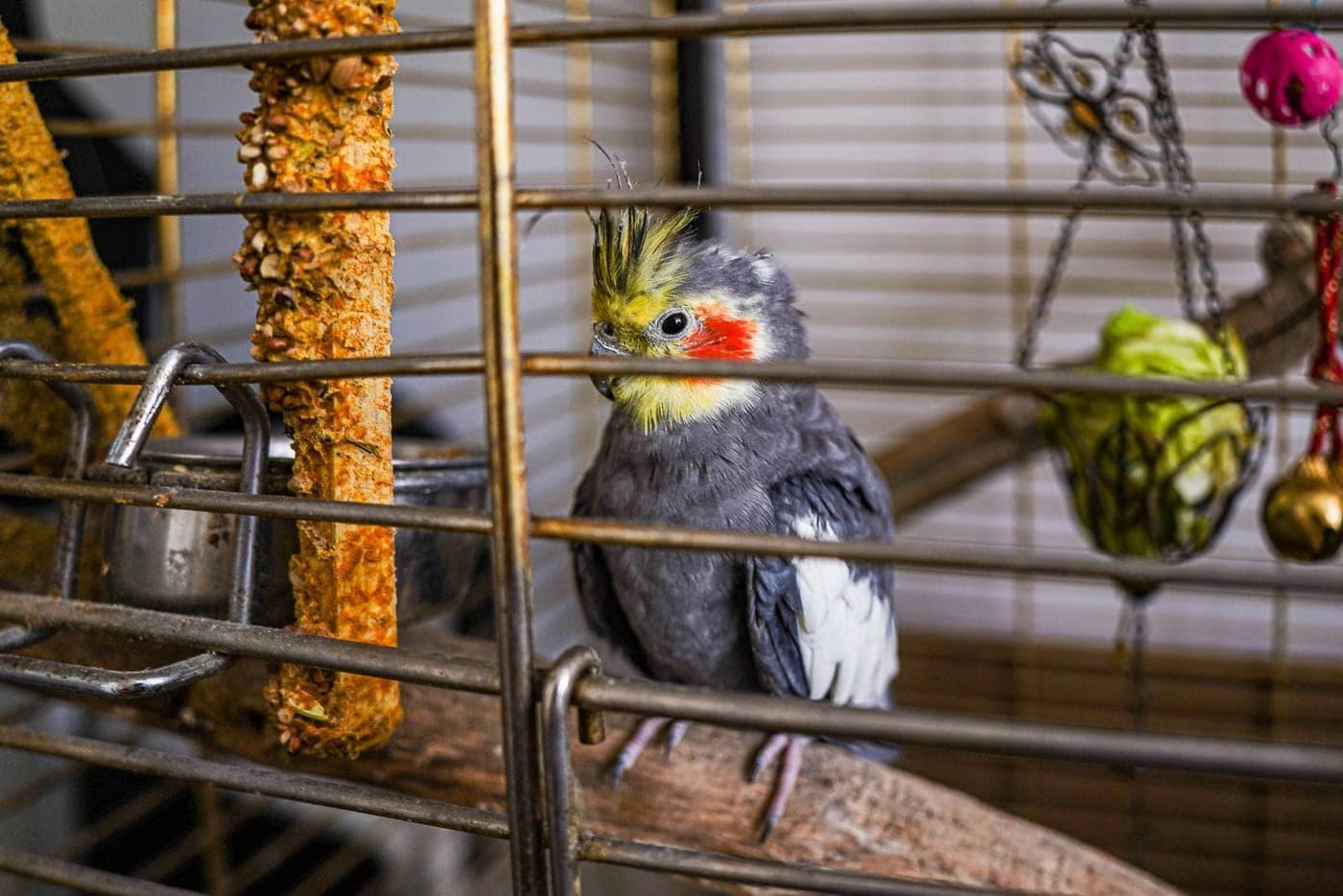
The party activity for a parrot, cockatiel, budgie or conure is a foraging toy they have to take apart: shredded paper, folded paper cups with a nut inside, a woven palm ball with seed in the middle, a stack of coffee filters threaded on a skewer. Birds spend a large share of their day foraging in the wild, and a caged bird with nothing to dismantle is a bird that starts dismantling its own feathers.
The bird section carries a hazard nobody puts in party guides, so here it is. Birds have an extremely efficient respiratory system and are exquisitely sensitive to airborne toxins. Non-stick cookware containing PTFE, heated above 536°F, gives off a colorless, odorless vapor that kills birds, and VCA’s own guidance notes that the bird does not have to be in the same room as the pan for poisoning to occur. If you’re baking a cake for the dog while the cockatiel is in the next room, use a non-coated pan. Scented candles, aerosol sprays and air fresheners belong in the same category: not at a party with a bird in the house.
Species-specific formats are in cockatiel birthday party ideas.
What About Rabbits, Guinea Pigs, Rats and Ferrets?
All four play the same three games with different props.
The dig box. A shallow cardboard box or storage tub filled with shredded paper, hay, or (for rats) uncooked whole oats, with food buried in it. Rats will spend half an hour on this. Rabbits will empty it onto your floor, which is the correct outcome.
The cardboard destruction event. A plain cardboard box, a toilet paper tube stuffed with hay, a paper bag. Rabbits and guinea pigs chew. Give them something you’re happy to lose. No ink, no tape, no glossy coating.
The tunnel run. Ferrets in particular are obsessive about tunnels, and a new crinkle tube is the single highest-value party object you can hand a business of ferrets. Rats will use it too. Guinea pigs prefer a tunnel with two open ends so they never feel cornered.
One safety note that applies to all four: fabric with loose loops, and string of any kind, is a bad idea. Small mammals get toes caught in frayed loops, and ingested string causes the same intestinal problem it causes in cats.
Rabbit birthday party ideas goes deeper on the rabbit version.
Can Reptiles and Fish Play Anything?
Yes, if you define the game honestly. No, if you’re expecting a reptile to fetch.
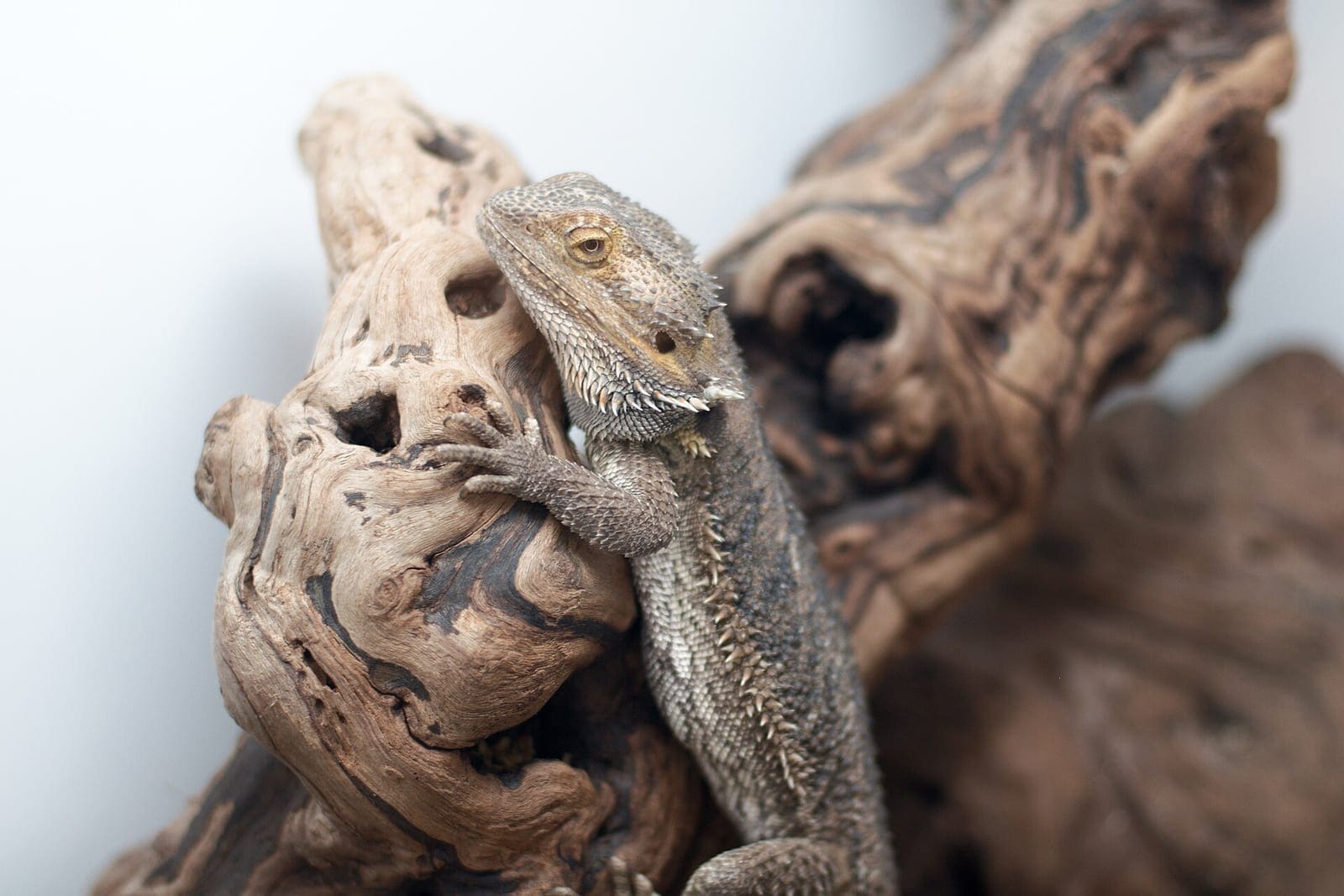
Bearded dragons and other lizards: live prey in a bowl they have to work at, a rearranged basking layout, or supervised floor time in a warm room with new textures to walk over. Hunting live insects is genuine predatory enrichment and it’s the closest thing to a game a beardie has. Bearded dragon birthday party ideas has the full setup.
Snakes: no games. A new hide, a fresh climbing branch, and a properly sized meal. That’s the celebration, and pretending otherwise is for the humans.
Fish: target training is real and works. A betta will learn to follow a chopstick or swim through a hoop for food in a handful of short sessions, and it’s the only pet party game that fits inside a five gallon tank. Betta fish birthday party ideas walks through it.
What Games Should You Skip?
Costume contests. One animal is always miserable. The photo isn’t worth it.
Anything with balloons near a chewer. A popped latex balloon becomes a swallowable piece of rubber, and balloon ribbon is the same linear foreign body risk described below. Foil balloons out of reach, latex nowhere.
String, ribbon, tinsel and yarn as toys. VCA’s guidance on linear foreign bodies is blunt about the mechanism: one end lodges, usually at the base of the tongue, the rest trails down, and the intestine bunches up along it while the string saws at the lining. It calls intestinal perforation the most significant possible complication, and treatment is an exploratory laparotomy. This applies most to cats and applies to everyone.
Human party food as a prize. Chocolate, grapes and raisins, onion, garlic and chives, macadamia nuts, xylitol, and alcohol are all on the ASPCA’s list. Onion and garlic are worse for cats than dogs, per that same source.
Any game where losing means being restrained. If the animal’s exit is blocked, it stopped being a game.
How Do You Run Games With Mixed Sizes or Mixed Species?
Separate them, then run the games in shifts.
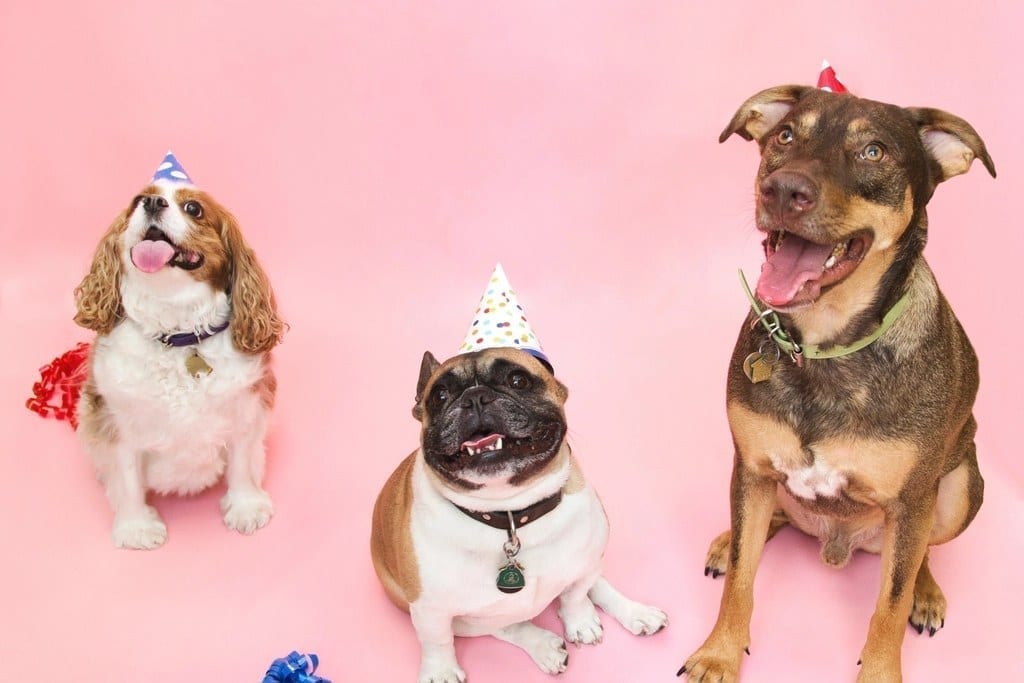
The size problem is real and it’s a safety issue, not an etiquette one. A squeaky toy built for a 70 pound dog is an obstacle for a Chihuahua; a toy built for a Chihuahua is a choking hazard for the 70 pound dog. If your guest list spans that range, run tennis balls and scatter feeding, which are size-neutral, and hand out size-matched toys as party favors at the door instead.
Cross-species parties follow one rule: the prey animal never shares floor space with the predator. A rabbit in a room with a strange dog is a stressed rabbit even if the dog is perfectly behaved, because rabbits assess the situation with their instincts, not with your reassurances. Give each species its own room and its own fifteen minutes.
A workable schedule for a mixed household:
| Time | Who | Game |
|---|---|---|
| 0:00 | Dog | Treat hunt outside, 15 minutes |
| 0:20 | Rabbit or guinea pig | Dig box and hay tube, alone in a quiet room |
| 0:40 | Cat | Wand toy, then the cake photo, then leave her alone |
| 1:00 | Bird | Foraging toy in the cage, humans out of the room |
Nobody meets anybody. Everybody has a good day.
Game Supplies Worth Buying
Prices move; check current pricing. Most of what’s above is free, and this list is for the four items that genuinely outperform the DIY version.
- AWOOF Snuffle Mat for Dogs, the scatter-feeding game in a form that works indoors and washes.
- Squishy Face Studio Flirt Pole V2, 36 inch, the sturdy version of a flirt pole. The cheap ones snap.
- Cat Dancer 101, 3 pack, a wire and a piece of rolled cardboard, and one of the few toys cats keep responding to. Put it away between sessions.
- Shredding Foraging Bird Toys with Rope Perch, sized for conures, cockatiels, budgies and lovebirds.
- emours Willow Branch Rattan Balls, for rabbits, guinea pigs and chinchillas. Stuff them with hay.
- Outward Hound Nina Ottosson Treat Tumble, a food-dispensing ball for dogs. Buy it for the dog, not the cat, for the reasons above.
The complete party plan, including cake and decorations, is in the pet birthday party guide.
Whatever you run, end it while the animal still wants more. The best pet party game finishes ninety seconds early.
Sources
- Delgado M, Han B, Bain MJ. “Domestic cats (Felis catus) prefer freely available food over food that requires effort.” Animal Cognition, 2021, link.springer.com/article/10.1007/s10071-021-01530-3
- Duranton C, Horowitz A. “Let me sniff! Nosework induces positive judgment bias in pet dogs.” Applied Animal Behaviour Science, 2019, vol. 211, pp. 61-66, sciencedirect.com
- VCA Animal Hospitals, Teflon (Polytetrafluoroethylene) Poisoning in Birds, vcahospitals.com
- VCA Animal Hospitals, Linear Foreign Body in Cats, vcahospitals.com/know-your-pet/linear-foreign-body-in-cats
- ASPCA Animal Poison Control Center, People Foods to Avoid Feeding Your Pets, aspca.org
- You
- Your pets
- Confirm