
Axolotl Safe Birthday Treats: What Your Lotl Can Eat for the Tankiversary Feast
Axolotl birthday treat guide: the earthworm-first principle, safe protein sources for Ambystoma mexicanum, the cold-water rule that governs everything, and what not to feed the internet's most popular amphibian. Caudata.org verified.
As an Amazon Associate we earn from qualifying purchases.
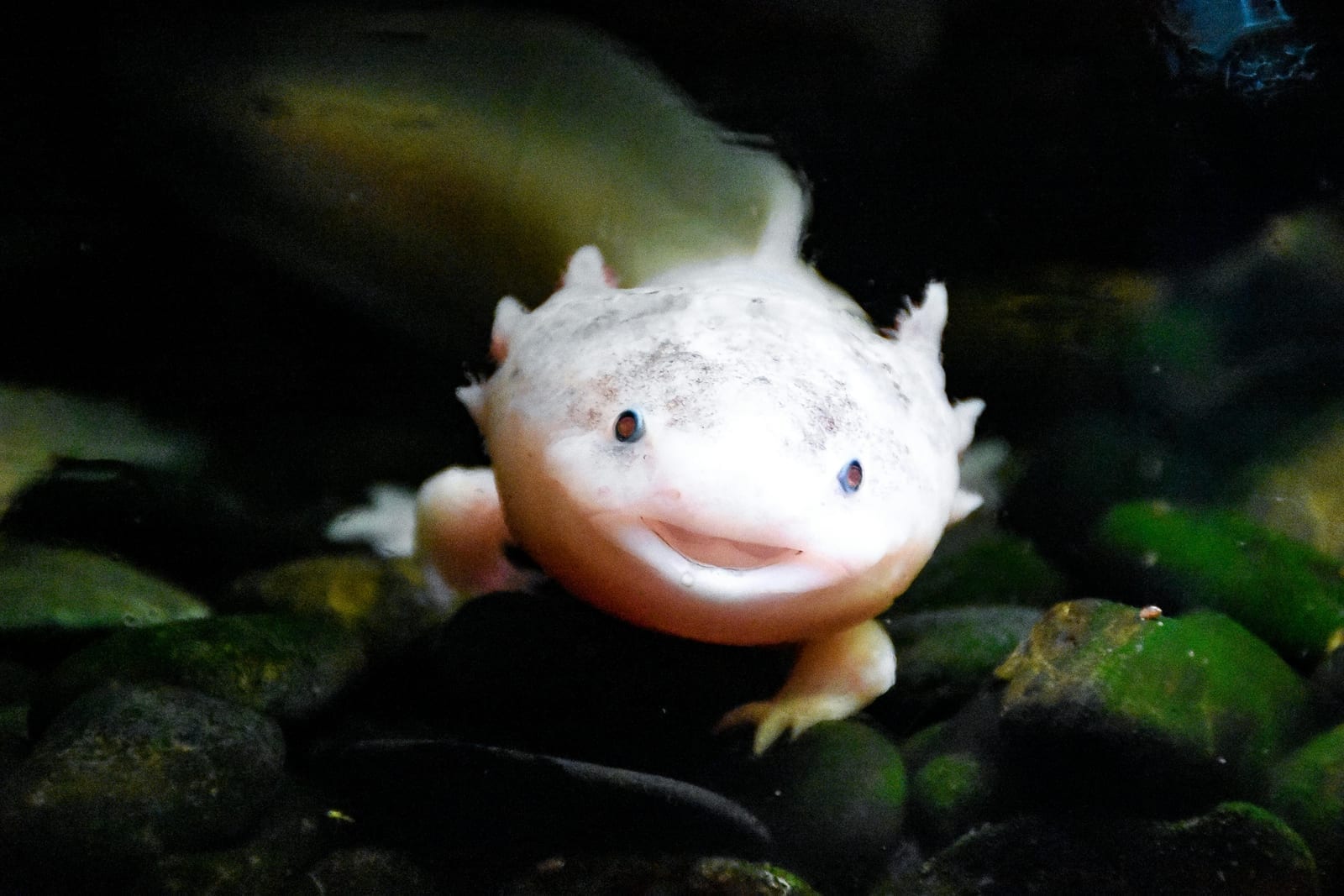
Axolotls are carnivorous amphibians, not fish, and every birthday treat recommendation needs to start with that distinction. Axolotl birthday treats are protein-based and offered in water that stays at 60 to 68°F. Above 72°F, axolotls are stressed; above 75°F, the temperature can be fatal over sustained exposure. The cold-water requirement governs everything, including how much food you can safely offer on birthday day: a warmer tank means slower digestion and higher ammonia risk from uneaten food. Check the temperature before the birthday feast and confirm it’s in range.
The Temperature Confirmation First
Before any birthday food discussion: axolotls live in cold water. Per Caudata.org’s axolotl care sheet, the optimal temperature range is 60 to 68°F. A birthday feast offered in a tank at 75°F is a feast offered to a stressed animal that cannot properly process it. Verify the water temperature with a thermometer the morning of and the evening before the birthday. The feast proceeds only if temperatures are correct.
What Axolotls Can Eat for Their Birthday
Earthworms. Per Caudata.org, earthworms are the gold standard feeder for axolotls, nutritionally complete, natural prey, and enthusiastically consumed. Nightcrawlers from a pesticide-free bait shop or red wigglers from a worm farm. Cut to appropriate size (roughly as long as the axolotl’s head is wide) and offered directly with tongs or dropped into the water near the axolotl. The birthday earthworm feast can be 2 to 4 worms offered over the course of the evening rather than all at once. If your lotl ignores everything else and only wants earthworms, that’s fine. The earthworm feast is a complete and appropriate birthday on its own; the other options below are for axolotls that happen to accept variety, not a requirement.
Frozen bloodworms. Accepted by most axolotls as a secondary feeder and a birthday variety addition. Thaw in tank water before offering. Remove uneaten portions within an hour.
Raw shrimp pieces. Plain, unseasoned, uncooked shrimp cut into axolotl-appropriate pieces. Accepted by many axolotls. Remove uneaten pieces promptly.
Axolotl pellets. Commercial pellets designed specifically for axolotls. These are fine as a supplement to the earthworm feast for the birthday, not instead of it.
Frozen daphnia or brine shrimp. Accepted by some axolotls, ignored by others. A birthday variety offering alongside earthworms.
What Axolotls Cannot Eat
Feeder fish (especially goldfish). Goldfish contain thiaminase, which destroys vitamin B1 with regular feeding. They also carry disease risk. The axolotl community is clear on this: feeder goldfish are not appropriate feeders.
Standard fish food and flakes. Axolotl dietary needs are amphibian-specific, not fish-specific. Flakes and most commercial fish pellets don’t meet them. Stick to axolotl-labeled pellets or earthworm-based feeding.
Wild-caught invertebrates. Pesticide exposure risk. Earthworms must come from a pesticide-free source.
Plant matter. Axolotls are carnivores. They cannot digest plant matter and don’t benefit from it.
Warm-water food in a cold-water tank. Food should be at or near tank temperature before offering. Thaw frozen food to tank temperature in tank water rather than in hot water.
Large prey items. Prey too large causes injury during attempted swallowing. Cut everything appropriately.
Feeder insects (crickets, mealworms) from land-insect sources. Some axolotl communities debate this; the safer approach is to stick with aquatic-appropriate feeders: earthworms, bloodworms, and aquatic-appropriate protein.
The Uneaten Food Warning
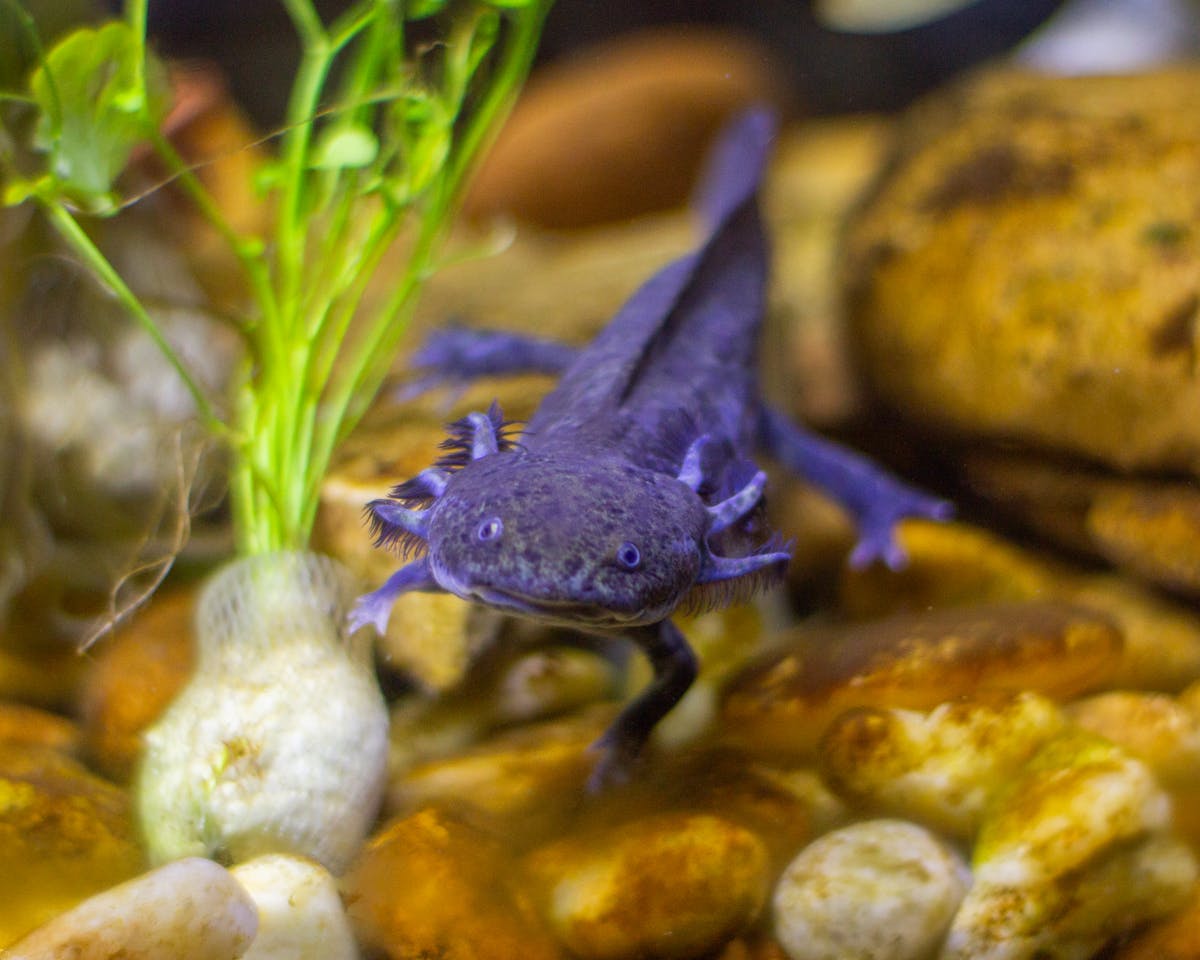
Axolotls in cold water have relatively slow metabolisms. They may not eat as frequently as a warmer-water amphibian would. On birthday day, offer the feast in small portions, observe whether the axolotl is eating, and remove any uneaten food within an hour. Decaying food in a cold-water tank is an ammonia source that’s slower to process than in a heated tank and can cause water quality problems that last for days.
Do a 25 to 30% water change before the birthday feast, just as with any aquatic pet’s celebration.
Watch for floating after the feast too. An axolotl that struggles to stay down afterward is usually telling you the last piece was too large to process, or that the water ran warmer than it should have. Give it 24 hours. Normal behavior returns, no action needed. Lethargy, persistent floating, or a lost righting reflex means a call to a vet who actually sees amphibians.
Axolotl Birthday Supplies
Axolotl birthdays: new hides, substrate improvements, live foods:
- Aquarium Cave Hide for Axolotls, new hide as the birthday enclosure upgrade.
- Pool Filter Sand Aquarium Substrate, substrate upgrade for axolotl tanks.
- Live Red Wiggler Worms for Axolotls, fresh worms as the birthday treat.
Sources
- Caudata.org: Axolotl Care Sheet
- ASPCA Animal Poison Control Center: Animal Poison Control
For the full tankiversary guide: Axolotl Birthday Party Ideas
For what axolotls can eat at a party: What Can Axolotls Eat at a Party?
- You
- Your pets
- Confirm