
The Prep · Party safety · Free tool
How much birthday cake can your party animal actually have?
A slice of cake is the whole point of the party, but pets are small, and the calories add up fast. Vets use the 10% rule: treats and cake stay under a tenth of the day's calories. Tell us about the guest of honor and we'll do the math, sourced, no guesswork.
Quick answer: treats, birthday cake included, should stay under 10% of a pet's daily calories. For a 30-lb dog (about 790 cal/day) that's roughly 79 calories, or ~23 g of pet-safe cake. Use the calculator below for your pet's exact number, and keep chocolate, xylitol, grapes, and macadamia nuts out of the cake entirely.

Today's treat budget
calories of treats / day
⚠️ Never safe at any amount. Leave these out of the cake:
Build the party cake from a pet-safe recipe instead. Every one of ours is checked against ASPCA Animal Poison Control and is xylitol-, chocolate-, and grape-free.
How we got this number
The treat budget is 10% of the daily total, per the vet 10% rule. These are planning estimates, not a prescription. Your vet's number for your pet wins.
Want a cake that fits the budget? Browse pet-safe birthday cake kits or lower-calorie training treats on Amazon. As an Amazon Associate we earn from qualifying purchases.
Why "just a little cake" still needs a number
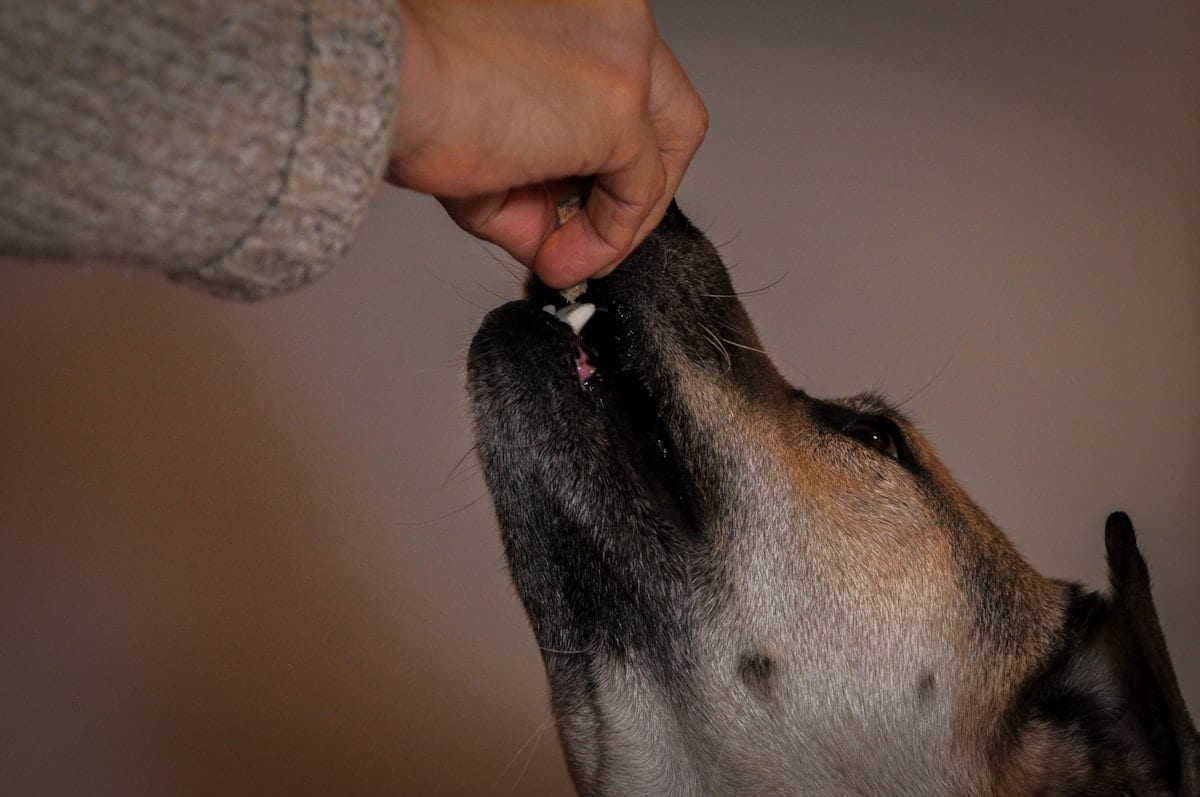
Pets are small, and a forkful of human cake carries a lot of calories relative to their day. A 10-lb dog needs only ~250–400 calories a day; a 9-lb cat needs ~200–280. Ten percent of that, the treat ceiling, is 25–40 calories. A single bite of frosted human cake can use the entire allowance, and the sugar and fat aren't doing them any favors even when the ingredients are technically safe.
The math, and where it comes from
We start with Resting Energy Requirement (RER), the calories a pet burns at rest:
RER = 70 × (ideal weight in kg)0.75
That's the standard formula in the Merck Veterinary Manual and the WSAVA / AAHA nutrition guidelines. We multiply RER by a life-stage/activity factor (a spayed adult dog is ~1.6×, a kitten ~2.5×, a pet on a diet ~1.0×) to get the day's total, the Maintenance Energy Requirement, following Today's Veterinary Nurse's "Nutrition Math 101." Then the treat budget is simply 10% of that total, the ceiling VCA and the UC Davis veterinary teaching hospital both use.
The bites that are never on the menu
Calories are only half the party-safety story. Some ingredients are dangerous at any amount and don't belong in a pet's cake at all:
- chocolate
- xylitol (birch sugar / many sugar-free items)
- grapes & raisins
- macadamia nuts
- onion, garlic, chives, leeks
If your pet has already gotten into one of these, don't wait for symptoms. Call your vet, the Pet Poison Helpline (855-764-7661), or the ASPCA Animal Poison Control Center (888-426-4435) now. (Source: ASPCA Animal Poison Control.)
FAQ
How much birthday cake can my dog actually have?
As much as fits inside 10% of their daily calories, and not one bite more. Vets call it the 10% rule: treats, cake, table scraps, and training bites combined should stay under a tenth of the day's calories, with the other 90% from complete, balanced food. For a 30-lb dog that's roughly 700 calories a day, so about 70 calories of cake. A slice of rich human cake can blow past that in two forkfuls, which is exactly why a pet-safe, lower-calorie recipe matters on party day.
Where do the calorie numbers come from?
Resting Energy Requirement (RER) = 70 × (ideal weight in kg)^0.75, the standard veterinary formula in the WSAVA and AAHA nutrition guidelines. We multiply RER by a life-stage/activity factor to get Maintenance Energy Requirement (the day's total), then take 10% of that for the treat allowance. Every number on this page traces back to a vet source listed below.
Is human birthday cake safe for dogs and cats at all?
Most human cake is a bad idea. It's loaded with sugar and fat, and many cakes hide ingredients that are toxic, not just fattening: chocolate, xylitol (birch sugar, in many 'sugar-free' frostings), raisins, and macadamia nuts can all be dangerous or fatal. Stick to a pet-safe recipe with no chocolate, no xylitol, no grapes/raisins, no onion or garlic. If you're not sure an ingredient is safe, don't serve it.
My pet already grabbed something off the party table. What now?
If they ate chocolate, anything sugar-free (xylitol), grapes/raisins, macadamia nuts, or onion/garlic, treat it as urgent. Call your vet, the Pet Poison Helpline (855-764-7661), or the ASPCA Animal Poison Control Center (888-426-4435) right away. Don't wait for symptoms. Have the wrapper and your pet's weight handy.
Does this work for cats too?
Yes. We use the same RER formula with cat-specific maintenance factors. Cats are smaller and need far fewer calories, so their treat budget is tiny (often 20–35 calories a day). A cat 'birthday cake' is best built from a spoonful of plain cooked meat or a dab of their own food, not sweet baked goods.
Sources
- Merck Veterinary Manual. Nutritional Requirements of Small Animals (RER = 70 × kg^0.75)
- Today's Veterinary Nurse. Nutrition Math 101 (RER / MER factors)
- VCA Hospitals. Treats should make up no more than 10% of daily calories
- UC Davis Veterinary Medical Teaching Hospital. Treat Guidelines for Dogs (2020, PDF)
- AKC. How Many Treats Can a Dog Have Per Day
- ASPCA Animal Poison Control. People Foods to Avoid Feeding Your Pets
This calculator is an educational guide, not veterinary advice. Calorie needs vary with metabolism, body condition, health, and breed. Your vet's recommendation for your pet always wins. Treat-energy densities are approximate; use the calories printed on the package when you have them. Methodology last verified 2026-06-24.