
What Can Tarantulas Eat at a Birthday (Molt) Party? The Prey Guide
Tarantula birthday feast guide: which live prey is appropriate for the molt anniversary, pre-killing guidelines, the premolt fasting period, and why the feast timing matters more than the prey choice. American Tarantula Society verified.
As an Amazon Associate we earn from qualifying purchases.
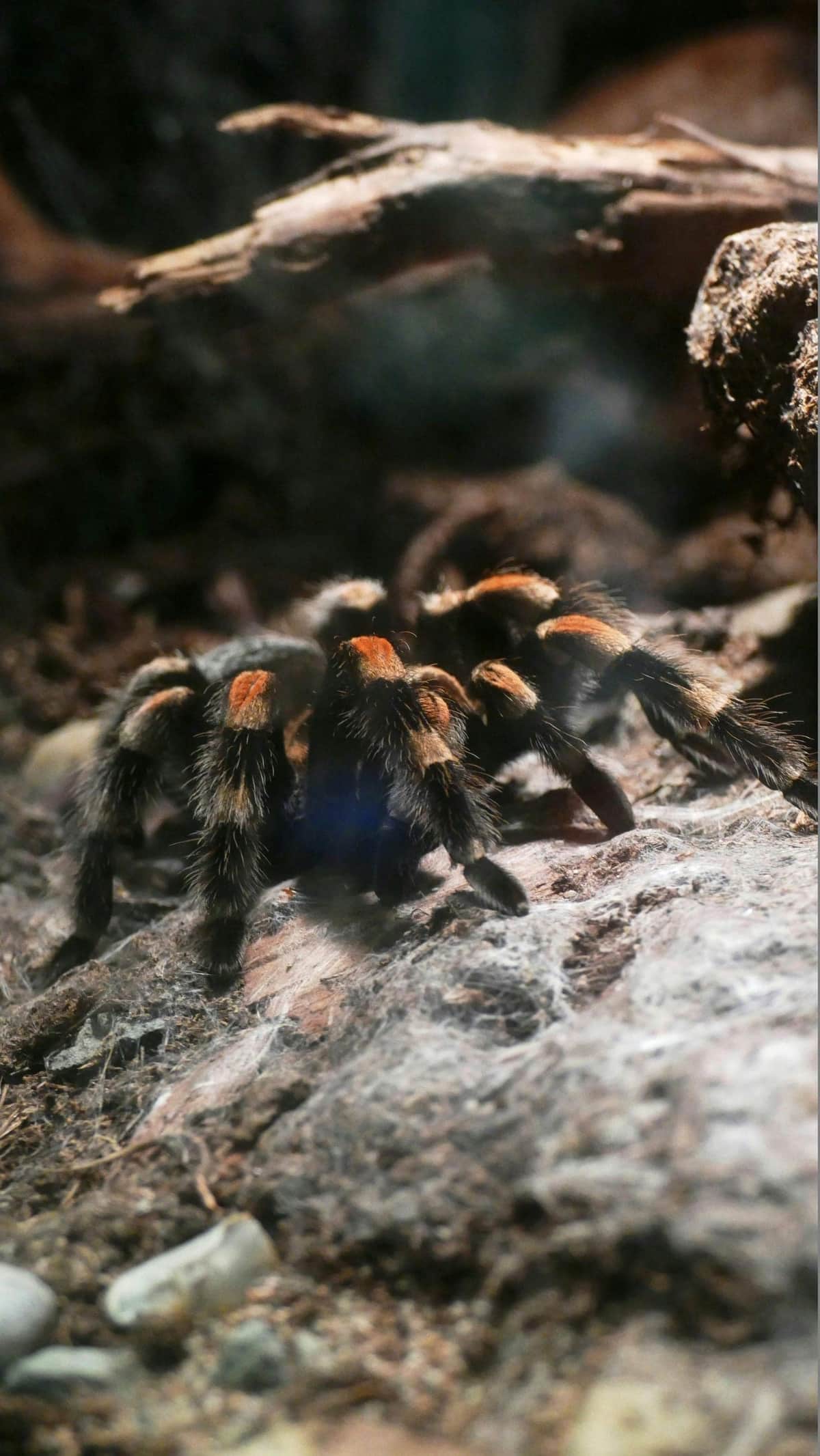
Tarantulas eat live or pre-killed invertebrate prey. The birthday or molt anniversary feast is appropriately sized prey offered once the tarantula has fully hardened after a molt and is clearly in feeding condition. The prey list is short: crickets, dubia roaches, superworms, mealworms, and hornworms depending on species and size. The timing is more important than the specific prey choice. A tarantula in premolt won’t eat and shouldn’t be offered prey; a tarantula that just molted is vulnerable and needs to harden for days to weeks before any feeding attempt.
The Molt Timing Rule (Most Important)
Never offer prey during premolt. A tarantula approaching a molt stops eating, often seals its hide, and becomes inactive. A tarantula in this state with live prey in the enclosure is at risk of being harmed by the prey item, particularly a cricket that bites a molting spider. If the T is showing premolt signs, remove all prey and wait for the molt to complete.
Wait after the molt. After a molt, the tarantula’s exoskeleton is soft and the fangs are non-functional. Wait until the spider’s coloring has darkened to post-molt appearance and the fangs are clearly hardened before offering any prey. For small species and juveniles, this takes 48 to 72 hours. For large adult females, it may take 2 weeks or more.
Premolt has a look, not just a behavior. Watch for the abdomen turning darker or developing a shiny patch, that’s the new exoskeleton forming underneath. A tarantula showing that sign, sealed in its hide and refusing food, is doing exactly what it should. Long fasts around this stage are normal, and so is a general slowdown in fall and winter that has nothing to do with molting at all. If there’s no premolt sign and the spider’s gone more than 2 to 3 months without eating, that’s when to double-check enclosure temperature and humidity rather than assume it’ll pass.
The birthday or molt anniversary feast happens after full hardening, not on the molt date itself.
What Tarantulas Can Eat at the Birthday Feast
Crickets. The most widely available feeder for tarantulas. Appropriate sizes range from small crickets for slings and small species to large adult crickets for large adults. Pre-kill if the spider doesn’t strike immediately after introduction. An uncaptured cricket left overnight with a tarantula bites.
Dubia roaches. Better nutritional profile than crickets and no escape or noise issues. Many tarantulas prefer dubias to crickets. For the birthday feast, a quality dubia is a better choice than a cricket where the spider accepts them.
Superworms. Good for medium to large tarantulas as a higher-fat treat component. Birthday context appropriate. Pre-kill by crushing the head before offering to remove any biting risk.
Mealworms. Lower nutritional value than dubias, used as a treat or as a small supplement for smaller species. Fine as part of a birthday spread.
Hornworms (for larger species). Soft-bodied, high moisture, dramatic movement. Many large tarantulas take hornworms readily. One or two for a large adult Brachypelma or Grammostola on the birthday is a treat-level offering.
Waxworms (small amounts). High fat, treat only. One or two for a large adult.
Most tarantulas take one prey item per feeding and stop there, though some will go for a second once the first is finished. Don’t drop several live prey items in at once, an uneaten cricket left overnight bites. Offer one, give the spider a chance to strike or ignore it, and pull anything declined. If it’s clearly still hunting after finishing the first, a second item an hour later is fine.
What Tarantulas Cannot Eat
Wild-caught insects. Pesticide risk. Pet store or captive-bred feeders only.
Prey too large for the species. The general guideline: prey no larger than the tarantula’s abdomen. Oversized prey is injury risk, particularly for defensive species.
Human food. Tarantulas are obligate predators. No fruit, vegetables, or processed food of any kind.
Prey with chemical exposure. No insects from chemical-treated gardens or unknown sources.
Pre-Killing vs. Live Prey
The American Tarantula Society’s general guidance is that pre-killed prey eliminates the risk of prey biting a vulnerable tarantula. The technique: crush the prey’s head with forceps before offering. This is particularly recommended for any tarantula that has recently molted, for defensive species, or for any enclosure where a refused prey item might be left overnight.
For healthy tarantulas in active feeding condition, live prey is accepted by most species and triggers the full hunting response. Both approaches are valid.
A killed-but-uneaten cricket usually means a defensive strike, not a feeding one. Some tarantulas react to movement even when they aren’t actually hungry, so the prey dies without ever getting eaten. Pull the carcass out quickly regardless, a rotting cricket fouls the enclosure and draws mites. The spider isn’t broken. It just wasn’t hungry that day.
Tarantula Birthday Supplies
Tarantula birthdays: enclosure upgrades and live feeders:
- Cork Bark Hide for Tarantula, new hide as the birthday enclosure upgrade.
- Dubia Roach Feeder Insects, quality feeder roaches as the birthday treat.
Sources
- American Tarantula Society: ATS Home
- Smithsonian’s National Zoo: Tarantula
- ASPCA Animal Poison Control Center: Animal Poison Control
For the full birthday party guide: Tarantula Birthday Party Ideas
For the jumping spider comparison: Jumping Spider Birthday Party Ideas
- You
- Your pets
- Confirm