
Tarantula Birthday Party Ideas: How Keepers Celebrate Molt Day
Real tarantula birthday ideas from the T community: the molt anniversary, live prey feedings, enclosure upgrades, urticating hair facts keepers need, and how to photograph a T safely.
As an Amazon Associate we earn from qualifying purchases.
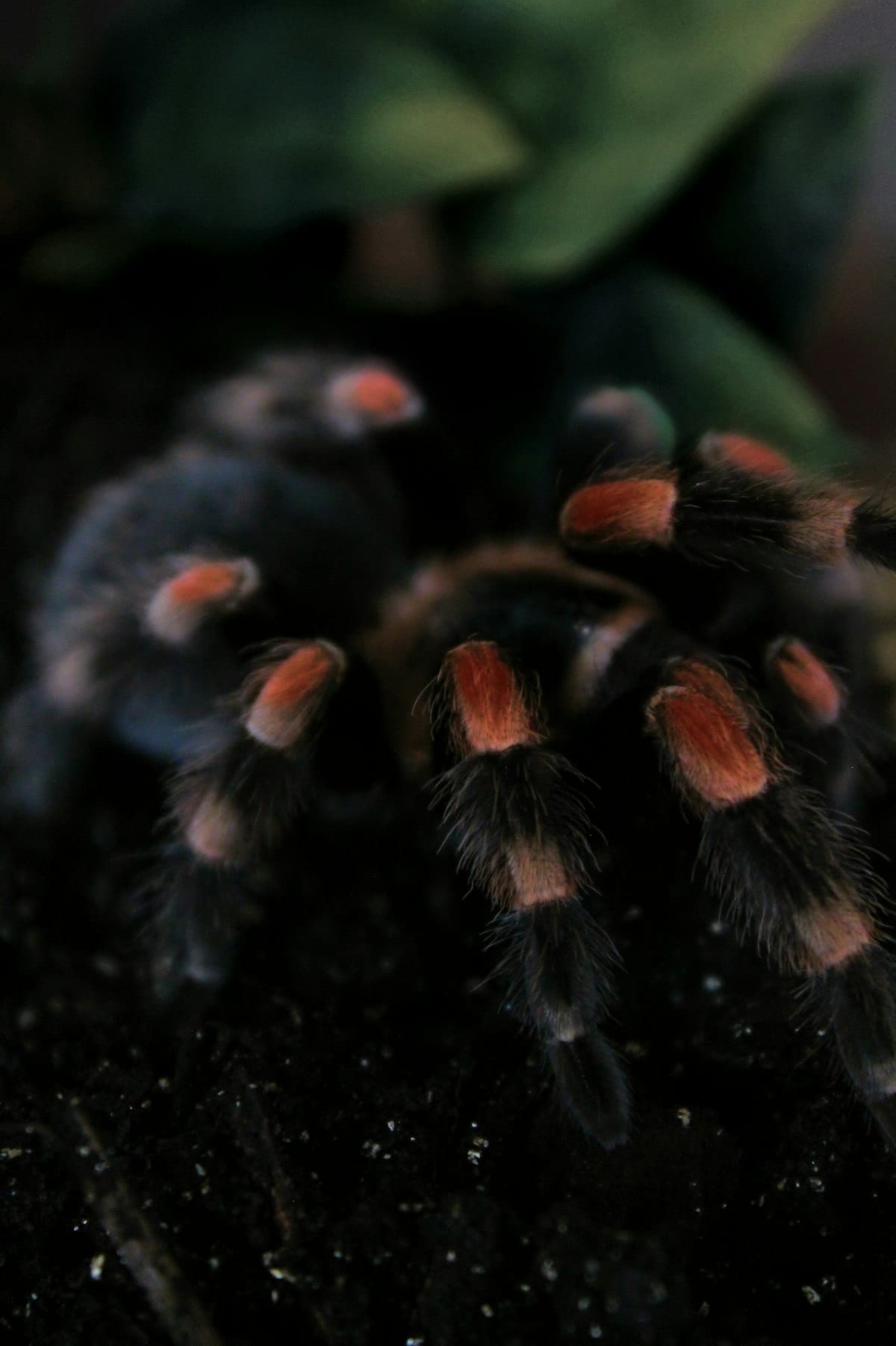
The tarantula birthday in the keeper community is usually the molt anniversary, not the hatch date. Molts mark real growth milestones: the spider emerges larger, with fresh coloring, and a renewed appetite. The celebration format is a live prey feeding once the T has hardened up after the molt, a new hide or enclosure element, and a molt photo showing the shed exoskeleton next to the spider. The comparison shot is the annual record that the community actually wants to see. Here’s how to do it right.
Molt Day vs. Hatch Day: How the Community Marks Time
Most tarantula keepers don’t know their spider’s hatch date. Tarantulas purchased as spiderlings from breeders sometimes have approximate hatch dates; most bought at expos or online do not. Gotcha day, the date the T came home, works as a functional birthday.
But molt day is the milestone that actually matters to keepers. Each molt means a larger spider with potentially different coloring (juveniles and subadults often look significantly different from adults), renewed condition, and a new measurement baseline. The community celebrates molt days more consistently than birthdays precisely because they’re observable, photographable, and biologically meaningful.
Keeping a molt log is a standard practice in the community: date, pre-molt weight if you track it, post-molt leg span, any coloring changes observed. The birthday celebration is a good occasion to update the log with the most recent molt data.
That log can run for decades, at least for a female. Brachypelma hamorii females have been documented living 25 to 30 years in captivity; males mature sexually around 3 to 7 years old and their lifespan shortens sharply once they do. A spiderling female is closer to a multi-decade commitment than a goldfish-length one.
The Birthday Feast: Timing and Safety Rules
Tarantulas should not be fed immediately after a molt. The exoskeleton needs time to harden, a process called sclerotization, and a T with soft fangs cannot properly subdue prey. Feeding too soon can result in the prey item injuring the tarantula, which is particularly dangerous because a recently molted T cannot defend itself effectively.
The hardening time varies by species and size. A small juvenile may harden in 48 to 72 hours. A large adult female may need two weeks. The community standard is to wait until the spider’s coloring has deepened and stabilized, the fangs appear dark, and the abdomen has good turgor (not wrinkled).
Long fasting outside of a molt is also normal and shouldn’t change the plan. Adult female tarantulas in particular can go six months to a year without eating and stay perfectly healthy, premolt is the most common reason but not the only one. If your T refuses the birthday feast, don’t force it. Offer the prey, pull it if it’s ignored, and try again in a few weeks.
For the birthday feast itself:
Live crickets or small dubia roaches. The standard live prey for most pet tarantulas. Appropriately sized prey is the rule: nothing larger than the spider’s abdomen. For a large adult Brachypelma hamorii (Mexican red knee), a full-sized cricket or a medium dubia roach is appropriate.
Pre-killed prey. Some keepers prefer to pre-kill feeders to eliminate any risk of the prey item injuring the spider. Crushing the feeder’s head is the common method. This is particularly appropriate for defensive species or recently molted Ts. A pre-killed cricket placed with tongs near the spider’s burrow entrance is the safest delivery method.
Hornworms or silkworms for a special birthday treat. These are high-moisture, softer-bodied prey that many tarantulas take readily and enthusiastically. They’re also visually dramatic, which makes the feeding video more interesting.
Remove any uneaten prey within 24 hours. A live cricket left in the enclosure can and will chew on a tarantula. This is documented in the community and the reason pre-killing is a valid approach.
Urticating Hairs: What You Need to Know Before Any Handling Discussion
This section is non-negotiable for any tarantula content. New World tarantulas, which include most of the commonly kept pet species, possess urticating hairs on their abdomen that they can flick as a defensive mechanism. These hairs cause significant irritation to skin and, critically, serious injury to eyes.
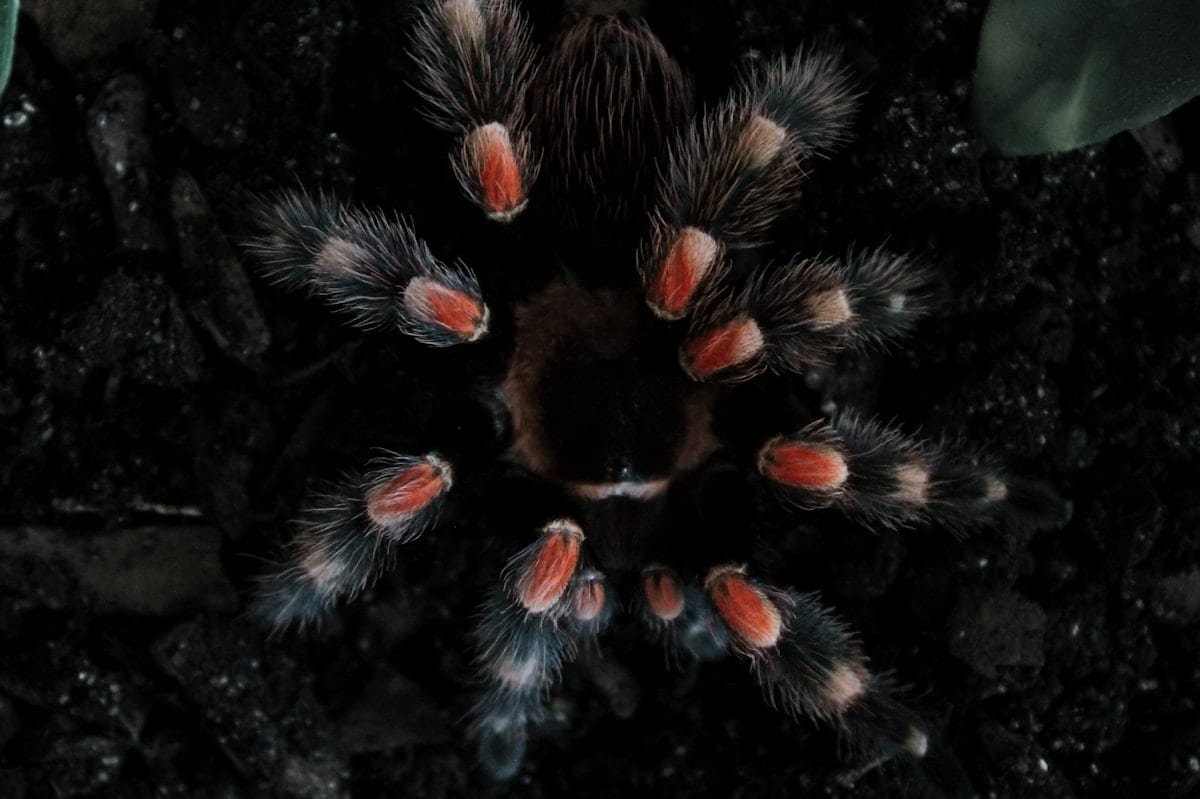
The species this applies to includes Brachypelma hamorii (Mexican red knee), Tliltocatl vagans (Mexican red rump), Grammostola pulchripes (Chaco golden knee), and most Theraphosidae genera from the Americas. The hairs are specialized and barbed, and once embedded in skin or mucous membranes, they’re difficult to remove.
Do not handle a tarantula near your face. Do not rub your eyes after handling. Wash your hands thoroughly after any contact with a T or its enclosure. Eye protection (safety glasses) is not overkill if you’re handling species known for hair-flicking.
Old World tarantulas (Poecilotheca regalis, Cyriopagopus sp., Heteroscodra maculata) do not have urticating hairs. However, they have venom that is medically more significant than most New World species and they are extremely fast. The handling recommendation for Old World species from the community and the American Tarantula Society is generally: don’t handle unless you know what you’re doing and understand the risk.
For the birthday photo session: a T can be photographed in the enclosure without handling. This produces excellent results and zero urticating hair risk. If guests are coming to see the birthday spider in person, brief them before they get near the enclosure: no touching, no reaching in, hands away from the face for the rest of the visit. Watching through the glass is the safe format for anyone who isn’t the primary keeper.
The Molt Photo: The Birthday Post the Community Actually Shares
The molt photo is the tarantula equivalent of the birthday photo. When your T molts, the shed exoskeleton (the exuvia) comes out as a complete, intact cast of the spider’s previous form. A photo of the spider next to the exuvia, positioned so both are clearly visible, is the shot.
Why it works. The comparison shows growth directly: the old exuvia is always noticeably smaller than the spider. For keepers documenting multiple molts, the series of exuvia photos over time tells the whole story of the spider’s growth.
Sexing from the molt. Adult female tarantulas have a spermatheca visible on the inner surface of the molt exuvia. This is how many keepers determine the sex of their Ts. If you’re uncertain of your T’s sex, the molt is the occasion to check. There are detailed guides on r/tarantulas and the ATS website for how to do this correctly.
Photography of the molt shot. Set the exuvia and the spider on a clean, contrasting surface. Natural light or a softbox. The exuvia is usually a rusty-tan color; the spider’s fresh coloring is often more vivid immediately after molt. Photograph from above at an angle that shows both clearly.
The community format. r/tarantulas, r/spiders, and the tarantula Facebook groups all have strong engagement on molt posts. Include: species name (correct taxonomy, not just common name), date of molt, approximate leg span before and after if you track it, and whether you were able to sex from the molt.
Enclosure Upgrades for the Birthday
New enclosure items are the meaningful gifts in T keeping.
A new hide or burrow structure. Most tarantulas use hides extensively. A new hide made from cork bark, a ceramic hide, or a appropriately sized PVC pipe gives the T a new structure to investigate and potentially adopt as its primary retreat.
Fresh substrate. The birthday is a good occasion to do a full substrate refresh if the enclosure needs it. Species requirements vary: burrowing species like Aphonopelma chalcodes need deep, loose substrate to create burrows. Arboreal species like Psalmopoeus irminia need vertical space and anchoring points. Research the specific requirements for your species.
A new decor piece. A piece of cork bark, a piece of driftwood, or a clean rock provides something new to explore. Ts investigate new items with their pedipalps and legs over the first few hours after introduction.
Community Vocabulary Check
The T community has its own shorthand. Using it correctly builds trust:
- T = tarantula (universal abbreviation)
- OBT = Orange Baboon Tarantula (Pterinochilus murinus). “OBT” is also community code for “Orange Bitey Thing,” which reflects the species’ defensive temperament. Mentioning the OBT by its proper common name without acknowledging its reputation as a high-strung defensive species would be a credibility miss.
- Slings = spiderlings (juveniles)
- AF/AM = adult female / adult male
- DKS = dyskinetic syndrome, a real and poorly understood health condition where affected Ts show coordination problems. Not curable. Know this exists.
- Exuvia = the shed exoskeleton from a molt
- Premolt = the period leading up to a molt when the T stops eating and may become less active
Not every day looks like progress, and that’s fine. Fossorial species especially can sit motionless in a burrow for a week with nothing wrong at all. Ts aren’t social, they don’t get bored the way a dog does, and they don’t need daily enrichment to stay healthy. If a T is eating on a normal schedule, molting when it’s supposed to, and holding a healthy abdomen, it’s fine. It’s just being a tarantula.
Tarantula Birthday Supplies
Tarantula birthdays: enclosure upgrades and live feeders:
- Cork Bark Hide for Tarantula, new hide as the birthday enclosure upgrade.
- Dubia Roach Feeder Insects, quality feeder roaches as the birthday treat.
Sources
- American Tarantula Society: ATS Home
- Smithsonian’s National Zoo: Tarantula
- ASPCA Animal Poison Control Center: Animal Poison Control
For the jumping spider community’s more handleable celebration: Jumping Spider Birthday Party Ideas
For the general exotic pet birthday framework: Pet Birthday Party Guide
- You
- Your pets
- Confirm