
Sulcata Tortoise Birthday Party Ideas: Celebrating the Herd's Giant
Sulcata tortoise birthday ideas from tortoise keepers: the birthday feast with Tortoise Trust-approved foods, outdoor grazing celebration, handling tips for a 60-pound tortoise, and how the sulcata community marks the occasion.
As an Amazon Associate we earn from qualifying purchases.
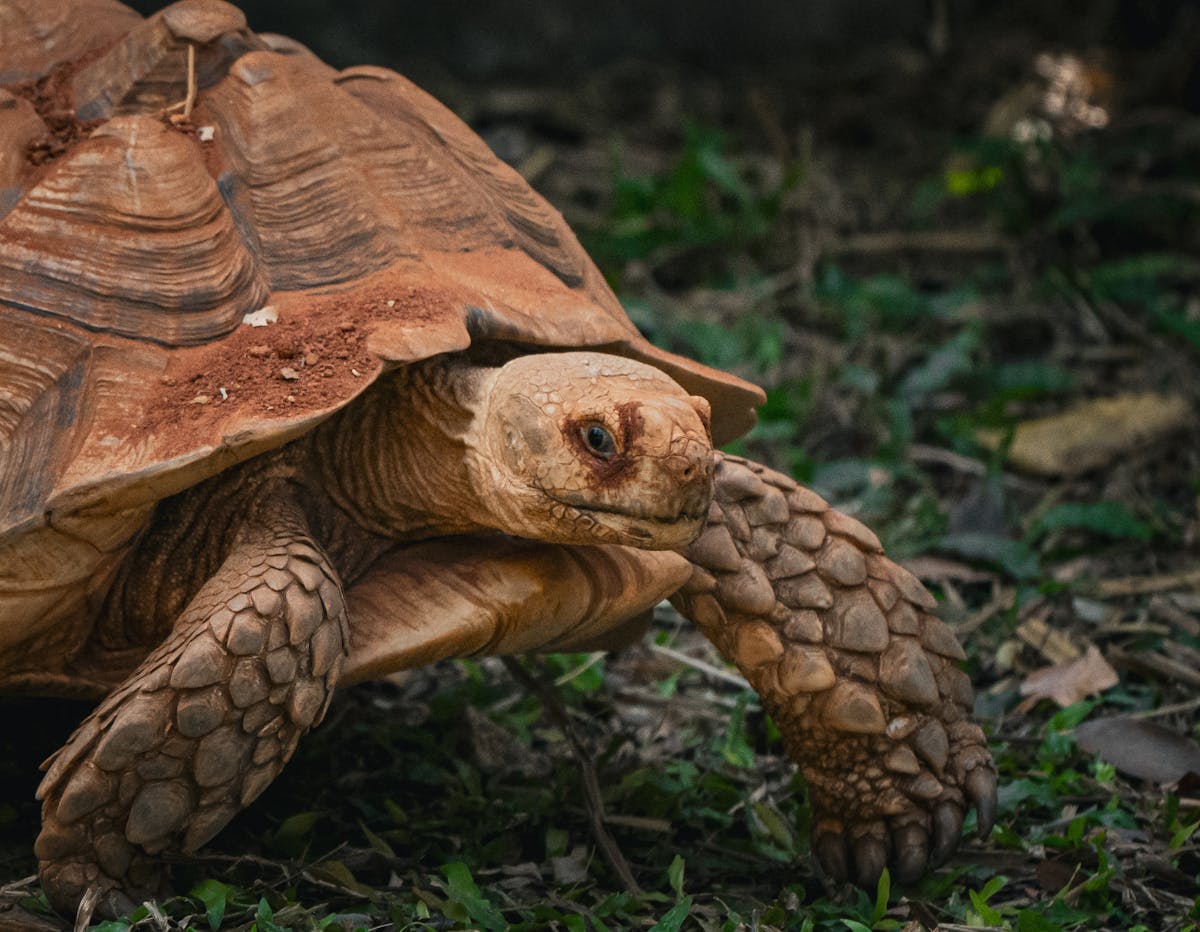
The sulcata tortoise birthday is an outdoor event. An adult sulcata (Centrochelys sulcata) can weigh 60 to 100+ pounds, can’t be comfortably brought inside, and doesn’t need to be. The birthday celebration is a sprawling grazing session in a secure outdoor space with a birthday spread of preferred weeds, a fresh hibiscus flower, some cucumber and squash for additional interest, and a soaking opportunity. Sulcatas grow for decades. The birthday is a genuine milestone for a species that can outlive its keeper.
The Birthday Feast: Sulcata-Safe Foods Only
The Tortoise Trust is the primary reference for sulcata nutrition, and their guidance is clear: sulcatas in the wild eat dry, fibrous grasses and weeds. The captive diet should approximate this. High-protein foods, fruit in significant quantities, and many common vegetables are not appropriate. Getting the diet wrong causes pyramiding of the shell and long-term health problems.
The birthday grazing session. The best birthday feast for a sulcata is a morning of supervised access to a safe outdoor space with appropriate forage. Grasses, dandelion (leaves, stems, and flowers), clover, plantain weed, and other common lawn weeds make up the ideal sulcata diet. If your outdoor space has these, the grazing session is the birthday.
Fresh hibiscus. Hibiscus leaves and flowers are a sulcata favorite and one of the more photogenic birthday treat options. Most keepers who have hibiscus in their yard report their sulcata making a beeline for it. It’s nutritionally appropriate and visually striking when the tortoise is eating a bright red hibiscus flower.
Prickly pear cactus. Opuntia pads (with thorns carefully removed) are excellent sulcata food. High moisture, appropriate fiber, and most sulcatas eat them enthusiastically. A fresh Opuntia pad is a genuine birthday treat.
Squash and zucchini. In moderate amounts, these are acceptable additions to the birthday spread. High moisture content means they shouldn’t be the staple, but as a birthday supplement they’re fine.
Leafy greens. Collard greens, mustard greens, dandelion greens. Use these as a supplement to the grazing, not the entire meal.
What to absolutely avoid. The Tortoise Trust explicitly identifies the following as problematic: high-protein foods (legumes, beans, commercial tortoise diets with high protein) cause pyramiding. High-oxalate foods (spinach, beet greens, Swiss chard) cause calcium binding and kidney stones with regular consumption. Fruit in significant quantities is inappropriate for a species adapted to a dry, low-sugar diet. Iceberg lettuce is nutritionally empty. Bananas are too high in sugar and phosphorus. Avocado is toxic.
The birthday feast should lean into the natural diet. Weeds, grasses, hibiscus, and prickly pear. This is what a sulcata birthday looks like in practice.
No fireflies. Wild-caught insects and bugs of any kind should not be fed to any tortoise. Fireflies contain bufadienolides that are lethal to many reptiles, and wild insects may carry parasites.
If your sulcata is already pyramiding, the birthday feast won’t make it worse. Pyramiding, the raised, pyramid-shaped scutes instead of a smooth dome, comes from diet and humidity problems during the growth years, and once an adult tortoise has it, the shape is permanent. A proper Tortoise Trust-approved birthday spread doesn’t reverse existing pyramiding, but it’s a fine excuse to check the ongoing diet against those guidelines and make sure nothing’s still going wrong.
The Scale of the Celebration
Sulcatas are not small animals at birthday time unless they’re very young. The growth rate is significant: a hatchling sulcata (roughly the size of a golf ball) can reach 10 pounds in 2 to 3 years, 50+ pounds by age 10, and 100+ pounds as an adult. A 10-year birthday celebration is a very different event from a hatchling’s first birthday.
Hatchling birthday (year 1). More intimate. A small birthday spread in the indoor enclosure (many keepers raise hatchlings inside for the first year in cooler climates). Hibiscus, dandelion greens, a pinch of clover. A warm soak in shallow water. Photos showing the tiny tortoise next to something for scale.
Juvenile birthday (years 2-5). Starting to look like a real tortoise. Outdoor celebration if conditions allow. The comparison photo from year 1 to now is the community’s most popular content format.
Adult birthday (year 10+). This is a major outdoor grazing event for a large animal. The birthday spread can be a genuine arrangement: a pile of hibiscus flowers, an Opuntia pad, a pile of dandelion greens. The tortoise walks through it at sulcata pace, which is deliberate and unhurried. Film it.
Enclosure and Outdoor Conditions
Sulcatas require significant heat: a basking spot of 95 to 100°F in their enclosure, ambient temperatures of 80 to 90°F during the day. In cooler climates, outdoor access is weather-dependent. The birthday celebration should happen when outdoor temperatures are appropriate for the animal, not forced into an unsuitable weather day.
Adults in warm climates (Southern US, Mediterranean regions) often live outdoors year-round. For these animals, the outdoor birthday grazing is straightforward. For sulcatas in cooler climates with indoor winter setups, time the birthday celebration for a warm day.
Sulcatas dig. They dig with purpose, they dig deeply, and they dig frequently. A birthday outdoor area needs a secure perimeter: concrete barriers buried several inches into the ground, not just wooden fencing sitting on the surface. This is a containment reality, not just a birthday concern.
Soaking is worth building into the birthday routine too. A warm, not hot, soak in shallow water for 20 to 30 minutes a few times a week helps with hydration and elimination. It’s a real health practice year-round, and the birthday is just a good excuse to make time for it. Keep the water warm to the touch and shallow enough that the tortoise stands with its head comfortably above the surface.
Photography for the Sulcata Birthday
Large tortoises are surprisingly photogenic. A few approaches that work well:
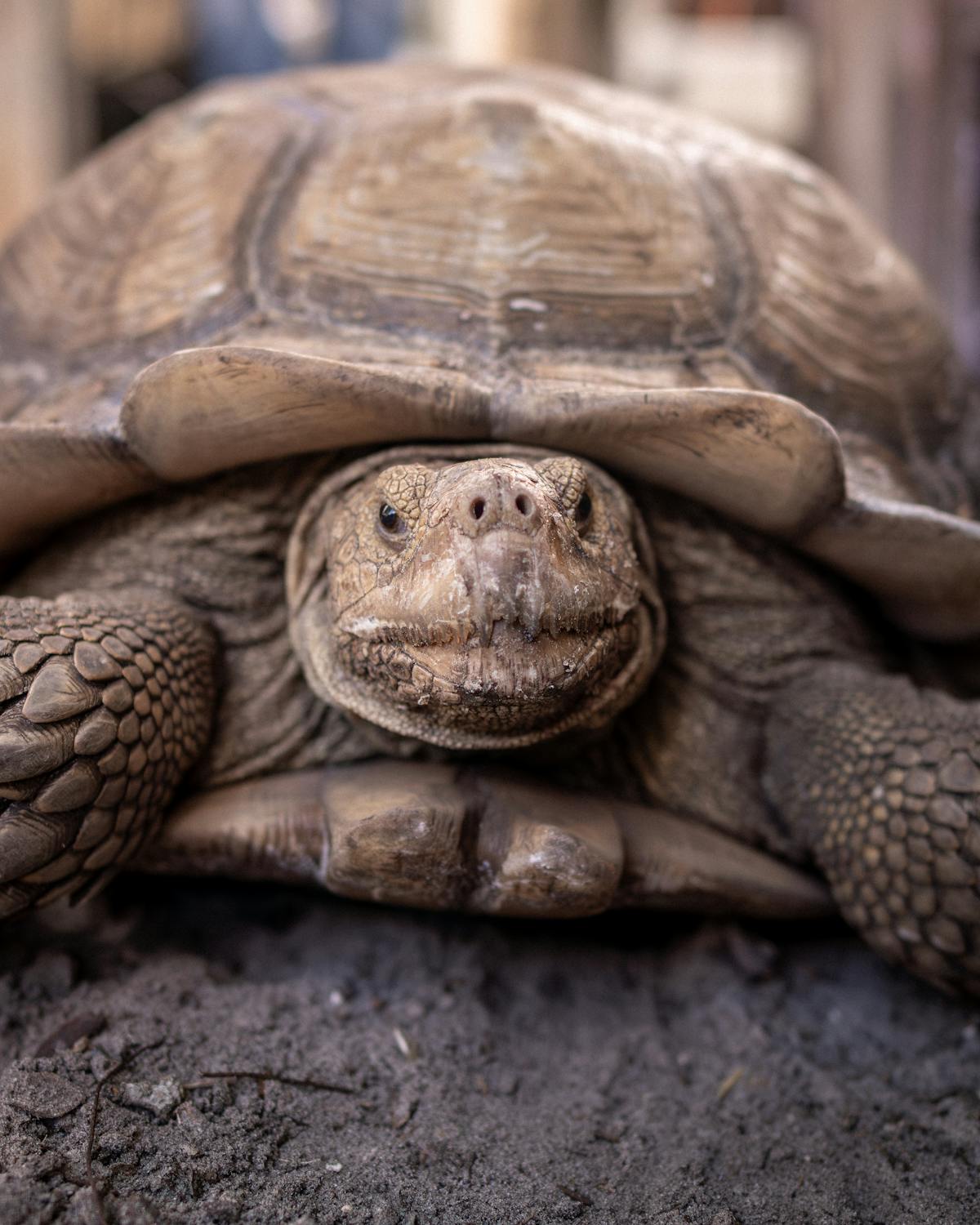
Ground level. Get down to the tortoise’s level. A face-on shot of a sulcata looking directly at you, taken from ground level, is one of the better tortoise photos available. The ancient, deliberate expression reads clearly.
Shell from above. The scute pattern of a sulcata shell photographed from directly above, in good natural light, shows the concentric rings of growth and the texture clearly. This is the documentary shot.
The eating video. Set up a clear food item (hibiscus flower, Opuntia pad) in front of the camera and let the sulcata find and eat it. The approach, the neck extension, and the deliberate chewing are all engaging to watch. The community loves slow, unhurried sulcata eating footage.
Year-over-year comparison. This is the sulcata birthday photo that gets shared most. The hatchling at year 1 next to the same tortoise at year 5. The scale change is dramatic and visually impressive.
Community platforms. r/tortoise, r/herpetology, and dedicated sulcata Facebook groups all have active birthday communities. The sulcata community is particularly concerned with correct diet (because the incorrect diet advice circulating online causes real harm to these animals) and a birthday post with appropriate food in the frame signals that the keeper knows what they’re doing.
How Long Do Sulcatas Live?
Sulcata tortoises can live 70 to 100+ years in captivity with proper care. This is not a figure to read lightly. A sulcata adopted as a hatchling by a 30-year-old person will outlive that person in most scenarios. The birthday commitment is multigenerational. Many keepers make legal provisions for their sulcata’s care in estate planning.
Some keepers get partway into the growth curve and realize they underestimated what they signed up for: the eventual size, the weight, the outdoor space. That’s common enough that sulcata rescue organizations exist specifically for it. If a birthday milestone is what’s prompting that realization for you, the Tortoise Trust website has rehoming guidance, and using it is the responsible move, not a failure.
Party Supplies
- Tortoise Grazing Grass and Weed Seed Mix, to grow the dry, fibrous forage the Tortoise Trust recommends as the sulcata diet base.
- High Wattage Basking Heat Lamp for Tortoises, for the 95 to 100°F basking spot sulcatas need.
- Large Shallow Tortoise Soaking Tub, for the warm birthday soak.
Sources
- Tortoise Trust: Feeding Tortoises
- Tortoise Trust: Sulcata Care
- ASPCA Animal Poison Control: People Foods to Avoid Feeding Your Pets
For other tortoise celebrations: Russian Tortoise Birthday Party Ideas
For the general exotic birthday framework: Pet Birthday Party Guide
- You
- Your pets
- Confirm