
Puppy's First Birthday: How to Throw a 1st Birthday Party Your Dog Will Immediately Destroy
A puppy's first birthday party guide: what actually changes at 1 year, the smash cake setup, the photo you need, and how to celebrate the chaos of year one.
As an Amazon Associate we earn from qualifying purchases.
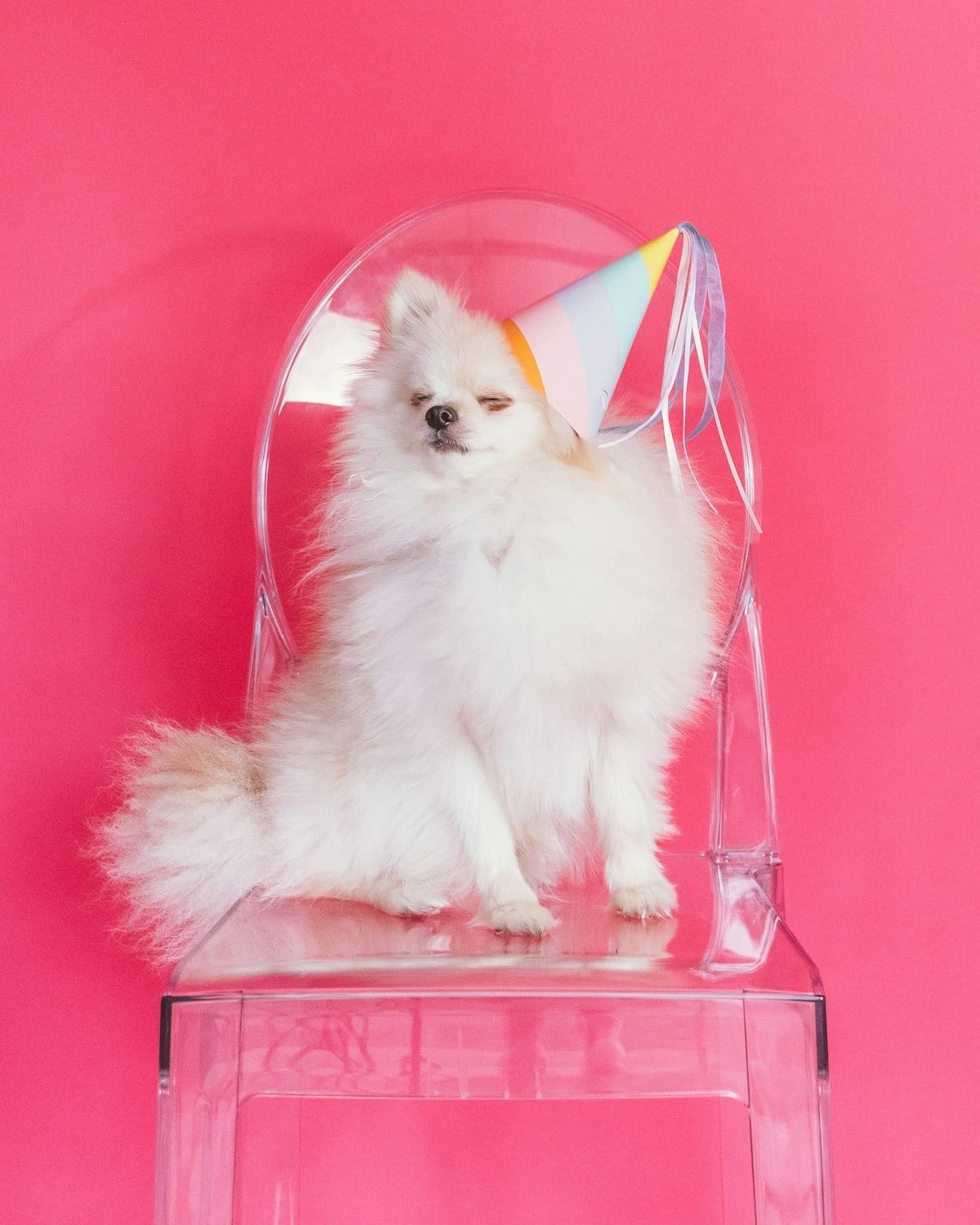
A puppy’s first birthday is the one you go all-out on, because they won’t remember it but you will. The 1-year mark matters: your puppy is officially a dog, has (mostly) survived the chaos of puppyhood, and deserves a party that acknowledges the journey. Here’s how to actually do it.
What Actually Changes at 1 Year
The 12-month mark is the line where a medium-sized dog crosses from “puppy” to “adult dog” in most veterinary and developmental frameworks. The American Kennel Club notes that the transition timing varies significantly by breed size. Small breeds (under 20 pounds) often reach adulthood as early as 9-10 months. Large breeds like Labradors and German Shepherds may not hit full physical maturity until 18-24 months. Giant breeds, think Great Danes and Saint Bernards, take even longer. But the 1-year birthday is the universal social milestone regardless of breed, because it’s the first number that sounds like an actual year.
Here’s what’s really different at 12 months, practically speaking.
Energy levels: A 1-year-old dog has high energy but slightly better impulse control than a 6-month-old. Slightly. The difference between a 6-month-old Lab and a 12-month-old Lab is roughly the difference between a category-4 hurricane and a category-3. The winds are still coming. They’re just marginally more predictable.
The food transition: This is the one that actually matters medically. Puppy food is formulated with higher protein levels, more calcium and phosphorus, and more calories per cup to support rapid growth. Adult food is calibrated for maintenance. VCA Hospitals advises transitioning medium-sized breeds around 12 months, large breeds at 12-18 months, and small breeds as early as 9-12 months, phasing the change over 7-10 days: roughly 25% adult food mixed into 75% puppy food for the first few days, then 50/50, then 75% adult to 25% puppy, then fully switched. Going cold turkey instead can cause digestive upset, and staying on puppy food past the appropriate window can cause excess weight gain and calcium-related issues in larger breeds. The birthday is a reasonable milestone to start the conversation with your vet.
Training retention: By 12 months, most dogs have a real foundation of commands. “Sit” is automatic. “Stay” works about 70% of the time. “Leave it” is there when the distraction isn’t a squirrel. The party is actually going to be more manageable than it would have been at 8 months.
Emotional attachment: Your dog knows who you are now in a deep way they didn’t at 3 months. By 12 months, your dog has developed their full attachment to you, your routines, your specific sounds and smells. When you make a big deal of the day, they’re going to feel that energy, even if they don’t understand why the cake is shaped like a bone.
The Milestone Angle (Why This One Is Worth Going Big)
Here’s the honest case for going all-out on the first birthday: you survived puppyhood.
Whatever your year looked like. The 3 AM crying. The chewed baseboards. The “I definitely told the dog to sit before he jumped on your grandmother” moment. The accidents. The first time they slept through the night. The first time they came when called. The moment you realized they had a personality, a specific one, just theirs.
That year is over. You’re both still here. Celebrate it.
The first birthday party for a dog is really a party for the dog-and-human team. The dog gets the cake and the photo. You get to look at the photo every year and remember the year that somehow went by fast even though it also contained an eternity of 5 AM wake-ups and a destroyed throw pillow.
The Smash Cake Setup
The smash cake moment is the one photo op that works for a puppy’s first birthday. Every other decoration, theme, or activity is secondary.
Here’s what you need for the smash cake setup:
A single-layer dog-safe cake, about 6 inches in diameter, works for a puppy the same way it works for an adult dog. The standard peanut butter, banana, and whole wheat flour formula is fine for any dog over 8 weeks old, plain Greek yogurt and cream cheese frosting included, just double-check any extra add-ins are puppy-safe specifically. The dog birthday cake recipe has three versions at different effort levels. The simplest takes 15 minutes and still photographs perfectly. Spread plain cream cheese or Greek yogurt on top. Put a dog biscuit or a carrot stick in the center as a “candle.”
A clean surface at dog level. A plastic cutting board on the floor, a disposable tablecloth, or just bare tile. Something that makes cleanup easy, because this is going to be messy.
A backdrop. A plain wall works. A piece of foam board in a solid color from a craft store costs $3 and photographs a hundred times better than a busy background. Prop it against a wall behind the cake.
One person to hold the camera. One person to handle the dog.
The handler puts the cake down, the dog investigates. You have about a 10-second window of sniffing-before-eating where the dog is photogenic. Then they eat. Let them. The full demolition is the second photo op. Film it if you can.
Total setup time: 10 minutes. Total cleanup time: longer than that.
First Birthday Supplies
You don’t need much. Here’s the short list, with real prices.
One planning note before the list: set up as late as possible. Puppies destroy decorations before parties start as reliably as they destroy anything else left within reach. Hang banners high, keep balloons in human hands only (foil balloons at dog height become chew toys), and keep anything else destructible out of the room until the moment you actually need it for photos. Some decorations are single-use by design. Budget for it.
The hat: A dog birthday hat pack on Amazon runs $8-15 for a set of 6-12. You’re using it for one photo. Get the elastic chin strap kind, not the tie-string kind. Elastic stays put for 20-30 seconds. Tie strings require two people and still slip. The hat is going to look great in the photo and come off immediately after. That’s the deal you’re making.
The banner: A “Happy Birthday” fabric banner, $10-18 on Amazon. Hang it at human height behind the smash cake setup. It’s in every photo. Reusable for years two through ten.
A number balloon: A foil “1” balloon, gold or any color that matches your theme. $5-8. Hold it behind or next to the dog for the posed photo. Don’t let it float to the floor; foil balloons at dog height become chew toys.
The smash cake: Homemade with the recipe linked above costs about $8 in ingredients. A purchased dog cake from Three Dog Bakery or a local pet bakery runs $15-35. Either is fine.
Bandana: A birthday bandana for $8-12 is the better alternative to the hat if your dog is a confirmed hat-refuser. Slides over the collar or ties loosely around the neck. Dogs wear it without noticing. You get the “dressed up” look without the wrestling match.
For a full breakdown of what to buy and what’s not worth it, the dog party supplies guide covers every category.
Inviting Other Dogs: The Introduction Protocol
Inviting other dogs to a puppy’s first birthday is fun in theory and a dog trainer’s stress test in practice. Here’s how to make it work.
Keep the guest list to 3-4 dogs maximum for a first party. Dogs who already know each other are the ideal invite list. If you’re mixing dogs who haven’t met, do the introductions outside the party space first. Neutral territory, leashes on, let them sniff. Move into the party space together only after they’re calm.
The biggest risk at a multi-dog birthday party is food competition. When you put the smash cake down, every dog in the room is going to want it. The birthday dog gets first access. Other dogs should be held or redirected during the cake moment. After the birthday dog has had a good portion, you can let others near, or give each dog their own smaller treat at the same time.
Leashes available, even indoors. Some dogs do better on leash for the first 20 minutes of a new environment. Don’t insist every dog run free. Let each dog find their comfort level.
The complete pet birthday party guide covers the multi-dog party logistics more fully, including how to set up the space for dogs who don’t know each other.
The One Photo You Need
You’re going to take 200 photos. One of them is going to be the birthday photo. Here’s how to make sure you actually get it.
Use the treat-above-the-lens trick. Whatever camera you’re using, have someone hold a high-value treat (a piece of chicken, a piece of cheese, something your dog will visibly focus on) directly above the camera lens. Your dog looks at the treat, the camera captures your dog’s face looking directly at the lens. Every time. Without this, you get photos of the back of a dog’s head.
Shoot in burst mode if you’re using a phone. Tap and hold the shutter button. You’ll get 10-15 frames per second. Review them after and pick the three best. Delete the other 197.
Natural light, if possible. A window. An open door. Morning light is warmer and softer than midday. You don’t need a ring light or any photo equipment. You need a window and the treat trick.
Get the smash cake photo on video, not just photo. The arc of a dog discovering they can eat the cake is four seconds of perfect content. Take the photos first, then step back and film the eating.
Check the dog birthday party decorations guide for more on setting up a backdrop and photo area that works with a puppy’s energy level.
Budget 60 to 90 minutes total for the whole event. Puppies tire faster than they let on, even mid-chaos. The arc usually runs: arrival and initial chaos, the smash cake moment, the photo session, a stretch of play, then a hard stop where the puppy just stops. Let that happen. Ninety minutes covers the whole thing without dragging past the point where a tired puppy turns cranky.
Party Supplies Worth Having
These are the products that actually work for a dog birthday party. All ship Prime:
- COMSUN Dog Birthday Party Supplies Set, bandana, hat, banner, numbers, and cake topper in one box. Solid value.
- Puppy Cake Complete Birthday Cake Kit, peanut butter flavor with silicone pan and candle. Makes a full double-layer cake or bone shapes.
- Zohokie Dog Birthday Party Decorations, full pink set with hat, bandana, banner, tutu, and balloons. The blue version is here.
- Bocce’s Bakery Birthday Cake Treats, wheat-free, peanut butter vanilla biscuits. Works as the treat bag filler or direct smash cake alternative.
- Zuke’s Mini Naturals Training Treats, small enough for party games, soft enough for older dogs.
Sources
- VCA Hospitals: Nutrition: General Feeding Guidelines for Dogs
- American Kennel Club: When Does a Puppy Become a Dog?
- You
- Your pets
- Confirm