
Pacman Frog Birthday Party Ideas: Celebrating Your Ornate Horned Frog
Pacman frog birthday ideas from keepers who know the species: the birthday feast with earthworms and roaches, the photo session that shows off that wide mouth, and why Pacman frog celebrations are more interesting than they look.
As an Amazon Associate we earn from qualifying purchases.
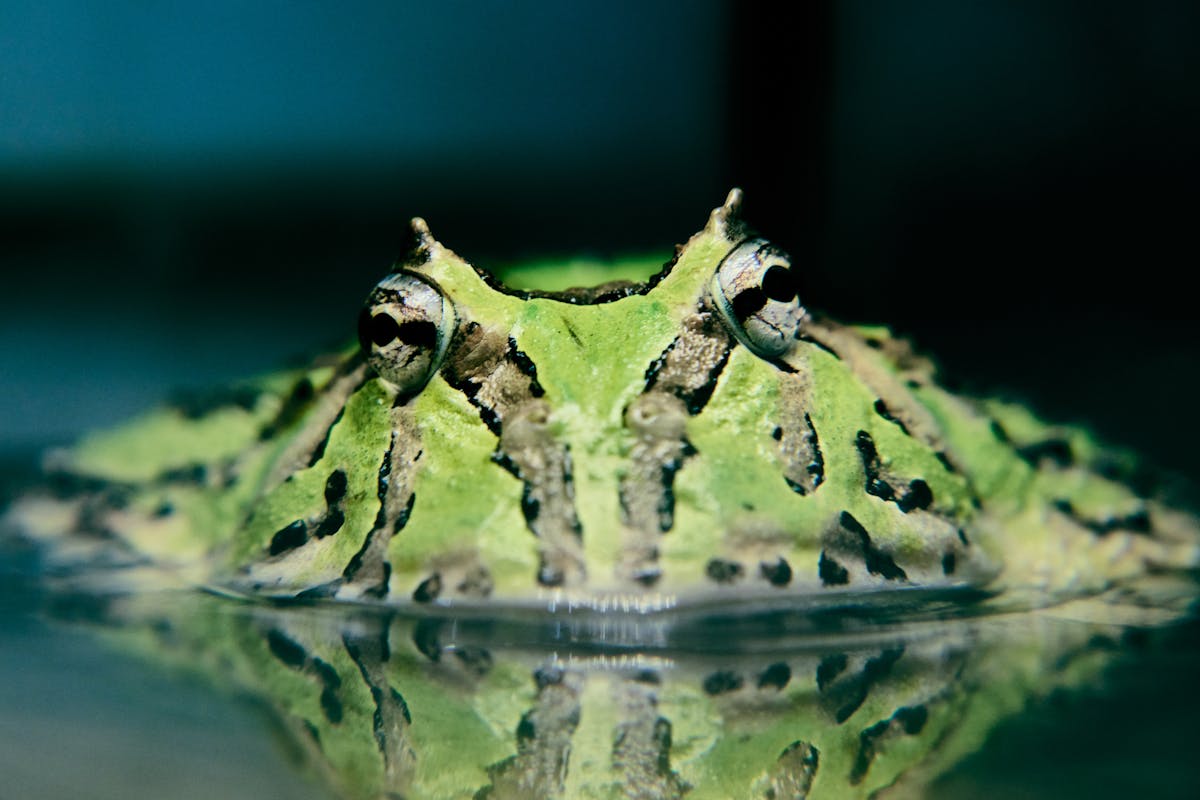
Pacman frog birthday celebrations are honest and simple: a large prey item, maybe two, and a photo session while the frog is positioned in a way that shows off its proportions. Pacman frogs (Ceratophrys species, primarily the ornate horned frog C. ornata and the Cranwell’s C. cranwelli) spend most of their lives sitting in one spot, occasionally eating whatever wanders close. The birthday amplifies this. You offer a premium meal, the frog eats it with alarming speed and efficiency, and you photograph the result. There’s a reason this species has a dedicated keeping community: the eating behavior alone is worth celebrating.
The Birthday Feast
Pacman frogs are ambush predators. They sit, wait, and eat whatever moves into range. In captivity, the diet is primarily earthworms, feeder insects, and pinky mice for adults. The birthday feast is a higher-quantity or higher-quality version of the usual feeding.
Earthworms. The community’s most-recommended staple feeder for Pacman frogs. Nightcrawlers from a bait shop (pesticide-free, organic sourced) or red wigglers are both appropriate. Most Pacman frogs eat earthworms eagerly and they’re nutritionally excellent. The birthday feast can be two or three earthworms offered in sequence rather than the usual one.
Dubia roaches. Adult Pacman frogs can take appropriately sized dubia roaches with enthusiasm. The roach moving near the frog triggers the feeding response, which is very fast for an animal that looks stationary. Film it. The strike is impressive for a frog that otherwise seems disinterested in everything.
Hornworms. A hornworm offered to a Pacman frog produces excellent feeding content because the worm is large, moves actively, and the frog’s response is immediate. Two or three hornworms at birthday time is a genuine treat feeding.
Pinky mice for adults. Adult Pacman frogs can take pinky mice. Thawed and appropriately warmed, offered with feeding tongs. Not every keeper feeds pinkies regularly, but for a birthday occasion they’re an appropriate high-protein treat for a large adult Pacman. Juveniles should not have pinkies.
They bite, and they mean it. Pacman frogs have odontoid processes, tooth-like projections on the lower jaw, backing up a strong bite reflex built for ambush hunting. An adult bite is painful and startling, not medically serious on a healthy adult, but there’s no reason to find out. Keep fingers away from the mouth at feeding time and use tongs for everything, not just the pinkies.
Waxworms. High fat and treat-only, the same rule as with other reptiles and amphibians. A couple for the birthday is fine.
What not to feed. Wild-caught insects carry pesticide and parasite risk. Large prey that’s wider than the space between the frog’s eyes is an impaction risk. Anything with added salt, preservatives, or chemicals. Per the ASPCA, many human foods that seem innocuous are toxic to amphibians.
Frequency note. Pacman frogs do not eat daily. Adult frogs typically eat every 7 to 10 days. The birthday should align with the natural feeding schedule. Don’t force extra feedings in quick succession.
Humidity, Temperature, and Substrate
Pacman frogs require consistently moist substrate. They burrow into damp coco fiber, eco earth, or a similar substrate and spend most of their time partially or fully buried. The birthday setup should maintain:
Temperature: 75 to 82°F ambient, with a warm side around 80°F. ReptiFiles’ Pacman frog care guide recommends maintaining proper temperature year-round, including celebration days.
Humidity: 50 to 80%. The substrate should be moist but not waterlogged. A surface water dish or a moisture-retaining substrate like coco fiber maintains this.
No handling for extended periods. Pacman frogs have semi-permeable skin like other amphibians. Handle with clean, damp hands only. Oils and soap residue on dry hands can cause stress and skin irritation. Keep handling brief and only if the frog is calm.
A frog that hisses and puffs up the moment you reach for it is bluffing, not sick, but it’s also telling you plainly that it doesn’t want to be picked up. If yours does this consistently, respect it: limit contact to health checks and enclosure maintenance, and skip the handling shot for the birthday photos.
An estivating frog isn’t sick or sad, it’s dormant. In response to dryness or cooler temperatures, a Pacman frog can enter estivation: it forms a cocoon out of shed skin and goes essentially inactive. Don’t force-feed it or try to wake it up. Fix the humidity if that’s the actual cause (it shouldn’t be estivating under correct conditions) and let it come out on its own. The birthday celebration just waits until it’s active again.
The Birthday Photo Session
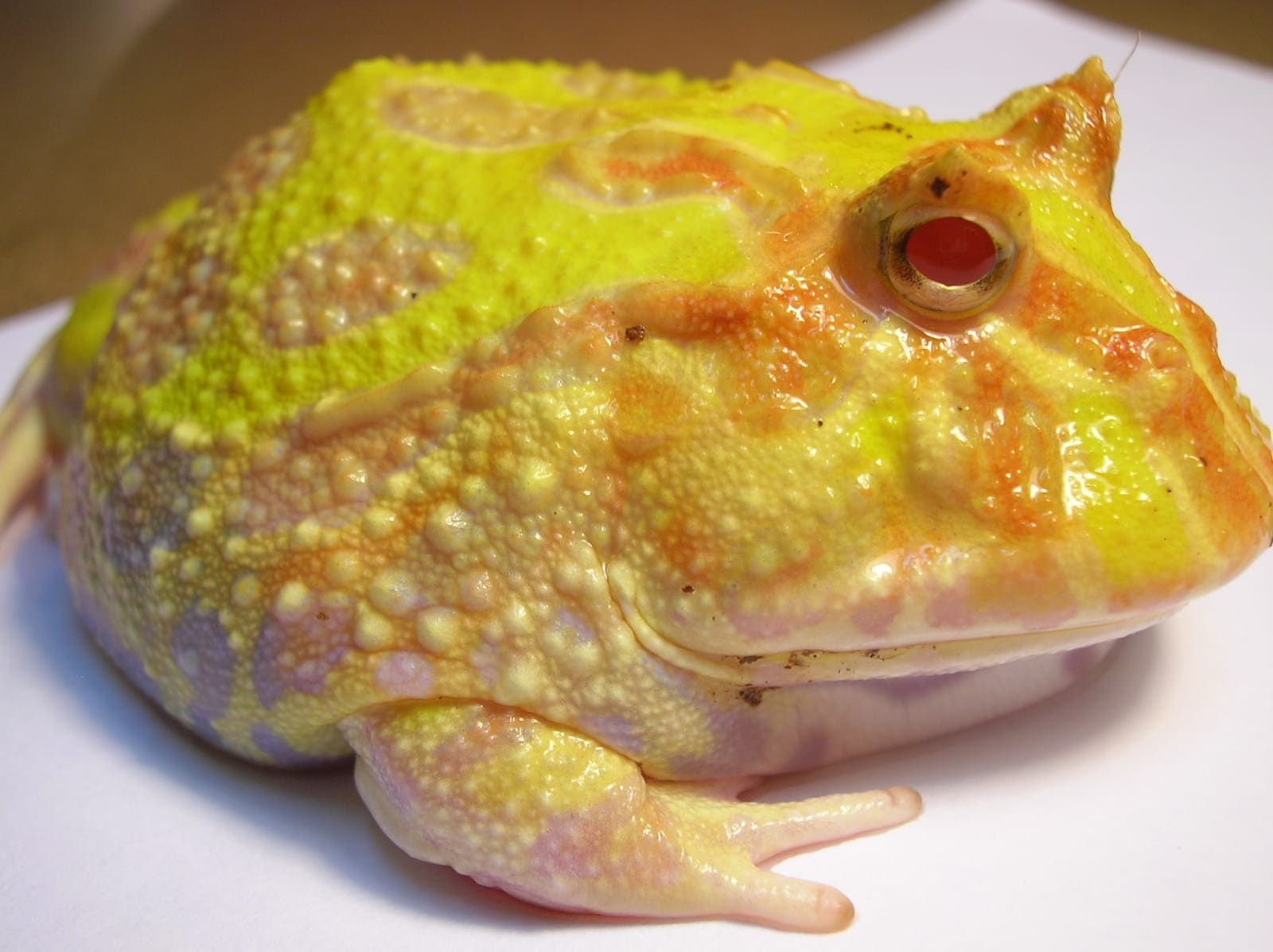
Pacman frogs are one of the more photogenic amphibians in the hobby because of their shape. The wide, round body, the enormous mouth relative to the body size, and the bright green or brown coloring make for distinctive photos.
The face-on shot. Position your Pacman frog on a clean, damp surface (a smooth piece of slate, a large leaf, a section of moist paper towel on a flat surface) and photograph from directly in front at frog level. The face-on view shows the proportions clearly: an enormous mouth on a body that’s nearly as wide as it is long.
The eating video. Set up a camera before offering the birthday meal. Offer the earthworm or roach within camera range and let the frog hunt. The strike is very fast but the approach sequence, the fixation on the prey, and the swallowing aftermath are all worth capturing.
The “just their face” close-up. At macro distance, a Pacman frog face shows surprising detail: the golden eye with its distinctive pupil pattern, the textured skin, and if the mouth is slightly open, the interior. These close-up shots are the ones the community shares most.
Size comparison. A Pacman frog next to a standard object (a coin, a hand) for scale. Many new keepers don’t realize how wide these frogs get relative to their height. An adult ornate Pacman frog in the hand for a scale photo is a consistently popular format.
How Long Do Pacman Frogs Live?
With good care, Pacman frogs live 7 to 15 years in captivity. Some individuals have reportedly reached 15+ years. A frog purchased as a juvenile can easily reach 10 years in good conditions. The birthday is a genuine milestone.
Community and Hatch Day
Pacman frogs from breeders sometimes come with hatch dates. The community celebrates these as the true birthday. From rescues or pet stores, the gotcha day is the functional date.
The Pacman frog community on Reddit (r/PacmanFrog), dedicated Facebook groups, and Instagram is active and welcoming. Birthday content that does well: the eating video (almost universally celebrated), the size comparison photo, and an honest note about the frog’s personality (“she’s eaten every earthworm I’ve ever offered and hissed at me once in six years”).
Party Supplies
- Coco Fiber Reptile Substrate, the moisture-retaining burrowing substrate Pacman frogs need year-round, birthday included.
- Reptile Feeding Tongs, for safely offering the birthday earthworms, roaches, or pinky mice.
- Amphibian Calcium Powder Supplement, dusted onto feeders per the birthday feast plan.
Sources
- ReptiFiles: Pacman Frog Care Guide
- ASPCA Animal Poison Control Center: Animal Poison Control
- Caudata.org: Amphibian Care Resources
For the axolotl amphibian celebration: Axolotl Birthday Party Ideas
For the general exotic birthday framework: Pet Birthday Party Guide
- You
- Your pets
- Confirm