Multi-Dog Household Birthday: How to Celebrate One Dog Without Starting a Fight
How to throw a birthday party in a multi-dog household: celebrating the birthday dog individually, managing treat distribution fairly, reducing resource-guarding tension, and getting the photo with the right dog in it.
As an Amazon Associate we earn from qualifying purchases.
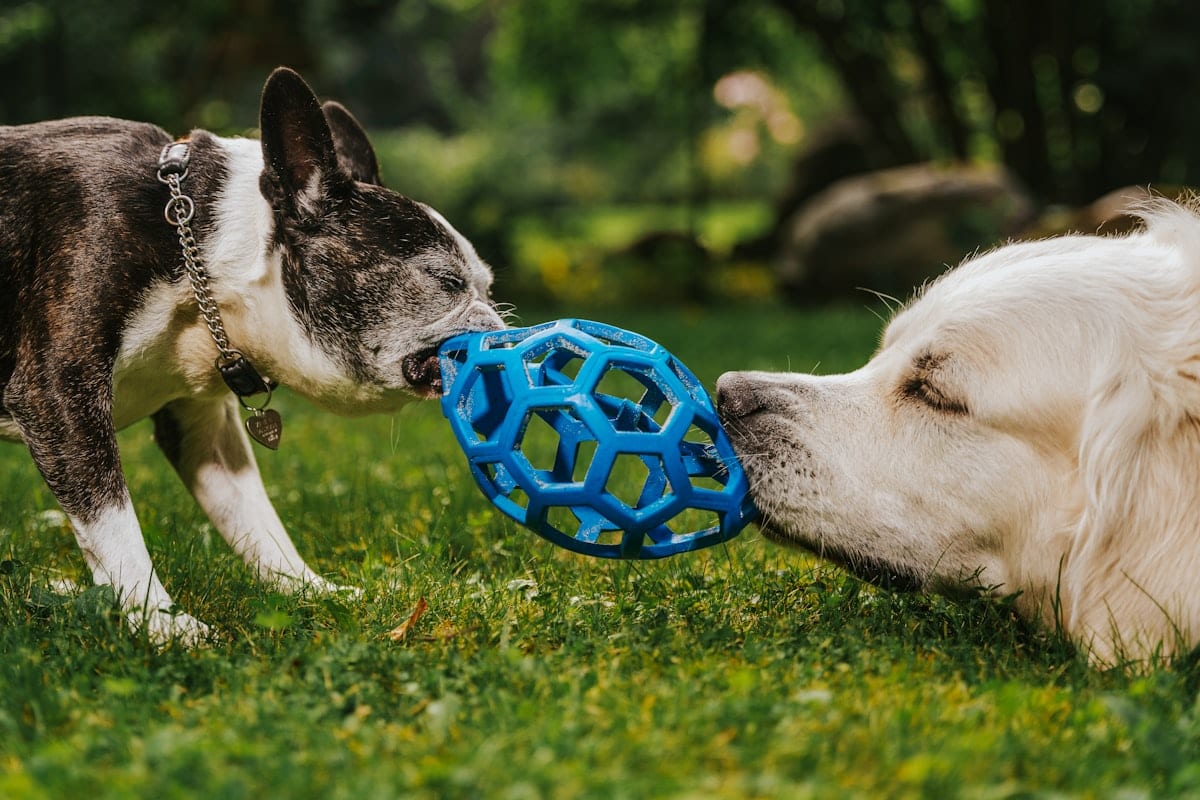
Multi-dog households create a specific birthday problem: how do you celebrate the birthday dog as an individual without the other dogs either feeling excluded or sparking resource-guarding conflict over the birthday cake?
The answer is structured separation during the food portion and intentional individual attention before and after. The other dogs get something good at the same time in separate spaces, not because you’re obligated to throw them a party, but because managing the dynamics is easier than managing the fallout from one dog eating a birthday cake while two others watch.
The Core Approach: Parallel Treats, Separated Spaces
The most reliable way to handle the birthday meal in a multi-dog household:
- The birthday dog gets the smash cake or special birthday treat in a separate room, crate, or outdoor space, wherever they normally eat without competition.
- Each other dog gets a high-value treat simultaneously in their own separate space, a frozen Kong, a chew, a puzzle feeder, something that occupies them for the duration of the birthday dog’s meal.
- Everyone comes back together after the food is done.
This isn’t about fairness in the birthday sense. It’s about preventing the situation where one dog finishes their treat and immediately wants the other dog’s. That scenario ends parties badly.
What “separate” means depends on your dogs:
- Dogs with zero food issues and solid leave-it training: a couple meters apart with you actively supervising may work fine.
- Dogs with any history of resource guarding around food: different rooms, doors closed.
- Don’t experiment with new distance boundaries on a birthday when everyone is excited and high-value food is present. Use whatever arrangement you know works.
The Birthday Photo with the Right Dog in Frame
Getting a clean birthday photo in a multi-dog household requires one person per dog during the shot, or physical separation.
Option 1: Separate the other dogs during the photo setup. Put them in another room, in the yard, or in their crates for the 5–10 minutes it takes to get the birthday photo. No one is punished; they just aren’t present. This is the cleanest solution.
Option 2: One handler per dog. If you want a photo with all dogs and the birthday setup, you need one person holding each non-birthday dog on a leash with a treat, positioned in frame but not at the cake. The birthday dog is in front of the cake. Everyone is held. Someone else shoots. You have about 90 seconds before someone breaks position. Shoot in burst.
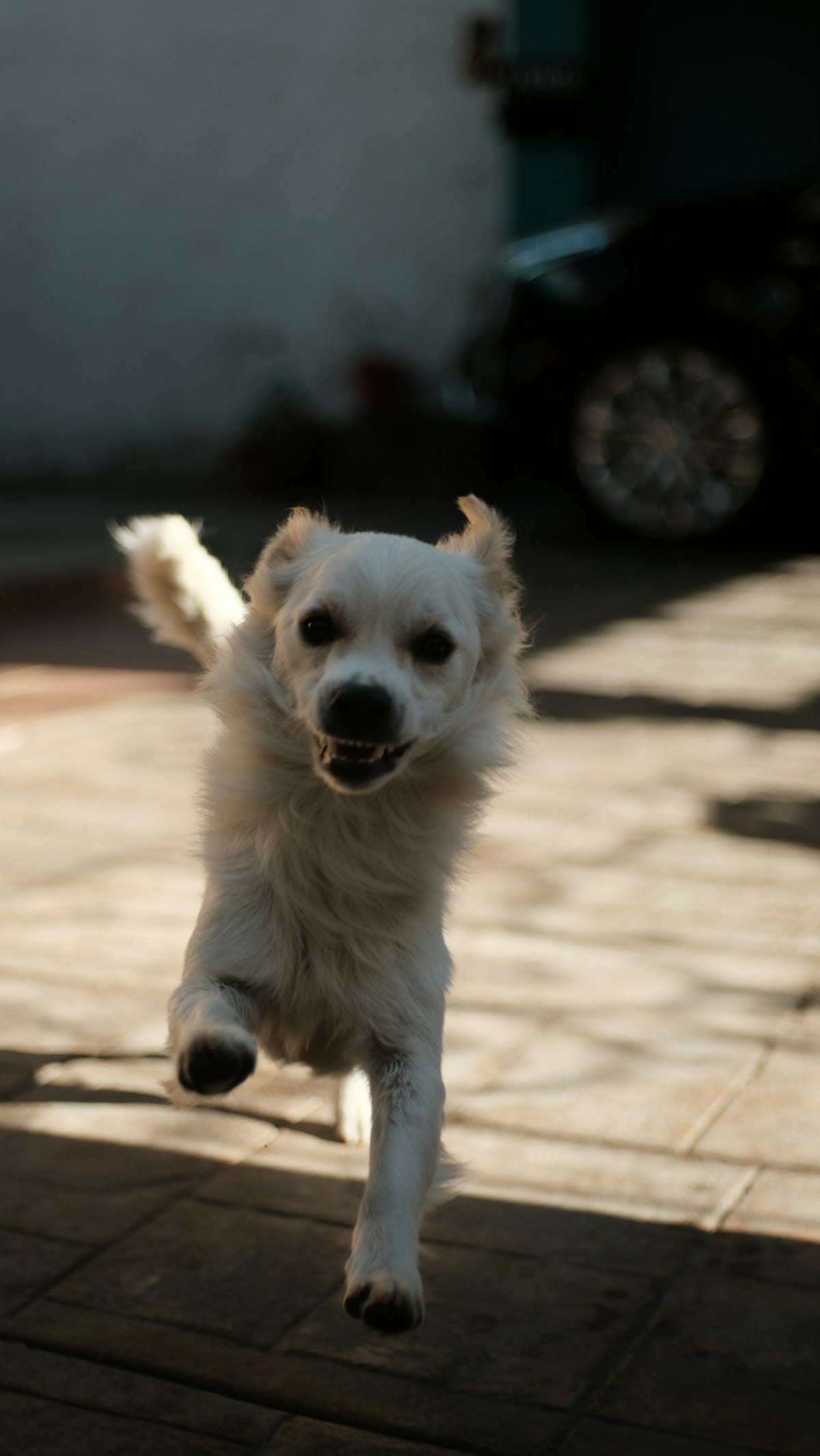
Option 3: Lean into it. A photo of the birthday dog wearing the birthday hat surrounded by chaos, the other dog trying to eat the cake, blurred dog tail in frame, birthday dog looking directly at the camera with profound dignity, is also a good photo. The chaos is honest.
Managing Different Birthday Dates
If your dogs have different birthdays, celebrate them separately. Each dog gets their own birthday day, their own smash cake, their own photo. The other dog gets a regular good treat while the birthday is happening (separate spaces). This is the right approach, it gives each dog individual attention rather than shared celebration where the dogs are competing for the same moment.
If you got your dogs from situations where you don’t know exact birthdays, pick dates and stick with them. The date is for you, not them. What they care about is the treat and the attention.
When Birthdays Overlap
If your dogs were born close together or you adopted multiple dogs at the same time with the same unknown history:
Joint birthday parties work when:
- Your dogs have no food-guarding history with each other
- You can serve equal portions simultaneously from separate bowls
- Both dogs can eat calmly without monitoring the other’s bowl
Joint birthday parties don’t work when:
- Either dog has ever guarded food from the other
- One dog eats faster than the other and moves toward the slower dog’s bowl when done
- Either dog gets over-excited around food in ways that affect their behavior
When in doubt, separate the food portion. Have the party together (enrichment, toys, play) and separate the eating. That’s a working combination.
The Multi-Dog Smash Cake Setup
If you go joint: two identical smash cakes placed far enough apart that each dog has a clear “this is mine” zone, roughly 6 feet in a home setting, more if your dogs are larger. Both dogs in frame for the photo with their respective cakes. Give a “wait” or “stay” cue, take the photo, release with “OK” or “free” simultaneously. Both dogs eat. This works if the distance is sufficient and both dogs have basic impulse control. If either dog breaks for the other cake, the distance wasn’t enough, adjust for next time.
For smash cake recipes, see dog birthday cake recipes. For supplies, see dog party supplies.
Party Supplies Worth Having
These are the products that actually work for a dog birthday party. All ship Prime:
- COMSUN Dog Birthday Party Supplies Set, bandana, hat, banner, numbers, and cake topper in one box. Solid value.
- Puppy Cake Complete Birthday Cake Kit, peanut butter flavor with silicone pan and candle. Makes a full double-layer cake or bone shapes.
- Zohokie Dog Birthday Party Decorations, full pink set with hat, bandana, banner, tutu, and balloons. The blue version is here.
- Bocce’s Bakery Birthday Cake Treats, wheat-free, peanut butter vanilla biscuits. Works as the treat bag filler or direct smash cake alternative.
- Zuke’s Mini Naturals Training Treats, small enough for party games, soft enough for older dogs.
Sources
- ASPCA, Food Guarding, aspca.org/pet-care/dog-care/common-dog-behavior-issues/food-guarding
- American Veterinary Society of Animal Behavior, avsab.org/resources/position-statements
- You
- Your pets
- Confirm