
Leopard Gecko Birthday Party Ideas: How to Celebrate Your Leo
Leopard gecko birthday party ideas that keepers actually do: the birthday feast, enrichment activities, handling tips, and how to photograph your leo without stressing them out.
As an Amazon Associate we earn from qualifying purchases.
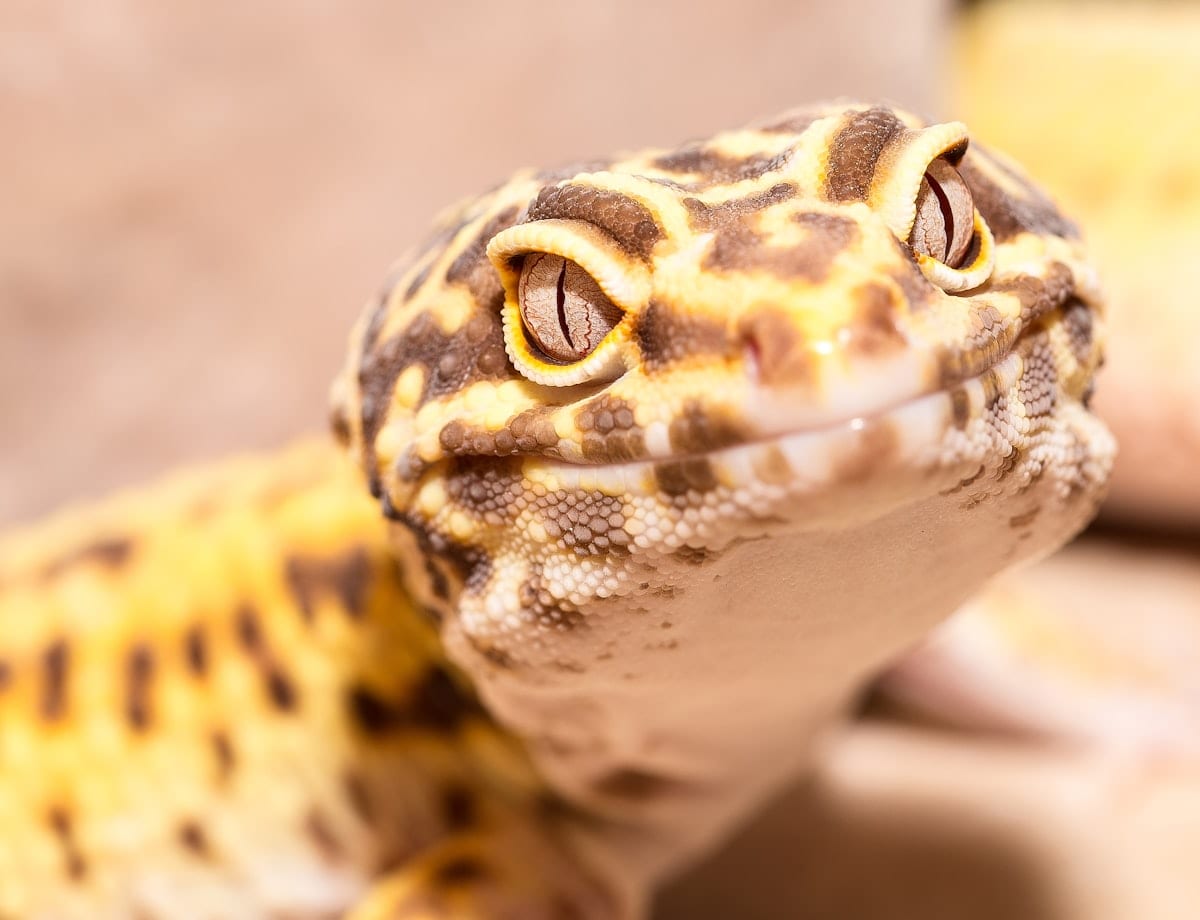
The best leopard gecko birthday is a varied insect feast timed to when your leo is actually active, which means late afternoon or early evening since they’re crepuscular. A good spread includes mealworms as the base, a few waxworms as the birthday treat, and some gut-loaded crickets or dubia roaches if your leo accepts them. Then a brief handled photo session, then back into the enclosure with a new hide or decoration to investigate. That’s the full party. Leos are small, specific, and completely unbothered by the concept of birthdays. Work with that.
Timing the Party Right
Leopard geckos are crepuscular, meaning they’re most active at dawn and dusk. Your leo at 2 PM on a Saturday is probably trying to sleep. Schedule the birthday feast and handling session for late afternoon, starting around 4 or 5 PM. You’ll get a much more alert, engaged animal and better photos.
This is one of the more commonly ignored facts in general gecko care content, so it bears being direct: if you try to do the birthday feast at noon and your leo barely responds, that’s not a sign they’re sick. They’re a nocturnal-leaning animal being woken up in the middle of their active rest period. Try again later.
The Birthday Feast
Leopard geckos are strict insectivores. No fruit, no greens, no plant matter of any kind. Their digestive systems are built entirely for live prey, and VCA Hospitals’ leopard gecko care guide confirms this clearly: feeding plant material isn’t appropriate and won’t be eaten willingly by a healthy leo.
Mealworms: the staple. Most leos eat mealworms eagerly and readily. They’re a perfectly good everyday feeder and a fine birthday main course. The concern with mealworms is that they’re relatively high in fat compared to crickets, so they’re better as a daily staple for adults than for juveniles who need higher protein turnover. For the birthday feast, quantity and variety matter more than the specific item, so a good dish of freshly gut-loaded mealworms is a strong base.
Waxworms: the birthday treat. Waxworms are high in fat and low in protein, which is why they’re treat-only, not staple feeders. But bearded dragon keepers know this, and leo keepers know it too: waxworms are like gecko candy. Most leos will eat them with visible enthusiasm. Two or three waxworms on the birthday is entirely appropriate. More than that regularly causes obesity and palatability issues where the gecko refuses to eat anything else. Save them for occasions exactly like this one.
Dubia roaches if your leo accepts them. Some leos take to dubias immediately. Others refuse. If yours eats dubias, they’re an excellent nutritional choice for the feast: good protein, better calcium-to-phosphorus ratio than crickets, no smell, no escape risk. Add a few to the birthday spread.
Crickets, gut-loaded. Crickets are fine feeders but require gut-loading (feeding the cricket nutritious food 24 to 48 hours before offering) and calcium dusting before feeding to your leo. A well-prepared cricket is a good feeder. An unprepared cricket from a pet store cup is mostly empty calories. If you’re using crickets for the birthday feast, gut-load them the day before.
Hornworms as a novelty. Some leos will go for hornworms and some won’t. They’re worth trying once if you’ve never offered them. The movement is dramatic and engaging, and if your leo locks onto one and hunts it across the food dish, that’s the birthday video.
Sizing. All feeders should be no larger than the space between your leo’s eyes. This is the standard rule for every insectivore reptile and it applies on birthdays too. An improperly sized feeder can cause impaction, particularly in smaller or younger animals.
Dust consistently. Calcium powder without D3 on feeders at every feeding. Calcium with D3 twice a week. Multivitamin once a week. VCA Hospitals notes that metabolic bone disease is common in leopard geckos fed without proper supplementation. The birthday doesn’t change the supplementation schedule.
Some leos skip the feast entirely, and that’s not automatically a crisis. A gecko heading into a shed cycle often stops eating a few days out. So does a stressed leo, whether from handling, a recent enclosure change, or a warm side that’s dipped below temperature. Check your temps first, then just try again the next evening. If the refusal runs past a week with no obvious cause, that’s a vet visit, not a wait-and-see.
A Note on Impaction Risk
Mealworm impaction is a real risk if your leopard gecko is kept too cold. Leos need a warm side of 88 to 90°F (belly heat from an under-tank heater, measured at the floor surface) and a cool side around 75°F. If the warm side is inadequate, mealworms can cause gut impaction because the gecko can’t digest properly. This is specifically documented in the reptile community and worth verifying before birthday feast day: check your temperatures with a temperature gun. Not a dial thermometer. A temperature gun.
If you’re ever in doubt about your temperature gradient, Reptiles Magazine’s leopard gecko care sheet is a straightforward primary-source reference.
Birthday Activities
Leos are small and fast. They’re not lap animals, though many become very tame with consistent gentle handling. The birthday activities that actually work are based on what leos genuinely respond to.
The hunger hunt. Drop two or three crickets or dubia roaches into the enclosure at dusk and film your leo hunting. Leos are active, intentional hunters. They stalk, they pause, they lunge. The hunt footage is genuinely impressive for an animal that fits in your hand. Use a phone in video mode with the flash off and let the enclosure lighting do the work.
A new hide to investigate. Leos are curious about new items in their enclosure. Add a new hide, a piece of cork bark, or a different substrate patch for the birthday. They’ll investigate it thoroughly over the next 24 hours. It’s not photogenic in the moment but it’s genuine enrichment.
A handled photo session. If your leo is handleable, the birthday photo session is worth doing. Leos are photogenic at macro distances. Set up near a window with indirect light, cup your leo in both hands, and let them look around. The eyes photograph incredibly well. Keep the session to 10 to 15 minutes max and watch for stress signs: tail waving (not the same as the hunting tail wave, this is slower and defensive), vocalizations, or attempts to hide in your sleeve.
One thing worth knowing: if a leopard gecko loses its tail to stress or injury, the tail grows back, but it won’t look the same. The regrown tail has a different texture and shape than the original. The community knows this, mentions it often, and it’s relevant to handling stress: don’t put your leo in situations where tail-drop is a real risk.
If you’re hosting guests for the party, that’s exactly the situation to manage carefully. Some leos tolerate strangers fine. Most don’t, and prefer the people they already know. Introduce guests one at a time, keep each handling turn short, and skip the hand-to-hand pass-around entirely. A gecko passed between four or five strangers in a row is one of the most reliable ways to end up with a leo that won’t leave its hide for a week.
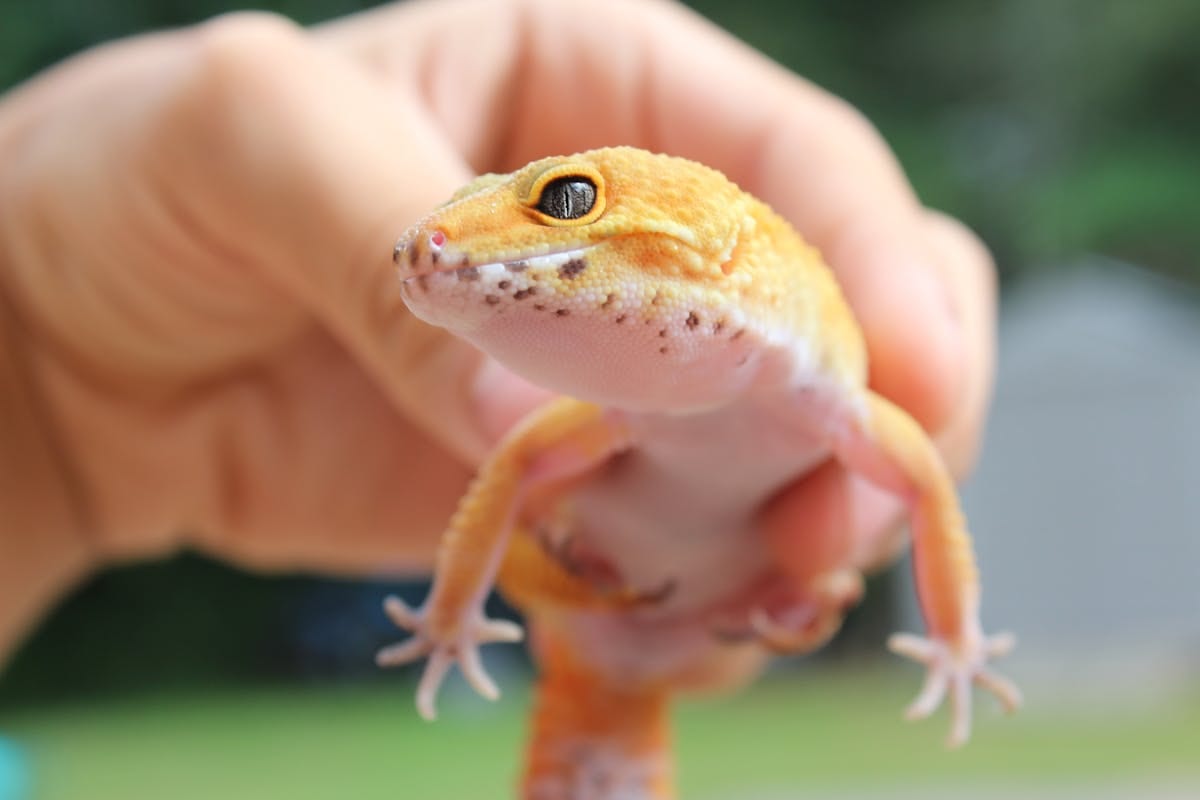
Photo Setup for the Leo Birthday Post
The leo birthday post is a fixture in the leopard gecko community on Reddit (r/leopardgeckos), TikTok, and Instagram. A few things that make the photos significantly better:
Macro mode. Most modern phones have a portrait or macro mode that handles small subjects well. Get close. The face and eyes at macro distance are what makes leo photography work.
Warm background. A piece of cork bark, a natural stone surface, or a warm-toned fabric background shows off the leo’s orange and yellow tones better than a white sheet.
The “looking at the camera” moment. Leos will make direct eye contact and hold it in a way that reads as intentional and personality-filled. Position your leo near the phone camera and wait. When they turn and look directly at the lens, that’s the shot.
The birthday caption setup. Plenty of keepers make a tiny sign (“1 year with my leo,” “hatchday 2026”) propped in the background of the shot. The leo in the foreground, the sign in the background. Clean, simple, community-standard birthday post.
Hatch Date vs. Gotcha Day
Leopard gecko breeders usually provide hatch dates, so many keepers know their leo’s actual birthday down to the week. If you got your leo from a breeder, check your purchase records. If from a pet store, you likely have an age estimate. Both work as a birthday baseline.
Gotcha day, the anniversary of when your leo came home, is equally worth marking and arguably more personally meaningful. Many keepers do both: a small feast on the estimated hatch date and a bigger post or celebration on the gotcha day anniversary.
Keep at it. A healthy leo in captivity lives 15 to 20 years, some males push past 20, so you’re not planning one party. You’re planning a couple of decades of them, hatch day and gotcha day both, if you keep track of both dates.
For more on how keepers distinguish and celebrate both: pet birthday and gotcha day overview.
Leopard Gecko Birthday Supplies
Leopard gecko birthdays: new hides, live feeder treats, enrichment:
- Hamiledyi Gecko Tank Hide Cave, resin bark hideout. Geckos use an additional hide immediately.
- REPTIZOO Multi-Level Reptile Hideout, can be positioned at different levels in the enclosure.
- Hornworm Feeder Insects, hornworms as the birthday feeder treat.
- Waxworm Feeder Insects, occasional birthday treat (high fat, use sparingly).
Sources
- VCA Hospitals: Leopard Geckos
- ASPCA Animal Poison Control: People Foods to Avoid Feeding Your Pets
- Reptiles Magazine: Leopard Gecko Care Sheet
For the general pet birthday framework: Pet Birthday Party Guide
For your beardie’s birthday: Bearded Dragon Birthday Party Ideas
- You
- Your pets
- Confirm