
Jumping Spider Birthday Party Ideas: Celebrating Your Jumber
Real jumping spider birthday ideas from keepers: the birthday feast, enrichment for Phidippus regius and bold jumpers, photo setup for the pose that always delivers, and how the spider community marks the occasion.
As an Amazon Associate we earn from qualifying purchases.
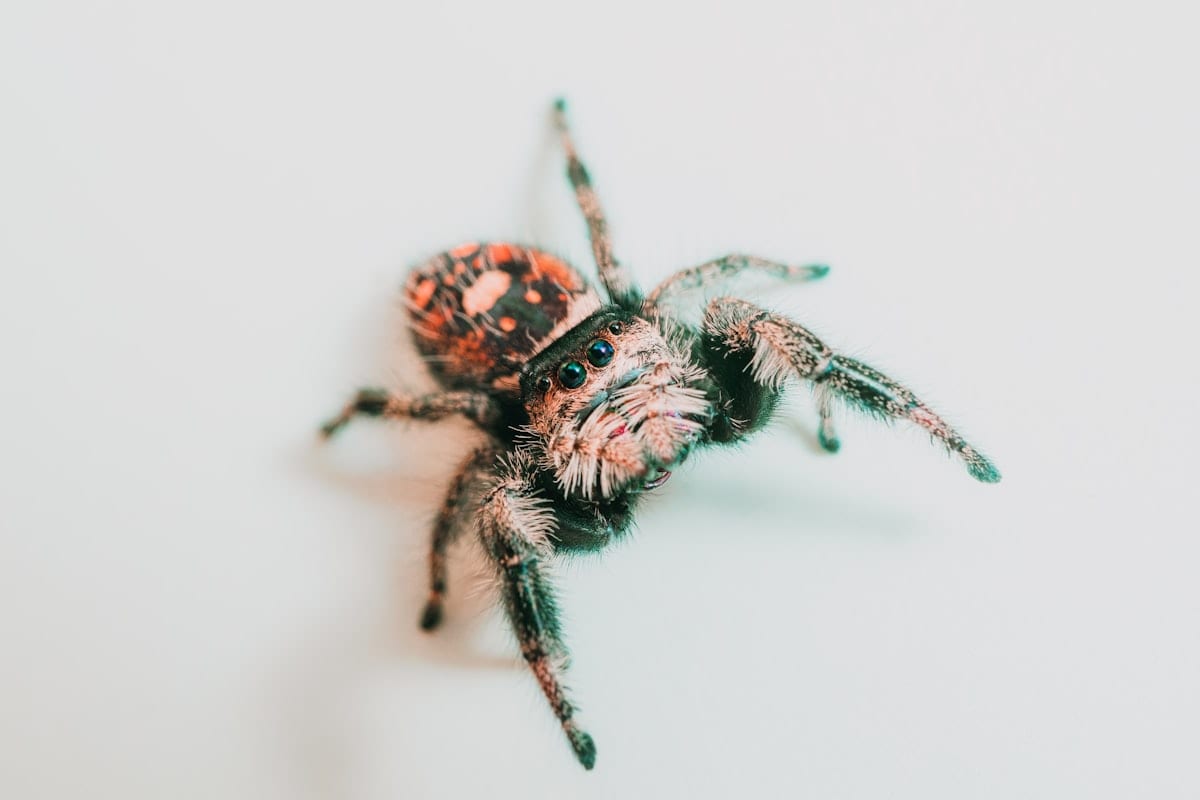
The jumping spider birthday is one of the better exotic pet celebrations because jumping spiders actually show up for it. They make eye contact. They investigate new objects with visible curiosity. They pose for photos with a presence that most small animals completely lack. The birthday party format is a varied live prey feeding, a new item in the enclosure, a brief handled photo session, and a post to the community that will get significantly more engagement than you expect. Your jumber will look directly at the camera and the photo will be excellent.
Which Jumping Spider Is This For?
The three most popular pet jumping spider species are Phidippus regius (the regal jumping spider, the largest North American jumping spider), Phidippus audax (the bold jumping spider, smaller and slightly more skittish), and Phidippus otiosus (a southern species with a quieter temperament than audax). Hyllus diardi is popular in Europe and Asia.
P. regius is the community’s most recommended species for new keepers and the most commonly kept. It’s the one most people picture when they think “pet jumping spider.” The care requirements are similar across these species, so the birthday format works for all of them, with minor adjustments for size.
Lifespan and When to Celebrate
Jumping spiders live 1 to 3 years depending on species and sex. Females live significantly longer than males. This makes the birthday a meaningful milestone, not just a formality. A regal jumping spider at age 2 is a genuinely senior animal that has had a full life.
Telling them apart matters here, since it changes what to expect. In P. regius, adult females run noticeably larger and often more complex in coloration, with iridescent chelicerae showing up in some individuals. Males stay smaller and more uniform, with a distinctive pedipalp structure near the mouth that’s easy to spot once you know what you’re looking for. Sexing a juvenile is harder. If you bought from a breeder, they can usually tell you the sex early on.
The birthday date is usually the hatch date if you bought from a breeder (who records these) or the date the spider arrived home if you bought as a juvenile from a show or online seller. The arrival date works fine as the functional birthday. Many keepers also mark the date of the final adult molt, since that’s when the spider reaches full size and coloring.
The Birthday Feast
Jumping spiders are hunters. They eat live prey and they’re very, very good at it. The birthday feast is about variety and appropriately sized prey that gives your spider a real hunting experience.
Bottle flies (Lucilia caesar or similar). These are the community’s go-to for adult P. regius. They’re large enough to be a satisfying meal and the flight behavior triggers the spider’s prey drive intensely. A culture of bottle flies purchased from a reptile supplier or online gives you a steady supply. For the birthday, release one or two into the enclosure and film the hunt. The stalk is deliberate, the jump is fast, and the whole sequence is genuinely impressive to watch.
Fruit flies (Drosophila hydei or melanogaster). For juvenile jumping spiders or smaller species, fruit flies are the standard feeder. D. hydei is larger and better for subadults. Both are available as flightless cultures from reptile suppliers. For the birthday feast of a juvenile jumber, a few D. hydei fruit flies released into the enclosure will keep the spider engaged for a significant amount of time.
Dubia roaches (small/medium for larger spiders). Adult P. regius can take a small dubia roach and will hunt it actively. Make sure the roach is smaller than the spider’s abdomen. A dubia roach provides more protein per meal than a fly and makes for a more dramatic hunt video because of the size differential.
Mealworm as a supplementary treat. Some keepers offer mealworms. They’re accepted but less exciting, as mealworms move slowly and don’t trigger the same prey-drive response as flying or fast-moving prey. Fine for variety, but don’t make it the centerpiece of the birthday feast.
What to skip. Wild-caught insects from your garden or yard. These can carry pesticides, parasites, and pathogens. Only captive-bred feeders for the birthday feast. This is the same rule as with reptiles and it applies here too.
Per the University of Florida’s documentation on regal jumping spiders, P. regius in the wild eats a wide variety of insects and other small arthropods. A varied captive diet approximates this well.
Appetite isn’t constant, and that’s normal. A spider in premolt or one that just molted won’t take prey (the handling notes below cover the signs), and a spider that ate well recently may sit out several more days on its own schedule. If your jumber refuses food outside of those situations for more than a week, check the enclosure before assuming something’s wrong. P. regius does best at 60 to 70% humidity and 72 to 80°F, and appetite is usually the first thing to slip once either drifts.
The Birthday Enclosure Upgrade
Jumping spiders are curious. They investigate new things in their environment with visible attention. The birthday enclosure upgrade is a meaningful enrichment item.
A new silk plant or fake flower cluster. Jumping spiders spend time climbing and exploring vertical surfaces. A new cluster of artificial plants in a different part of the enclosure gives them new territory to map. They’ll investigate everything.
A new hide or sleeping sac location. Jumping spiders build small silk sleeping sacs where they sleep and molt. They often return to the same spot every night. Introducing a new structure (a piece of cork bark, a small wooden hide with a protected interior spot) may be adopted as a new sleeping location.
Rearranging the existing decor. Even moving existing items to new positions counts as enrichment. The spider will spend time re-mapping and re-establishing its territory. The investigation behavior is engaging to watch.
The Birthday Photo Session
The jumping spider photo session is the centerpiece of the community celebration, and with good reason. These spiders photograph better than almost any other invertebrate.
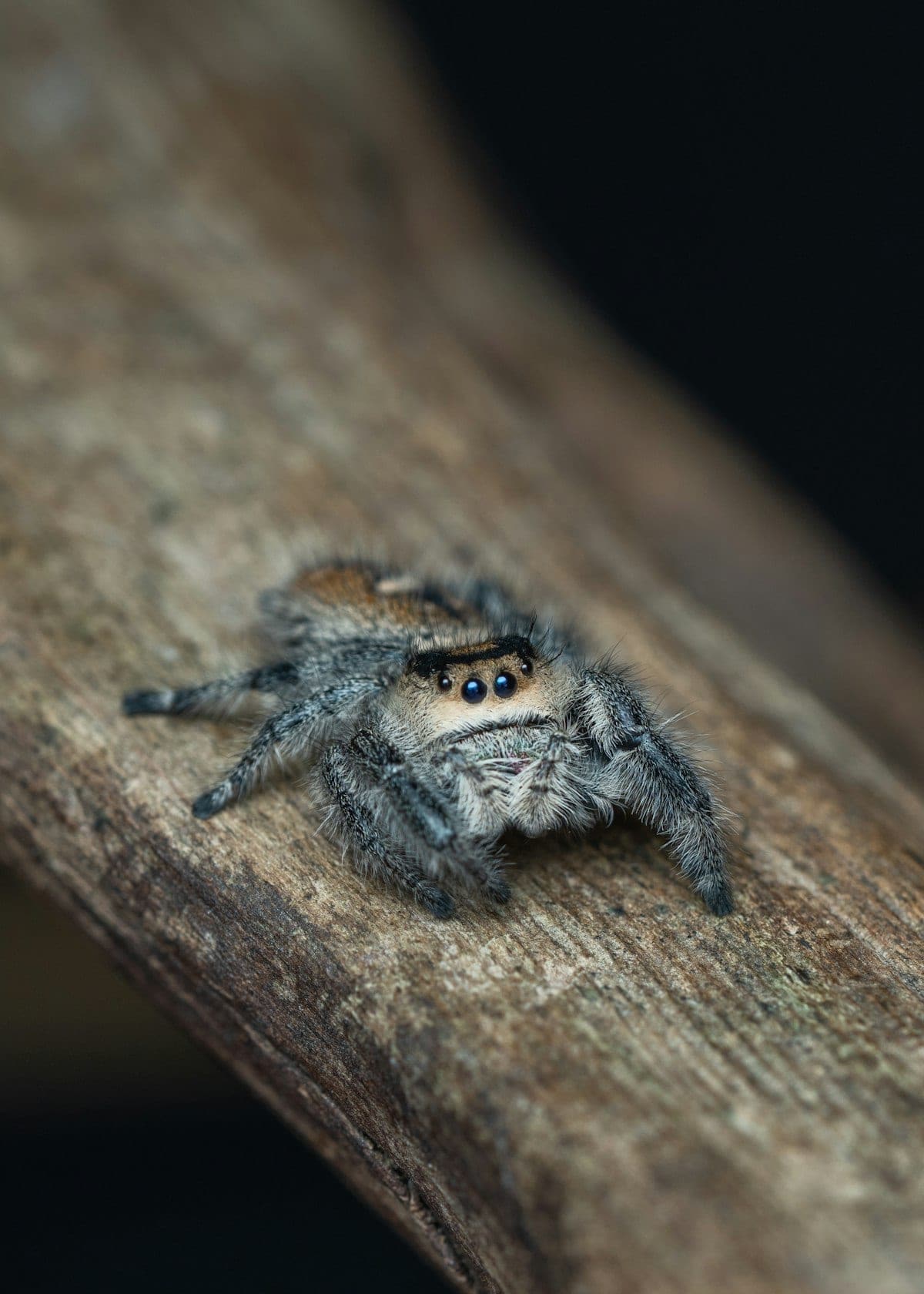
Why they’re so photogenic. Jumping spiders have forward-facing eyes arranged for binocular vision, which gives them depth perception far beyond other spiders. The two large anterior median eyes look, to human observers, like someone is home. They make direct eye contact and hold it. This is not anthropomorphization, it’s their actual sensory system functioning: they look at things with focused attention. The birthday photo captures that quality.
Setup. White, black, or natural-textured backgrounds work best. A piece of white card stock, a slice of cork bark, or a piece of smooth driftwood. The spider on a natural surface looks like wildlife photography. The spider on a white card looks like a professional portrait.
Positioning. Gently place your jumping spider on the photo prop. Wait. They’ll explore briefly and then stop and look around. When they turn toward you and make eye contact with the camera, that’s the moment. Burst mode on your phone captures several frames of the right moment.
Macro mode. Use portrait or macro mode for the face shot. The anterior median eyes at close distance, with the smaller secondary eyes visible, is the shot the jumping spider community shares most. Get as close as your phone’s camera will allow without the spider being spooked by proximity.
The eye-contact post. The birthday post format that gets the most community engagement: a clear macro face shot where the spider is visibly looking at the camera. Birthday date, species identification, name, one personality note. r/jumpingspiders, r/spiders, and dedicated jumping spider Facebook groups all have active communities that respond enthusiastically to good birthday posts.
Handling for the Photo Session
Jumping spiders are handleable and many become quite comfortable with regular, gentle contact. A few things to note for the birthday session:
Support all legs. Don’t pick the spider up by a single leg or from above in a way that requires them to hang. Cup your hand gently underneath and let the spider walk onto your hand of its own accord. Most will.
Don’t force the interaction. If your spider is actively avoiding your hand, retreating into a hide, or staying motionless in a defensive posture, skip the handling session. A stressed spider doesn’t make good birthday content. Try again tomorrow.
No handling during or after a recent molt. A freshly molted jumping spider has soft chelicerae (mouthparts) and is more vulnerable. Wait at least 48 to 72 hours after a molt before any handling. Premolt has its own signs: appetite drops off for anywhere from a few days to a week, the spider spends more time in its sleeping sac, and eventually seals itself in and goes still. Stop offering food and leave the enclosure alone once you see that. If your spider is in premolt or just came out of one close to the birthday, the celebration can wait. It’s not going anywhere.
Feeding during the session works too. Offer a bottle fly while your spider is on your hand and it’ll often hunt right there. The approach, the stalk, the strike, all filmed from a few inches away, is some of the best footage you’ll get all year. Just keep the fly contained until you’re ready. A loose bottle fly in the house is its own kind of birthday chaos.
Jumping spiders don’t have urticating hairs. This is specific to tarantulas. Jumping spiders do not flick urticating hairs. Their defensive response is typically just to jump away or retreat. They can bite if cornered, but a healthy, acclimated spider handled gently very rarely bites. The risk is low and the community’s general handling guidance reflects this.
What the Community Actually Does
The jumping spider keeping community is enthusiastic and growing. On r/jumpingspiders, birthday posts with good macro eye-contact photos regularly get thousands of upvotes. The community rewards:
- Clear, sharp photos showing the eyes
- Correct species identification (P. regius, P. audax, etc.)
- Personality notes that reflect genuine observation of the specific spider
- Honest captions (“she turned 1 year old and immediately ate a bottle fly off my hand”)
What the community doesn’t respond to as well: photos where the spider is clearly stressed or restrained, incorrect species identification, or anthropomorphized captions that miss the spider’s actual behavior patterns.
One thing worth noting: many jumping spider keepers in the community don’t handle their spiders at all and have excellent relationships with them through enclosure observation and feeding interactions. If your specific spider isn’t handleable, the birthday post can be a photo through the enclosure glass. The eye-contact shot works through clear acrylic just as well as through open air.
Jumping Spider Birthday Supplies
Jumping spider birthdays: new decor and a special feeder treat:
- Bottle Fly Pupae for Jumping Spiders, preferred feeder size for most jumping spiders.
- Cork Bark for Spider Enclosure, natural cork bark as enclosure enrichment.
- Air Plant Tillandsia, live air plant for the enclosure. No soil needed.
Sources
- University of Florida IFAS: Regal Jumping Spider (Phidippus regius)
- AB Spiders: Phidippus regius Care Guide
- American Tarantula Society: ATS Home
For invertebrate birthday celebrations of a different kind: Tarantula Birthday Party Ideas
For the general exotic pet birthday framework: Pet Birthday Party Guide
- You
- Your pets
- Confirm