
Goldfish Gotcha Day: How to Celebrate a Fish Tankiversary
How to celebrate a goldfish tankiversary: the water volume the RSPCA asks for, why the bowl is the problem, and a feast that will not wreck the water.
As an Amazon Associate we earn from qualifying purchases.
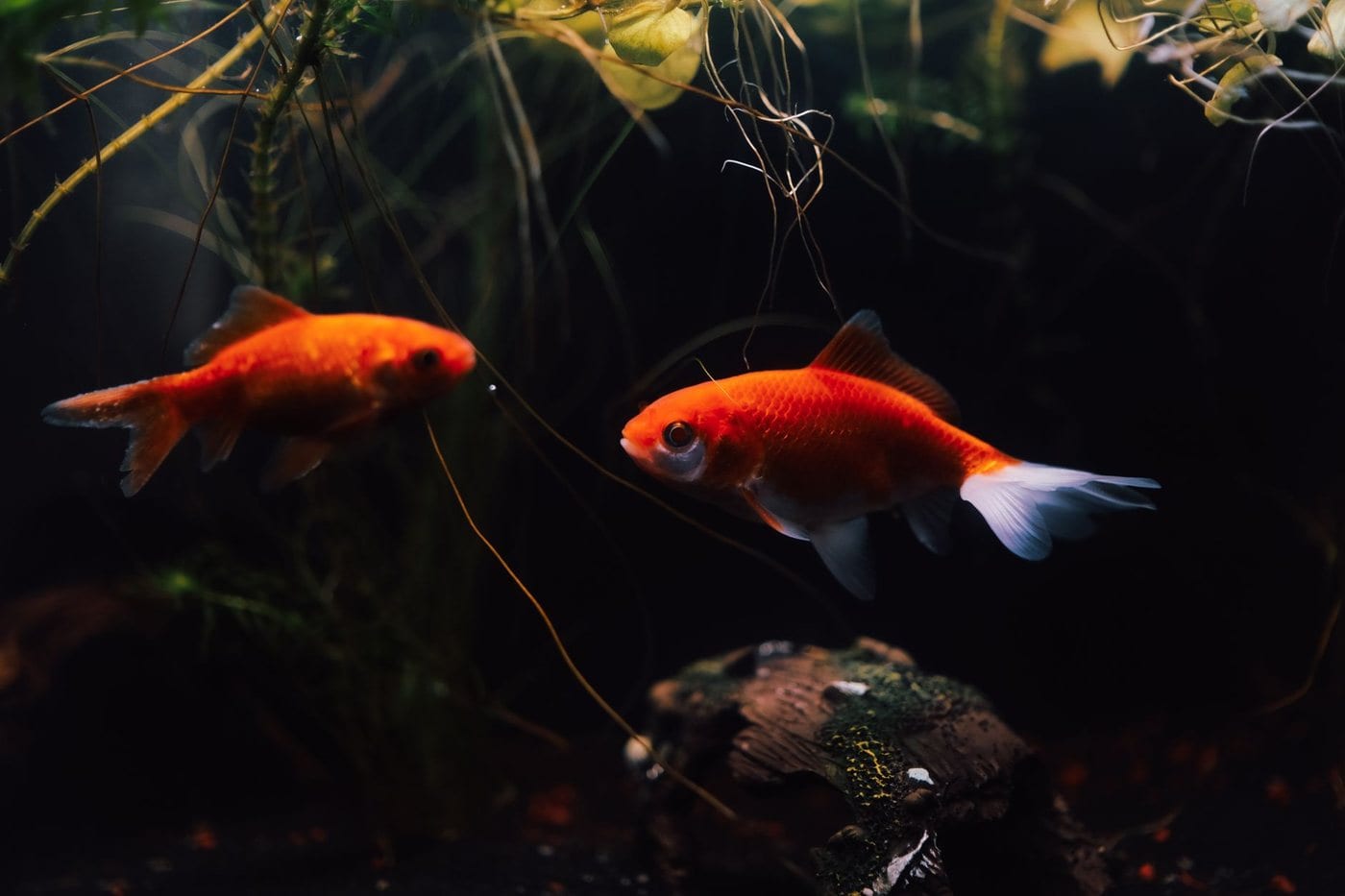
A goldfish Gotcha Day, or tankiversary, is the anniversary of the day the fish came home, and the way to mark it is a large water change, a check of the tank volume against the fish’s actual length, and a varied feed of something better than flake. The gift is water. Everything else on this page is downstream of that.
Which sounds unromantic until you look at what a goldfish can do with enough of it.
How Long Do Goldfish Actually Live?
Long enough that treating this as a throwaway pet is the single most expensive mistake in the hobby.
The Guinness World Record for the oldest goldfish ever belongs to a fish called Tish, owned by Hilda and Gordon Hand of Carlton Miniott near Thirsk, North Yorkshire. Tish was won at a fairground stall in 1956 by their seven-year-old son Peter, and died on 6 August 1999 at 43 years old. By the end his scales had faded from orange to silver, the fish equivalent of going grey.
Tish is the outlier, obviously. But he was not kept in anything exotic. He was a fairground goldfish who happened to get decades of stable water, and that is the whole lesson. A well-kept common goldfish reaching 10 to 15 years is ordinary, and 20 is not remarkable in a pond.
So a goldfish tankiversary is not a novelty. It’s an anniversary you may still be marking when the dog you got the same year has been gone a decade.
How Much Water Does One Goldfish Need?
More than almost any tank sold with a goldfish picture on the box.
The RSPCA’s number is direct: “goldfish require at least 60 litres of water each,” which is about 16 US gallons per fish. Their scaling rule for a growing fish is separate and stricter: “Allow 2 litres of water per 0.5cm of goldfish length.” That works out to 4 litres per centimetre, or roughly 2.7 US gallons per inch of fish.
Run that against real adult sizes and the arithmetic gets uncomfortable.
| Fish length | RSPCA volume (4 L per cm) | Approx US gallons | Notes |
|---|---|---|---|
| 5cm / 2in | 20 L | 5 gal | The 60 L per-fish floor still applies |
| 10cm / 4in | 40 L | 11 gal | The 60 L floor still applies |
| 15cm / 6in | 60 L | 16 gal | Floor and formula finally agree |
| 20cm / 8in | 80 L | 21 gal | A typical well-kept common goldfish |
| 25cm / 10in | 100 L | 26 gal | Still short of the maximum |
| 30cm / 12in | 120 L | 32 gal | Reported adult size for a common goldfish |
A common goldfish in good conditions runs to about 12 inches of body, with reported adult sizes across the range of 10 to 18 inches. Most tank-kept fish top out at 8 to 10 because the tank stopped them, which is not the same thing as the fish being small.
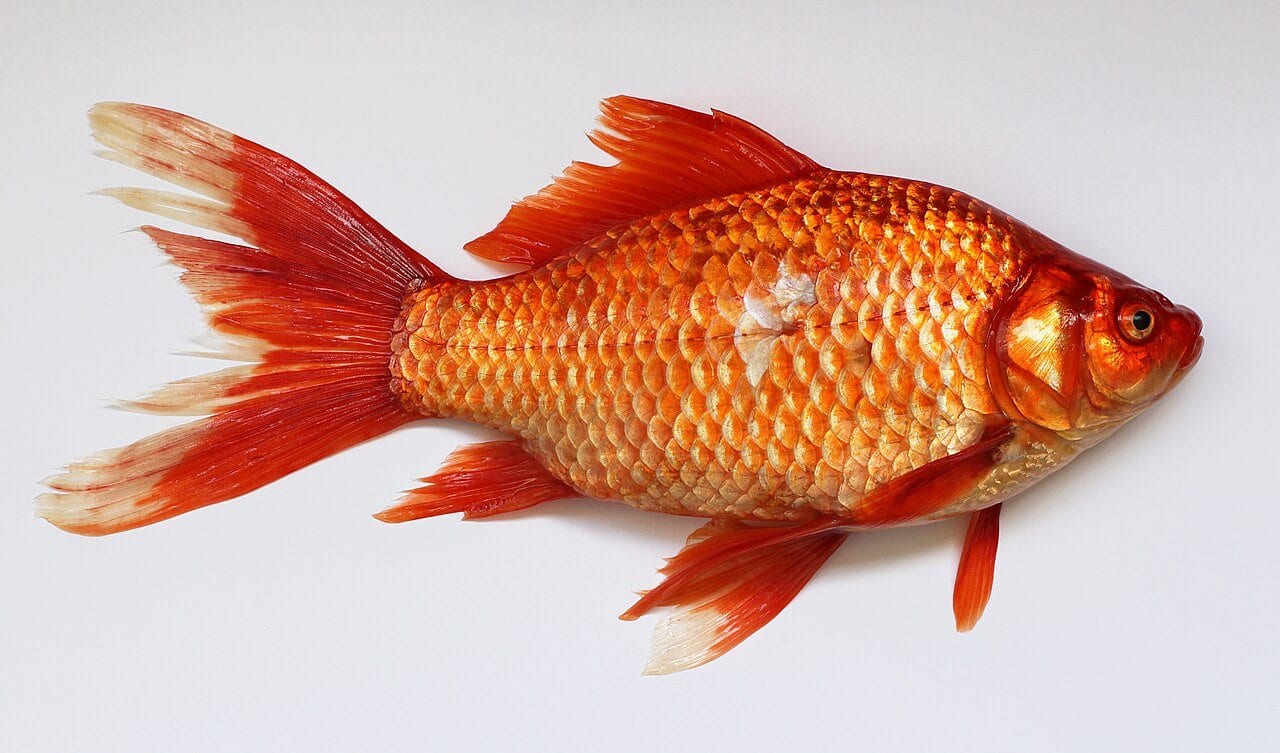
So the honest tankiversary gift for a fish in an undersized tank is the next tank up. Not a decoration. Second-hand 30 and 40 gallon tanks turn up constantly for $40 to $80, which is less than most people spend on a dog’s birthday.
Why Is a Goldfish Bowl the Wrong Container?
Because it fails at four separate jobs at once, and the RSPCA says so plainly.
Their wording: “Decorative or ‘fun’ tanks, like goldfish bowls, jars, or children’s tanks, have not been designed with fish welfare in mind.” The specific failures they list are insufficient size, no room for filtration, poor oxygen absorption at the surface, and unstable temperature.
The oxygen point is the one people miss. A bowl curves inward at the top, so the widest part of the water is in the middle and the narrowest part is at the surface, which is exactly where gas exchange happens. A bowl filled to the brim has less surface area than the same volume in a rectangular tank. Filling a bowl is worse than half-filling it, which is the opposite of what looks right.
Then there’s the ammonia. A goldfish is a heavy waste producer, and in an unfiltered container the ammonia climbs within days. The RSPCA’s framing is that small volumes “create unstable environments and prevent proper filtration and oxygen exchange,” which is the mechanism behind the folk belief that goldfish just die quickly. They do not. They get poisoned quickly.
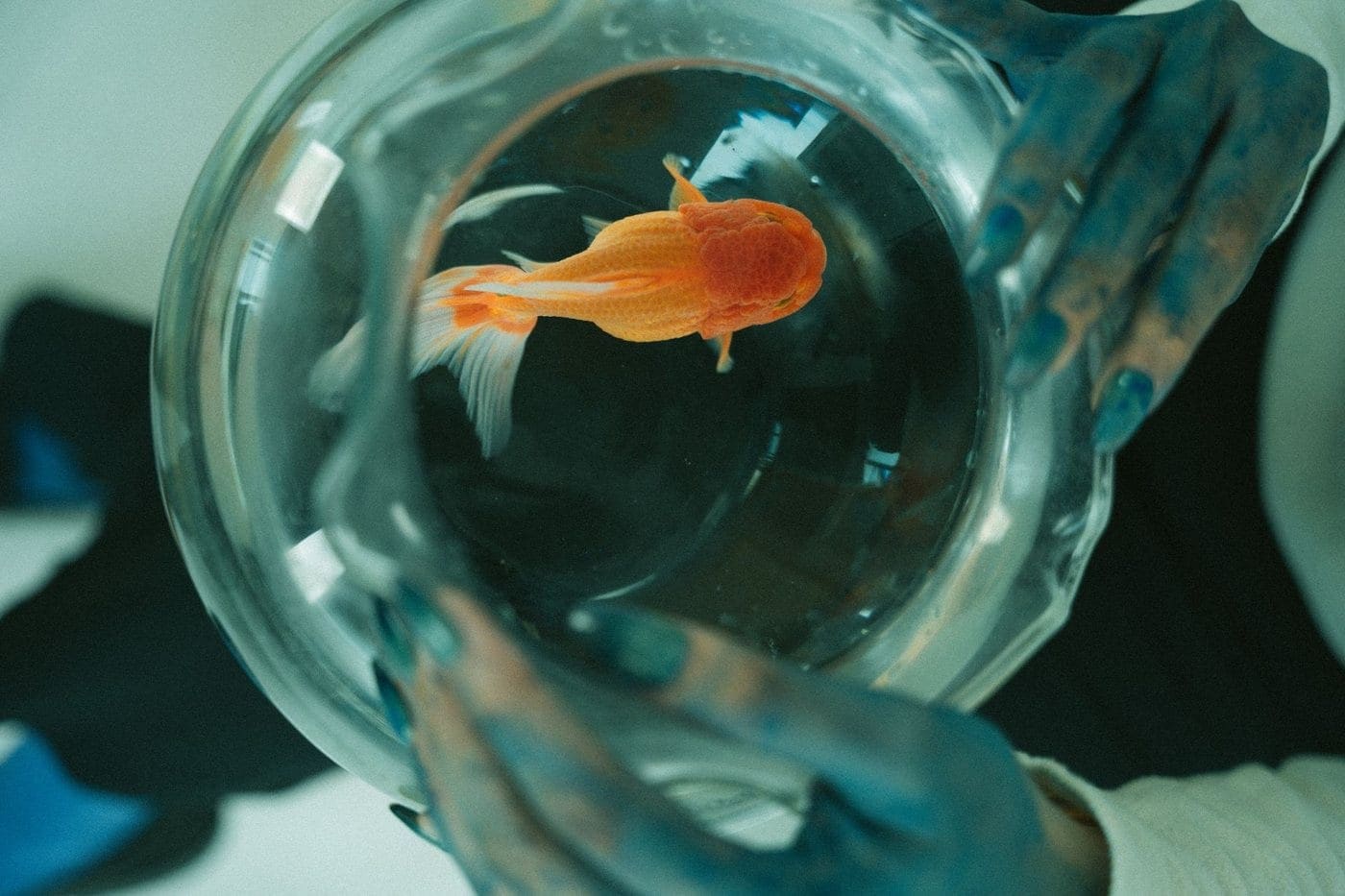
If your fish is currently in a bowl, the tankiversary is a good day to end that. Move the fish, keep the old filter media or sponge if there is any, and expect to test water daily for the first two weeks while the new tank cycles.
Do Goldfish Need a Heater?
No, and adding one is a common and avoidable error.
Goldfish are cold-water fish. The RSPCA’s range is 10 to 21°C, roughly 50 to 70°F, and their guidance says plainly that “a heater isn’t normally necessary.” A heater set to tropical temperatures, 78°F and up, pushes a goldfish’s metabolism harder than it is built for, increases its oxygen demand in water that holds less dissolved oxygen at higher temperatures, and shortens its life.
The exception the RSPCA allows is a heater used to stop wild swings, not to raise the baseline. A tank in a cold conservatory that drops to 6°C overnight and climbs to 24°C in the afternoon is a worse environment than a steady 18°C, and a heater set low can hold the floor.
This is also why a goldfish should not share a tank with tropical community fish. The two lists of requirements barely overlap, and the compromise temperature is wrong for both. For a proper community setup, community freshwater tank anniversaries covers the tropical side of it, and betta fish Gotcha Day covers the other most-mis-housed fish in the trade.
What Should You Feed a Goldfish on Gotcha Day?
Variety, in a smaller quantity than instinct suggests, with a water change after.
A goldfish has no stomach in the way a mammal does, so food moves through continuously and overfeeding turns into water quality problems fast. The tankiversary feast is therefore about giving three or four different things across the day rather than one enormous meal.
A sensible spread:
- Sinking pellets as the base. Sinking rather than floating matters, because a goldfish gulping at the surface swallows air, and in deep-bodied fancy varieties that contributes to buoyancy problems.
- Blanched deshelled peas, one or two, cut small. The traditional goldfish treat and genuinely useful for digestion.
- A small piece of blanched spinach, courgette or cucumber, clipped to the glass so it can be grazed and then removed.
- Frozen bloodworm or daphnia, thawed in tank water, offered in a small amount. This is the item the fish gets visibly excited about.
- Live or frozen brine shrimp, if you can get it, for the same reason.
Then the part that makes it a good day rather than a bad one: take out anything uneaten after ten minutes, and do a 25 to 30% water change that evening. A feast without a water change is just a spike in nitrogenous waste with extra steps.
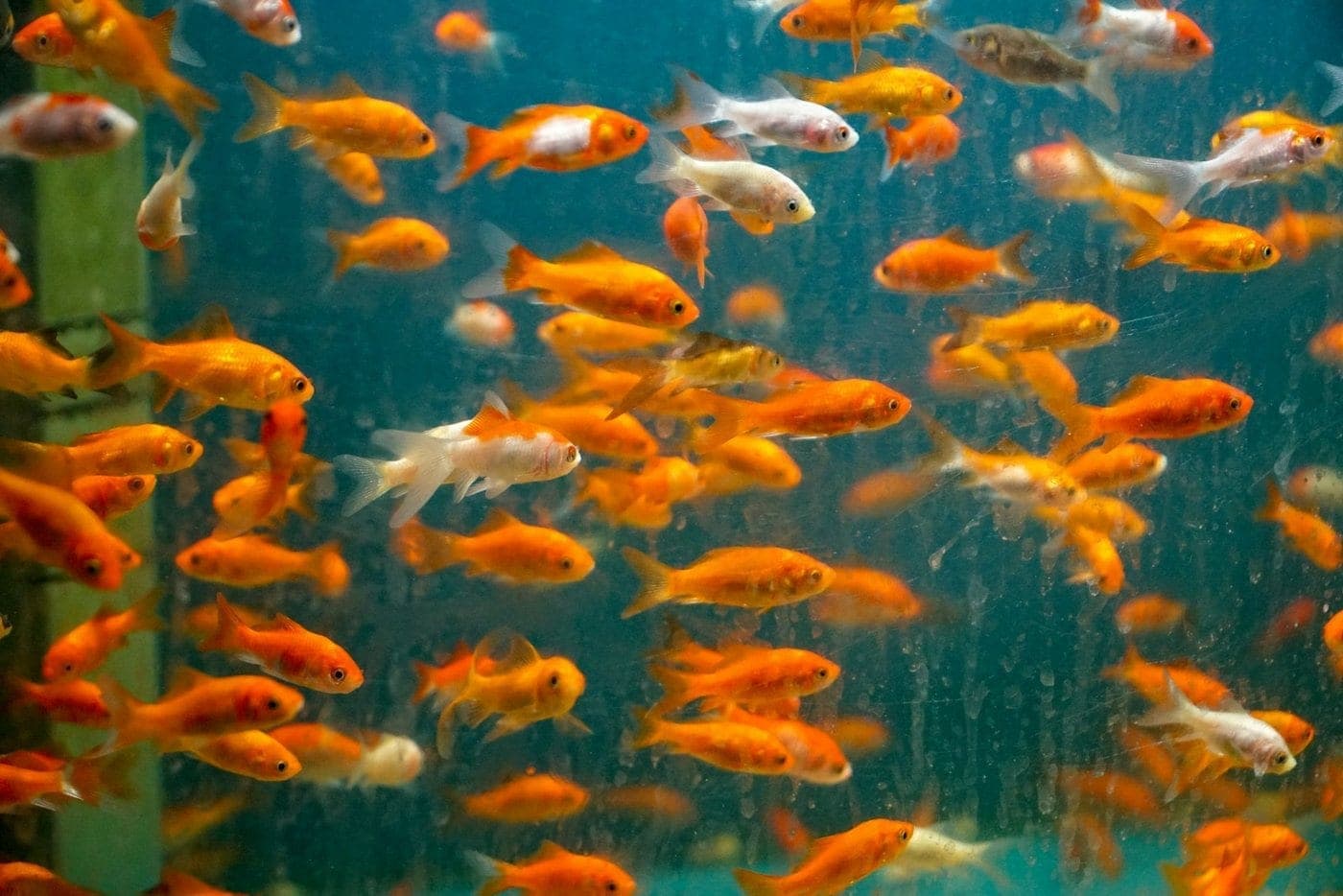
The full feeding list, including what never goes in a goldfish tank, is in what goldfish can eat at a party.
Is the Gravel in Your Tank a Choking Hazard?
Possibly, and the tankiversary is the right day to check.
Goldfish feed by sifting. They take substrate into the mouth, work it, and spit out what is not food, and that behaviour is why gravel of the wrong size is a genuine risk rather than a theoretical one. Vet-reviewed guidance from PangoVet describes gravel and rock becoming lodged in a goldfish’s mouth, causing injury and respiratory distress, and advises calling a veterinarian rather than pulling at a stone that is truly wedged.
The sizing rule that comes out of that advice is simple in both directions. Substrate should be either too big to fit in the mouth, with pieces at least twice the size of the fish’s mouth and larger than a pea as a rough floor, or fine enough that swallowing some causes no problem, which in practice means aquarium sand. What fails is the middle: standard pea-gravel-adjacent aquarium gravel of the size sold in every starter kit.
Bare-bottom tanks are the other option and are common among serious goldfish keepers, because they eliminate the risk entirely and make siphoning waste far easier. They look plain. The fish does not care.
Do the audit this way: net the fish into a bucket of tank water, run a hand through the substrate, and hold a piece against the fish’s mouth width from memory. If a piece is close to mouth-sized, replace the substrate with sand or take it out.
Does the Fish Know It’s Their Gotcha Day?
No, but goldfish notice more than they are given credit for.
They learn feeding routines, come to the front of the glass when a specific person approaches, and can be trained to swim through hoops and push targets. What they do not have is any concept of a date, so the split between what the fish gets and what you get is cleaner here than with any other animal on this site.
| What the goldfish gets | What you get |
|---|---|
| A 30% water change and clean glass | The annual photo, which will be blurry |
| Three or four foods instead of one | A reason to finally check the tank volume against the fish’s length |
| A substrate that cannot lodge in a mouth | The stocking decision you have been putting off |
| Somewhere new to graze, if you clip a vegetable to the glass | A date attached to a pet nobody else marks |
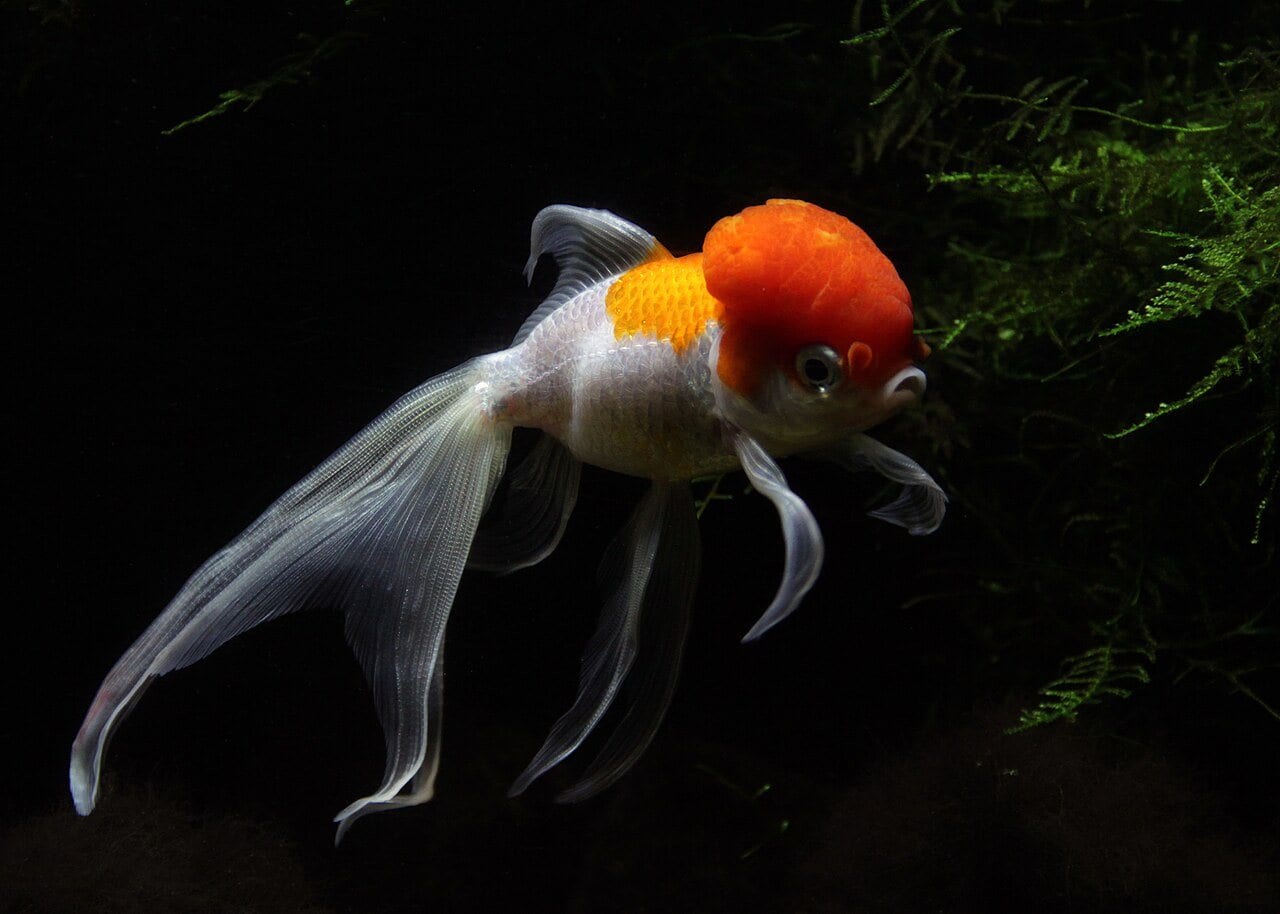
Goldfish Tankiversary Supplies
Prices move, so check current pricing before ordering. As an Amazon Associate we earn from qualifying purchases.
- Sinking goldfish pellets, the base food. Sinking rather than floating, particularly for fancy varieties.
- Frozen or freeze-dried bloodworm and daphnia, the treat item for the day. Thaw or soak in tank water first.
- Aquarium sand substrate, if the gravel audit went badly. Fine enough to pass through, easy to siphon.
- Aquarium water test kit for ammonia, nitrite and nitrate, the one purchase that changes outcomes more than any other in this hobby.
- Gravel vacuum siphon for water changes, because the water change is the actual present.
- Veggie clip for aquarium glass, for the blanched spinach or courgette, and it turns a feed into twenty minutes of grazing.
For the party-format version with tank decoration and photos, goldfish birthday party ideas has it. If you’re weighing which date to mark, Gotcha Day vs. birthday covers the choice.
Tish got 43 years out of a fairground prize and a family who kept the water clean. That is the entire method, and it fits on one line.
Sources
- RSPCA, Fish Environment and Housing, rspca.org.uk
- Guinness World Records, Oldest Goldfish Ever, guinnessworldrecords.com
- PangoVet, Why Is My Goldfish Eating Rocks and Gravel?, vet-verified, resources.pangovet.com
- PangoVet, What’s the Best Substrate for Goldfish Tanks?, resources.pangovet.com
- You
- Your pets
- Confirm