
Flying Squirrel Birthday Party Ideas: A Pocket Celebration for the Gliding Night Shift
How to throw a flying squirrel birthday party: safe foods with the calcium warning every owner needs to know, how pocket bonding shapes the birthday, legal considerations, and the glide photo you're trying to capture. Sources: Smithsonian's National Zoo, Exotic Nutrition.
As an Amazon Associate we earn from qualifying purchases.
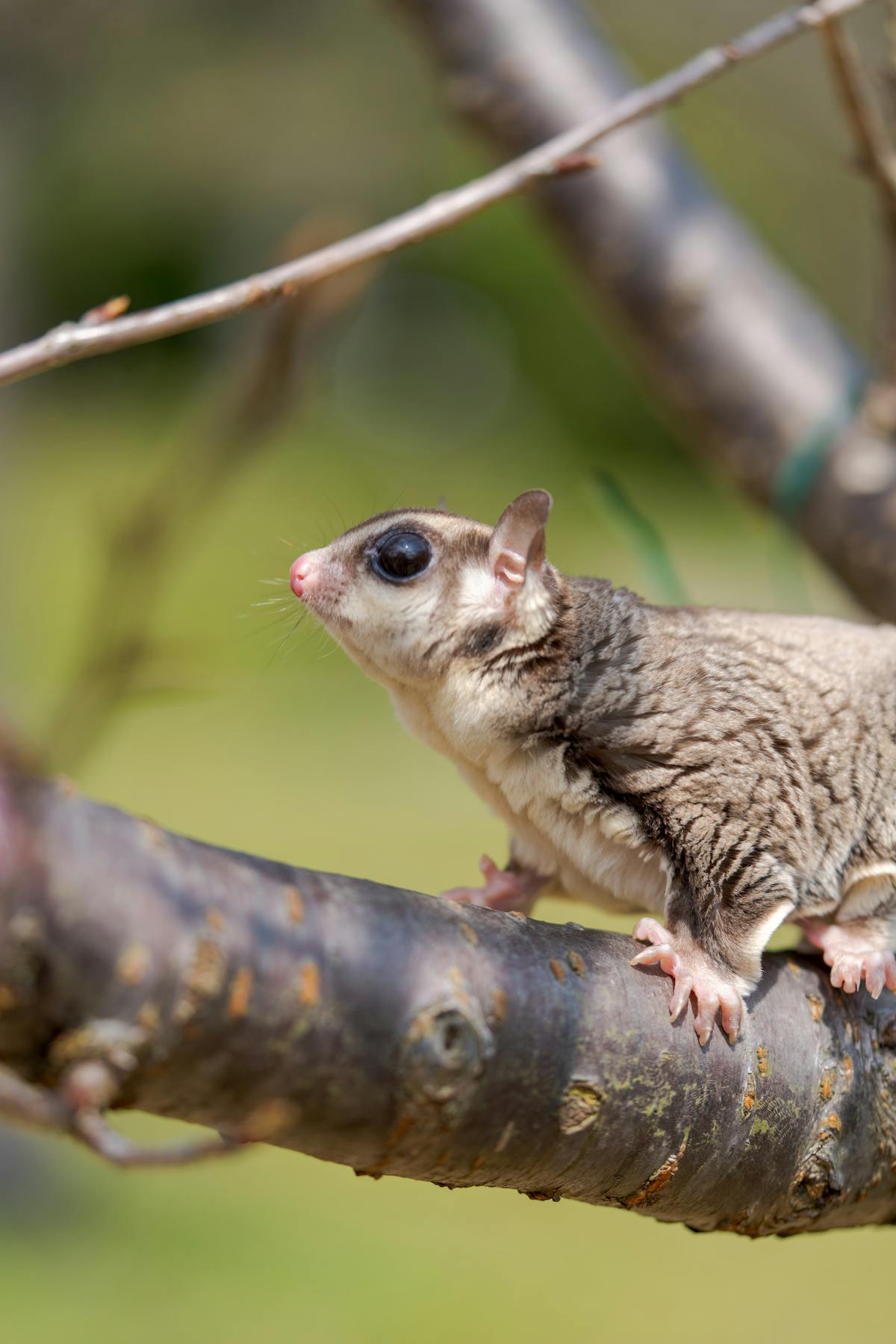
Flying squirrels don’t fly. They glide, using a membrane called the patagium that extends from wrists to ankles and catches air when they leap from height. The “flying” name stuck anyway. What they actually are is nocturnal pocket animals: small, large-eyed, soft-furred gliders who bond closely with their owners and spend significant daytime hours asleep in shirt pockets and fleece pouches against warm bodies. The birthday party happens after dark. The celebration is extended bonding pouch time, special food presented at dusk, and if your squirrel is confident enough, a glide across the room to reach you. Per Smithsonian’s National Zoo, southern flying squirrels can cover 50 to 80 feet in a single glide. They’re not doing that indoors, but even a room-length glide to your shoulder is excellent birthday content.
Legal Considerations First
Southern (Glaucomys volans) and northern (Glaucomys sabrinus) flying squirrels are native North American species. Their legality as pets varies by state. Some states require permits. Some prohibit them. Always source captive-bred animals from licensed breeders who provide documentation of legal origin, and verify your state’s regulations before acquiring one.
With proper care, flying squirrels live 10 to 15 years in captivity, sometimes longer for southern flying squirrels specifically. That’s a decade-plus commitment, not a casual purchase. If yours came from a rescue or a pet store without a recorded birth date, which is common with this species, the gotcha day party ideas guide covers building the annual celebration around your adoption date instead.
The Calcium Warning
Metabolic bone disease (MBD) is one of the most serious preventable conditions in captive flying squirrels. It develops from calcium deficiency or an imbalanced calcium-to-phosphorus ratio in the diet. Symptoms progress from subtle weakness to fractures and muscle tremors. Per Exotic Nutrition’s care guidelines, calcium supplementation is likely necessary for captive animals and the correct dosage should be established with a veterinarian experienced in exotic small mammals.
This shapes birthday food planning directly. Nuts are high in phosphorus relative to calcium and should be offered as a small treat rather than the bulk of the birthday spread. Fresh fruits and varied vegetables form the better foundation for birthday food.
Safe Birthday Foods
Per the Smithsonian and Exotic Nutrition care guidelines, flying squirrels are omnivores. In the wild they eat nuts, seeds, fungi, insects, lichen, and occasionally bird eggs. The captive birthday spread reflects that variety.
Safe birthday foods:
- Apple pieces (seeds removed): Reliable, well-accepted
- Grapes (seedless): Noted as a flying squirrel favorite
- Berries (blueberry, strawberry, raspberry): Good size, appropriate
- Banana piece: Small amount
- Leafy greens (kale, spinach): Good calcium source to balance the food spread
- Mealworms or crickets from a pet store: Flying squirrels eat insects naturally. Live or dried, excellent protein birthday treat.
- Button mushroom (small piece): Fungi are part of the wild diet. A small grocery-store mushroom is fine.
- Pecans, walnuts, hazelnuts (very small amounts): Treat quantities only. Not the primary birthday food.
What to avoid:
Salted or roasted nuts: not appropriate.
Avocado, onion, garlic, raisins: per ASPCA guidance on small mammals, avoid these.
Acorns without leaching: wild acorns contain tannins that cause digestive problems in quantity.
Processed human food with added salt, sugar, or preservatives.

The Bonding Pouch: The Real Birthday Celebration
Flying squirrel keepers use bonding pouches: small fabric pouches worn against the body, inside clothing, where the squirrel sleeps during daytime hours. The animal acclimate to your scent and heartbeat. This is the primary bonding mechanism for the species.
For the birthday, an extended pouch session is the most meaningful thing you can offer a well-bonded flying squirrel. Present birthday food at dusk when they wake naturally. Let them ride in the birthday pouch through the evening. A new fleece pouch pre-worn for a few days so it carries your scent is a practical gift that gets used every single day.
For squirrels who aren’t pouch-trained yet: start before the birthday. The bonding process makes all subsequent interaction richer.
If your squirrel bites, that’s fear, not aggression, and it eases as pouch time builds trust. Don’t punish a bite. Punishment only deepens the fear response and undoes the bonding work you’ve already put in.
Evening Activity and the Glide Setup
Flying squirrels are nocturnal, active from roughly dusk to midnight. Schedule the birthday enrichment for evening. A daytime party gets a sleepy, uninterested animal.
For a gliding session: a high launch point (top of a bookshelf, a cat tree) with a clear flight path to a soft landing zone. Put birthday food at the landing spot. A well-bonded flying squirrel will glide to their owner reliably. Burst mode, good light, and some patience: the mid-glide photo with the patagium extended is the birthday content you’re aiming for.
New climbing branches, scattered live mealworms for foraging, and any new perch configuration in their enclosure rounds out the birthday enrichment.
Your flying squirrel won’t know it’s a birthday. They’ll know it’s dark, there’s excellent food, their person is close, and there’s something worth gliding toward. For a nocturnal pocket animal, that’s about as good as a night gets.
Party Supplies
- Flying Squirrel Bonding Pouch, a fleece pouch pre-worn for a few days so it carries your scent, the most meaningful birthday gift for a well-bonded squirrel.
- Calcium Supplement Powder for Small Mammals, for guarding against the metabolic bone disease risk described above.
- Natural Wood Climbing Branches, a new perch configuration for evening enrichment.
Sources
- Smithsonian’s National Zoo: Northern Flying Squirrel
- Exotic Nutrition: Southern Flying Squirrel Care Guide
- You
- Your pets
- Confirm