
How to Throw a Dog Birthday Party When Not All Dogs Get Along
Dog birthday party with multiple dogs who don't all get along: intro protocols, stress signals, food management, leash strategy, and what to do if an incident happens.
As an Amazon Associate we earn from qualifying purchases.
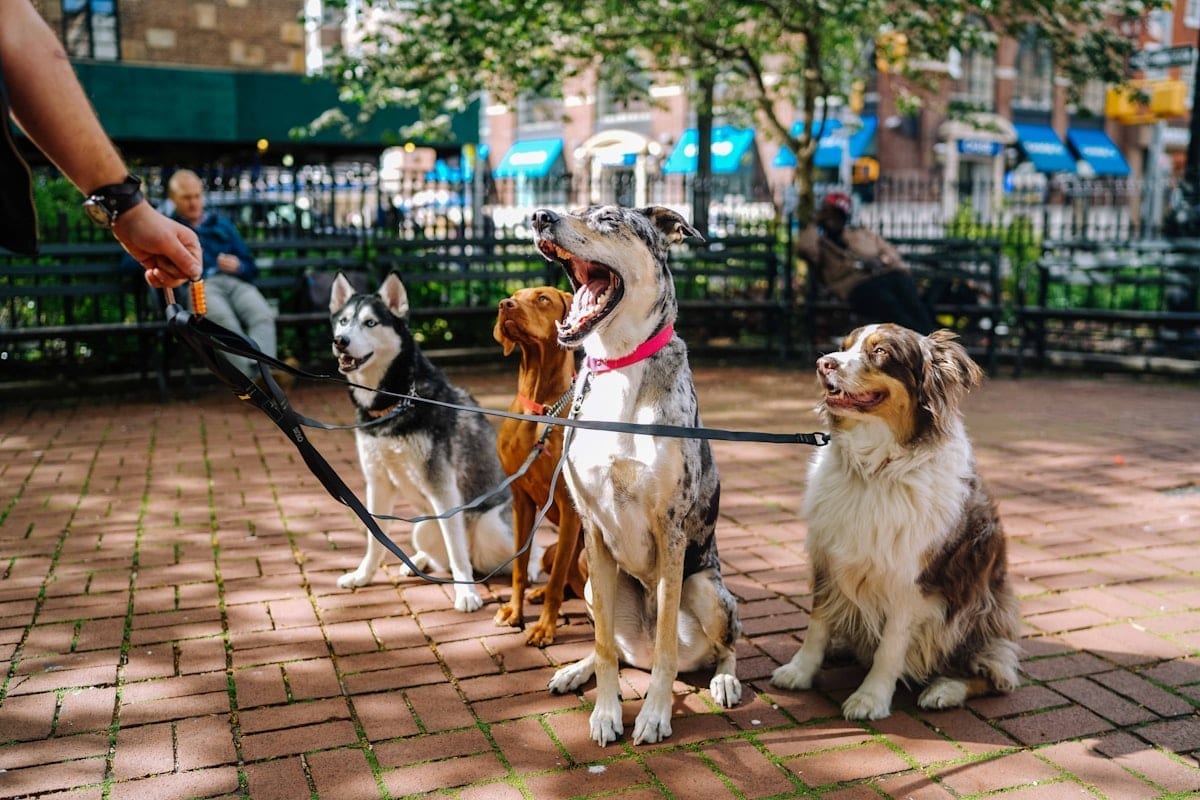
The dog birthday party guest list problem: your dog’s friends are also dogs, and not all dogs are friends with each other. The solution isn’t a smaller party. It’s a smarter setup. Parallel greeting zones, neutral introduction areas, and knowing which dogs stay leashed through cake time solves 90% of it.
The Reality of Multi-Dog Party Management
Dog birthday parties with multiple dogs are genuinely fun when they go well. And they can go well consistently, with the right structure. The mistake most people make is treating a multi-dog party like a dog park: everyone just sort of arrives, dogs meet in a compressed space, and you hope for the best.
That works sometimes. It goes sideways with surprising speed other times.
The dogs that tend to have problems at parties are usually fine dogs in regular life. They might be reactive on-leash but okay off-leash. They might be great with dogs they know and awful with strangers. They might be resource-guarders who’ve never shown that behavior until a piece of birthday cake is on the floor. You often don’t know which situation you’re in until it’s already in motion.
Structure prevents most incidents from happening. What follows is the structure that works.
Before the Party: Know Your Guest List
Not every dog is a good candidate for a multi-dog party. Before you finalize the guest list, think honestly about each dog’s social history.
Dogs that tend to do well at group parties: dogs with solid dog-social histories, dogs who regularly go to dog parks or doggy daycare without incident, dogs who have met several of the other guests before, and dogs whose owners know their dogs well enough to spot early stress signals.
Dogs that need extra management: dogs who are reactive on-leash (may do fine off-leash but need careful introductions), dogs who haven’t been around multiple dogs at once before, dogs who have resource-guarding tendencies, elderly dogs or puppies who may be overwhelmed by higher-energy groups, and dogs who’ve had any previous incident with another dog.
Dogs to consider leaving off the guest list or keeping in a separate space: dogs with a known bite history with other dogs, dogs whose owners aren’t confident about their behavior in new social situations, and dogs who’ve shown aggression toward the specific other dogs who’ll be attending.
This is not about excluding certain dogs because they’re “bad dogs.” It’s about knowing what you can actually manage safely.
If a guest’s dog has never been around other dogs before, don’t guess. Ask the owner directly: how does the dog handle new situations, has it been around multiple dogs at once, and does the owner feel confident managing it in a group? When there’s real uncertainty, invite that dog and owner to arrive 20 minutes early for a solo introduction with the birthday dog before the rest of the guests show up. A calm one-on-one meeting tells you in minutes whether the dog is going to be fine in the bigger group, and it’s a lot cheaper than finding out mid-party.
The Neutral Territory Introduction Protocol
The parallel walking protocol is the established standard for dog-to-dog introductions that reduces the chance of a tense first meeting. This is documented in ASPCA’s canine behavior education materials (including their “Dog Introductions” webinar available through ASPCApro) and recommended by certified professional dog trainers.
The principle: dogs meeting face-to-face in a confined space feels threatening to many dogs. Head-on approaches at close range trigger defensive responses. Walking parallel to each other, at a distance, with no direct pressure, lets dogs absorb each other’s scent and presence without the social pressure of a direct interaction.
The protocol, step by step:
-
Meet outside. Not inside the house or yard where one dog has established territory. Outside, on the street, or in a neutral area neither dog considers “theirs.” This reduces territorial behavior significantly.
-
Start at distance. Both dogs on leash, handlers positioned so the dogs can see each other but are 15-20 feet apart. Begin walking in the same direction.
-
Watch for calm body language. Loose body posture, tail held at mid-height or below, casual glances at the other dog rather than a hard stare. Reward calm with a treat and quiet praise.
-
Gradually close the gap. If both dogs are relaxed after 3-5 minutes of parallel walking, bring them closer. 10 feet, then 5 feet, then walking alongside each other at 3-4 feet apart.
-
Allow a brief sniff, then redirect. When you’re ready for a face-to-face, let them approach in a curve (not head-on), sniff for a few seconds, then walk away together. Keep moving. The first sniff doesn’t have to be extended. Forward movement prevents fixation.
-
Release off-leash only once both dogs are relaxed. For the party itself, once dogs have met and are walking calmly near each other, releasing into a fenced yard is reasonable. Don’t skip the introduction sequence to get to the “let them play” part faster.
This takes 5-15 minutes per introduction pair. Budget time for it before the party officially starts. Having guests arrive 20 minutes before the designated “party start” and do introductions in the front yard or sidewalk is a practical approach.
A dog that’s easygoing at the dog park still benefits from this step. Dog parks are open, low-pressure spaces where dogs choose their own distance from each other. A backyard or living room is a lot more compressed, and that compression changes the dynamic even for a dog with a spotless dog-park record. Five minutes of parallel walking resets the context before anyone gets boxed into a smaller space than they’re used to.
Stress Signals to Watch For During the Party
Dogs tell you what’s happening before they act on it. The hard part is knowing the language.
Early stress signals (less urgent, but worth noting):
- Yawning in a context where the dog isn’t tired. Yawning is a calming signal that dogs use to communicate “I’m uncomfortable.”
- Lip licking when there’s no food present.
- Whale eye: you can see the whites of the dog’s eyes because they’re turning their head away from something while keeping it in their peripheral vision. The dog wants to look at something but doesn’t want to face it directly.
- Excessive sniffing of the ground. A dog that suddenly becomes very interested in sniffing the ground is usually decompressing from social pressure.
- Moving away and not re-engaging. A dog that consistently removes itself from interactions is asking for space.
When you see early stress signals, give the dog space. Create physical distance between them and whatever’s triggering the stress. Don’t force a re-engagement.
Serious stress signals (act on these immediately):
- Hard stare. A dog staring intensely and directly at another dog with a still body is giving a threat signal. Do not wait to see what happens next. Move one of the dogs away immediately.
- Hackles raised. The ridge of hair along the spine standing up. Can appear with excitement OR with tension. Read the whole body. Hackles plus stiff posture plus hard stare: separate the dogs.
- Stiff, upright posture. Contrast this with a loose, wiggly body. Stiff is threat; loose is play.
- Low, continuous growling. Not a play bark or excitement vocalization. A low, steady growl with stillness. This is a warning and means the dog is very close to a response.
- Snapping or lunging. Immediate separation, leashes on, reset.
The difference between a dog that’s stressed and a dog that’s about to have an incident is usually one or two missed signals. Watch for the early ones and act before the serious ones appear.
Parallel Play: The Party Format That Works
You don’t need all the dogs to be best friends to have a successful party. Parallel play, where dogs are in the same space doing their own thing without necessarily interacting, is a completely valid and low-stress party format.
Think of it like a cocktail party for humans. Not everyone is talking to everyone else. Some people are in small groups, some are by the food table, some are checking their phone in the corner. It works because there’s enough space and everyone isn’t forced into one-on-one interactions.
Dog party layout for parallel play:
- A wide open area where dogs can move freely without being crowded into each other. A small backyard with 8 dogs is too compressed. The same number in a large yard has enough space for dogs to self-regulate their distance.
- Multiple activity zones so dogs can choose what they’re doing. A sniff spot (scatter a few treats in the grass or hay), a play area, a shade area where dogs can rest. The different zones prevent all dogs from clustering in the same 10 square feet.
- Leashed dogs interspersed with off-leash dogs only if needed. If one dog is better on-leash, keep them leashed but still participating. Leashed dogs in a group of off-leash dogs can sometimes escalate tension because the leash limits their ability to do normal dog-social movements (turning, giving space). Monitor this carefully.
Managing Food Competition: The Cake Moment
Food aggression between dogs who are otherwise socially fine with each other is one of the most common and least expected problems at dog birthday parties.
Dogs that coexist perfectly during play will sometimes compete intensely over food. This isn’t a personality flaw or a sign the dog is aggressive. Resource guarding is a normal dog behavior. It’s your job to structure the food distribution so it doesn’t become a flashpoint.
The rule: separate dogs for the cake moment.
If there are three dogs at the party, give each dog their piece of cake in a different spot. Enough physical distance that they’re not eating near each other. Some dogs won’t care. Some dogs will. You can’t always predict which is which, and the cost of separating them is zero while the cost of a food-triggered incident is high.
Specific protocols for the smash cake:
The birthday dog gets the smash cake moment as a solo event if possible. Leash or crate the other dogs briefly during the 2-3 minutes the birthday dog is eating their smash cake. Then release everyone for regular party activities.
If you want to give all the dogs a cake portion simultaneously, do it in widely-spaced locations. 10 feet between dogs is a reasonable minimum. Give each dog their portion and let owners stay nearby to manage.
Remove empty plates immediately. A dog that finishes first will investigate other dogs’ plates. The plate itself becomes a resource even after the food is gone. Pick them up as dogs finish.
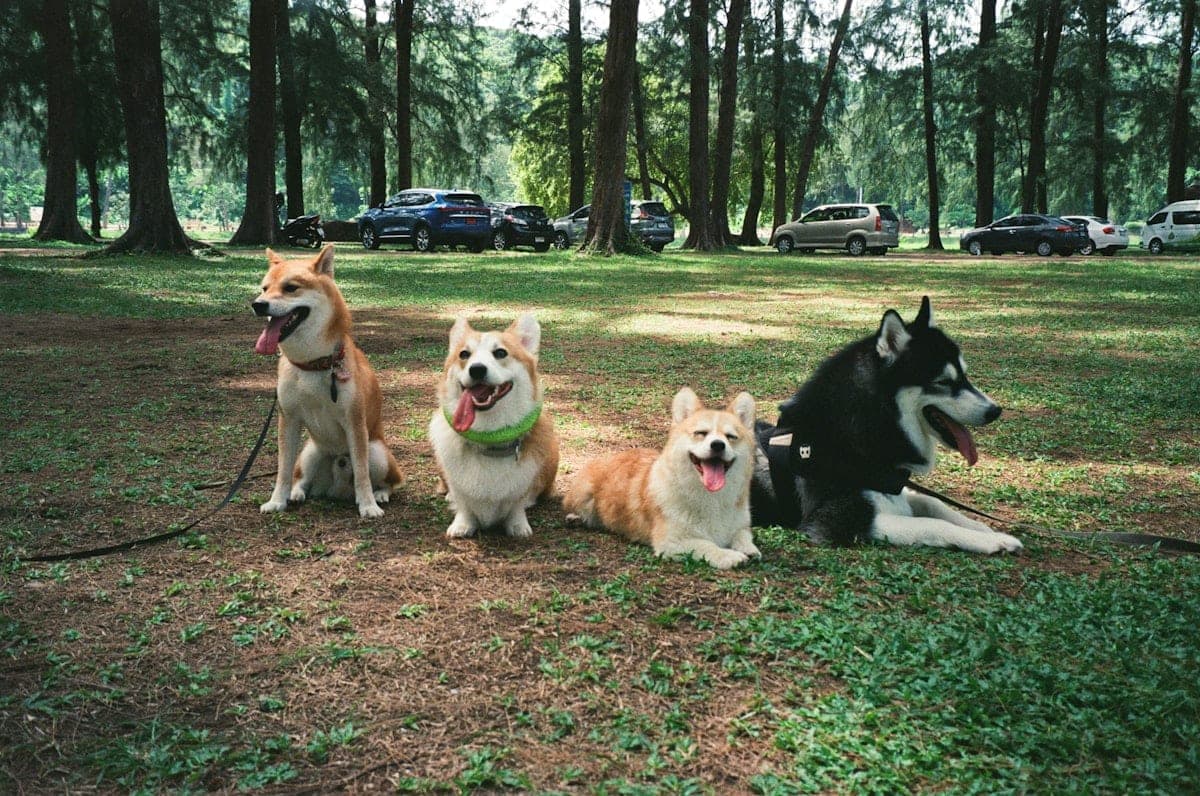
When to Keep a Dog Leashed Throughout the Party
Some dogs should stay leashed for the entire event. This is not a failure of the party or of the dog. It’s honest assessment of what’s manageable.
Keep a dog leashed throughout if:
- The dog has shown reactivity toward any of the specific other dogs who are attending
- The dog hasn’t been in a multi-dog social situation before and you’re unsure how they’ll respond
- The dog’s owner isn’t confident about their ability to recall the dog reliably in a high-distraction environment
- The dog is a known resource guarder and the party involves food
- The dog is elderly or in pain and may respond defensively if other dogs approach them unexpectedly
A leashed dog can still participate fully: they get their birthday treats, they can interact at a distance, they can be part of the group. The leash is management, not exclusion.
When to Separate a Dog Entirely
Sometimes the honest answer is that a particular dog isn’t going to do well in this specific group, on this specific day, with the energy level in the room.
Separation is the right call when:
- A dog is showing sustained stress signals and isn’t calming down despite space and time
- A dog has had two or more tense interactions during the party
- An owner is stressed about their dog’s behavior, which is being communicated to the dog through the leash and their energy
- The dog is making other dogs uncomfortable (persistent following, mounting, over-the-top greeting behavior that isn’t being received well)
A separated dog can rest in a crate, a car, a quiet room, or be walked away from the main party area by their owner. This is sometimes the kindest thing for the dog.
What to Do If an Incident Happens
Dogs are dogs. Even the best-structured parties can have a moment of tension. Knowing what to do in the moment makes a significant difference.
Immediately: separate the dogs. Don’t yell at the dogs. Don’t reach for collars if the dogs are in contact. Make a loud sharp noise to interrupt attention, then use leashes or physical barrier to create distance. Two people, each handling one dog, is the safest method.
Check for injuries. Dog fights that look and sound scary are often more dramatic than damaging. Check both dogs thoroughly for puncture wounds, especially around the face, neck, and legs. Puncture wounds can be small and easy to miss but can become infected quickly. Any wound that breaks skin warrants veterinary evaluation.
Don’t panic. Dogs read human stress. Your calm reassures the dog that the situation is resolved and not ongoing. Assess, manage, and don’t spiral.
Decide whether to continue the party. If the incident was minor and both dogs have calmed down, you can often continue with increased management: the two dogs involved stay separated for the rest of the party. If the incident was serious, or if either dog is still aroused and watchful, it may be time to end the event early. A party that ends an hour early because you read the situation correctly is better than a party that continues into a second incident.
Don’t assign blame during the party. If there’s something to discuss about dog behavior or management, that conversation happens between the owners later, not in the middle of the party while both dogs and humans are still in an activated state.
The Reactive Dog Host
What if it’s the birthday dog who’s reactive?
Same structure, extra honesty. A reactive dog can absolutely be the guest of honor at their own birthday party. The adjustment is in the guest list and the format.
A reactive dog’s birthday party might be: just the birthday dog, one other dog they know and trust, and the humans. Or: just the birthday dog and all the humans. A dog who’s reactive doesn’t need a crowd of dogs to have a celebration. They need their special cake, their special toys, and the people (and one or two specific animal friends) they’re comfortable with.
The birthday is for the dog. The guest list serves the dog’s comfort, not the human’s idea of what a party looks like.
Party Supplies Worth Having
These are the products that actually work for a dog birthday party. All ship Prime:
- COMSUN Dog Birthday Party Supplies Set, bandana, hat, banner, numbers, and cake topper in one box. Solid value.
- Puppy Cake Complete Birthday Cake Kit, peanut butter flavor with silicone pan and candle. Makes a full double-layer cake or bone shapes.
- Zohokie Dog Birthday Party Decorations, full pink set with hat, bandana, banner, tutu, and balloons. The blue version is here.
- Bocce’s Bakery Birthday Cake Treats, wheat-free, peanut butter vanilla biscuits. Works as the treat bag filler or direct smash cake alternative.
- Zuke’s Mini Naturals Training Treats, small enough for party games, soft enough for older dogs.
Sources
- ASPCApro: Canine Behavior: Dog Introductions Webinar
- Animal Humane Society: How to Successfully Introduce Two Dogs
- Journey Dog Training: How to Introduce a Reactive Dog Using the Parallel Walk Method
- Certification Council for Professional Dog Trainers (CCPDT): Resources
- You
- Your pets
- Confirm