
Corn Snake Birthday Party Ideas: Celebrating Your Colubrid's Hatch Day
Corn snake birthday ideas from keepers who know the species: the hatch day feast, morph photo session, handling tips, and why corn snakes are one of the most birthday-friendly reptiles in the hobby.
As an Amazon Associate we earn from qualifying purchases.
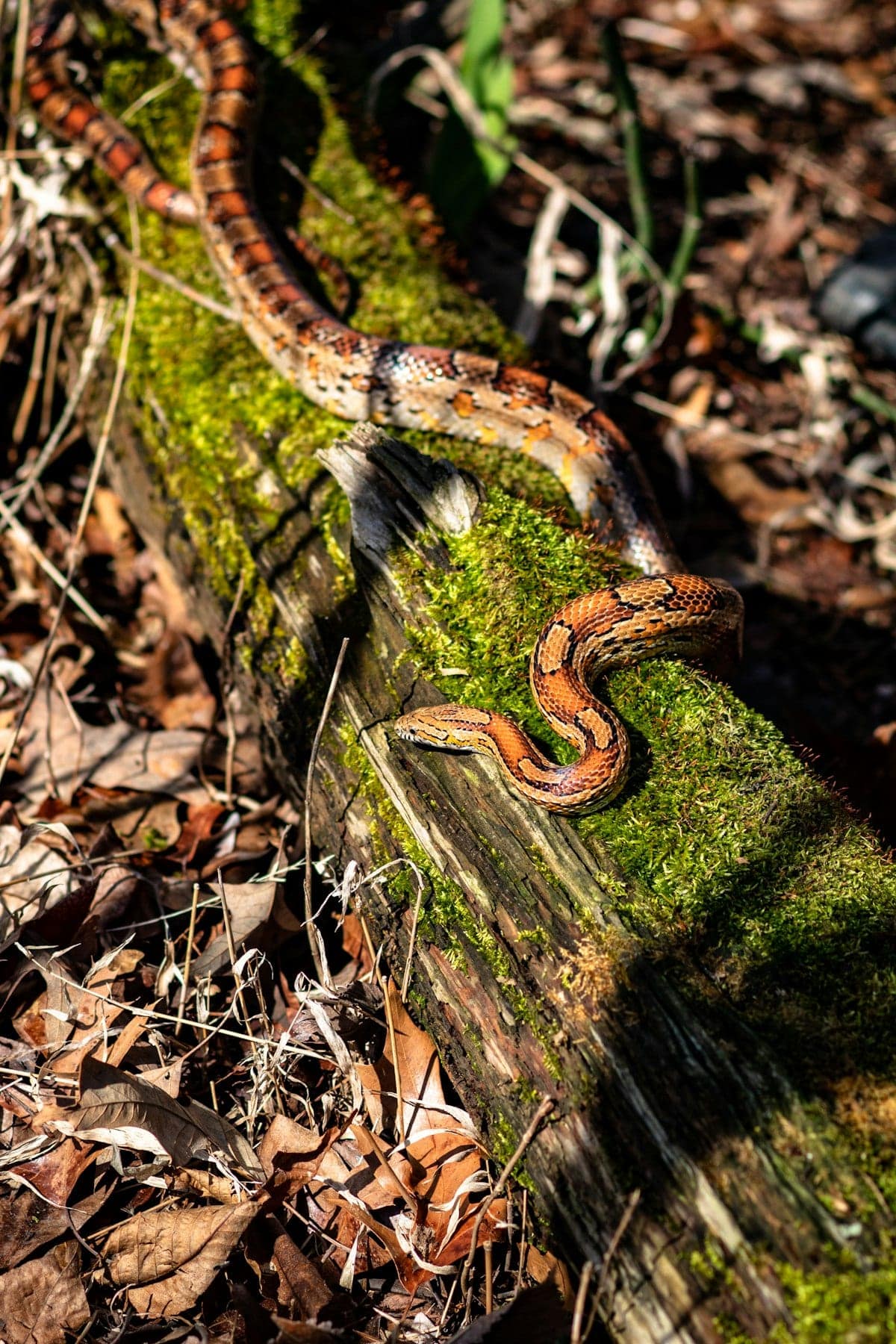
Corn snakes are one of the best reptiles to celebrate with because they actually engage with the world. They’re curious, generally smaller and more handleable on average than a ball python, and they come in a huge range of morphs worth photographing, though the ball python morph market is the larger of the two. Ball pythons are stockier and famous for hiding constantly; corn snakes are often actually out in the open when you want to find them, which is a real advantage on a birthday you’re trying to document. The birthday celebration is a timely feeding (frozen-thawed prey, appropriately sized), a morph photo session, and a handled exploration session. Corn snakes tend to make the most of all three.
Hatch Day vs. Gotcha Day
Corn snakes from reputable breeders typically come with a hatch date. The corn snake morph community is similar to the ball python community in this regard: breeders document lineages, parents, and hatch dates because morph genetics matter to buyers. Check your purchase records.
If you got your corn snake from a rescue or pet store without records, you have an estimated age. Gotcha day works perfectly well as the functional birthday. Many keepers celebrate both: a small feast on the approximate hatch date and a larger community post on the gotcha day anniversary.
The Birthday Feast
Corn snakes eat rodents exclusively in captivity. The correct feeding format is frozen-thawed prey, warmed to approximately 100°F before offering. VCA Hospitals’ corn snake care guide is explicit on this: live prey is not recommended because the rodent can injure the snake during feeding.
Prey sizing. The prey item should be approximately the same diameter as the snake’s thickest point, typically just behind the head. For most adult corn snakes, this is an adult mouse. Juveniles eat pinky and fuzzy mice.
The warming method. Defrost the prey item in the refrigerator overnight, then warm it to 100°F by placing it in a zip-lock bag and submerging in warm water for 10 to 15 minutes. Check the temperature with a thermometer or heat gun before offering. A properly warmed prey item will be taken more readily.
Feeding location. Some keepers feed in the enclosure; others use a separate feeding container to prevent the snake from associating hands entering the enclosure with food. Either approach works for corn snakes, which are not typically as food-aggressive as some other colubrids. Choose the method you use consistently.
Timing. Don’t offer the birthday feast if your snake is in shed (opaque/blue eyes). Wait until the shed is complete. Don’t handle for 48 to 72 hours after feeding.
Frequency. Adult corn snakes typically eat every 7 to 10 days. The birthday should align with the normal feeding schedule, not be forced into it.
The Birthday Morph Photo Session
Corn snakes were the original designer reptile. The morph hobby, the selective breeding of color and pattern variants, was pioneered in corn snakes before most other species had developed morph programs of any depth. There are hundreds of documented morphs and combinations, from the classic wild-type blotched pattern to albino, anerythristic, lavender, opal, tessera, and many others.
The birthday morph photo is an annual record of your snake’s development. Young corn snakes often look quite different from their adult coloring, and the comparison photos are genuinely interesting.
The top-down reference shot. Lay your corn snake on a neutral, contrasting surface and photograph from directly above. This shows the full pattern clearly and is the standard morph identification format in the community.
The coil portrait. Corn snakes coil more loosely than ball pythons and often explore while loosely coiled, giving you a dynamic subject that’s easier to photograph than a balled-up BP.
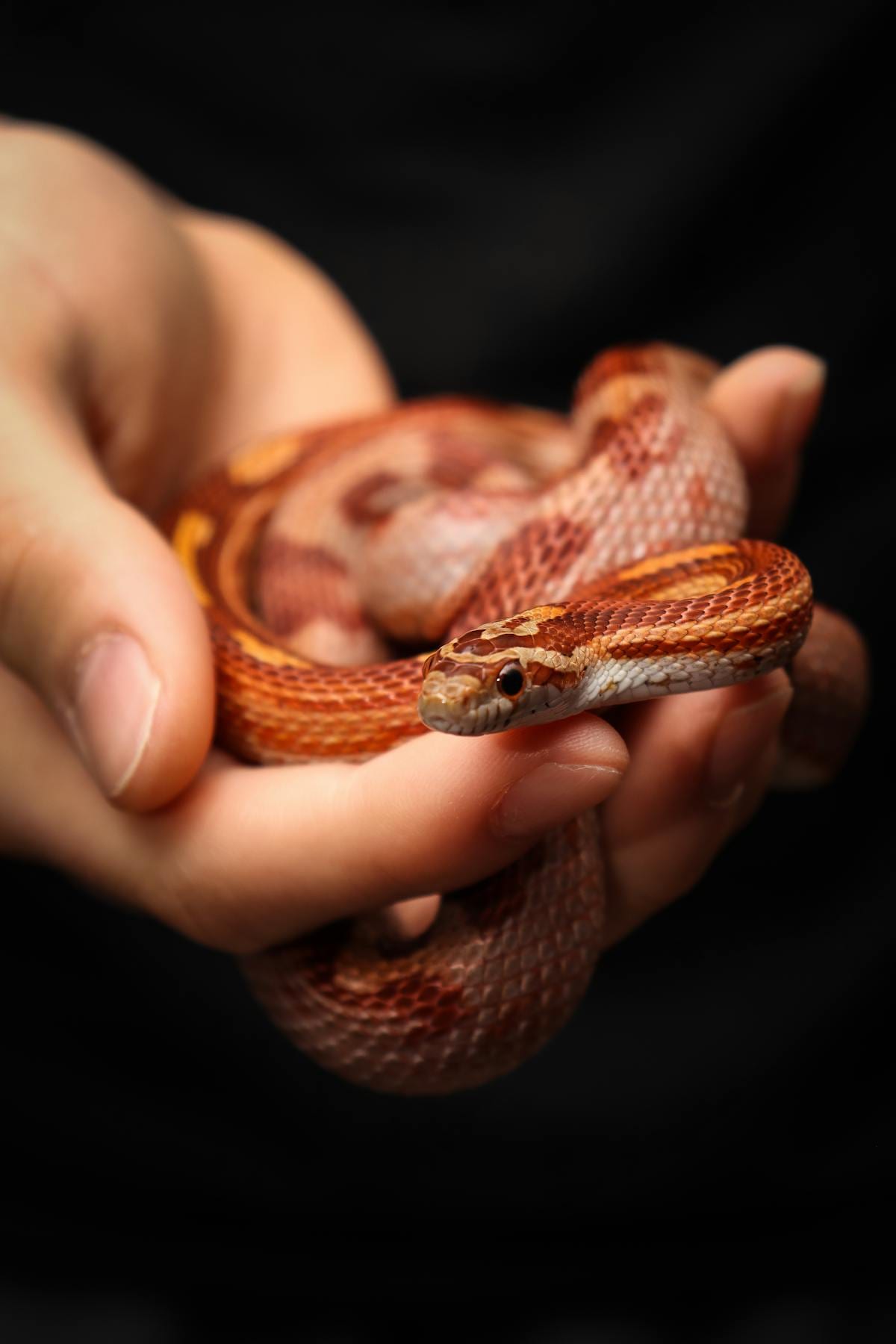
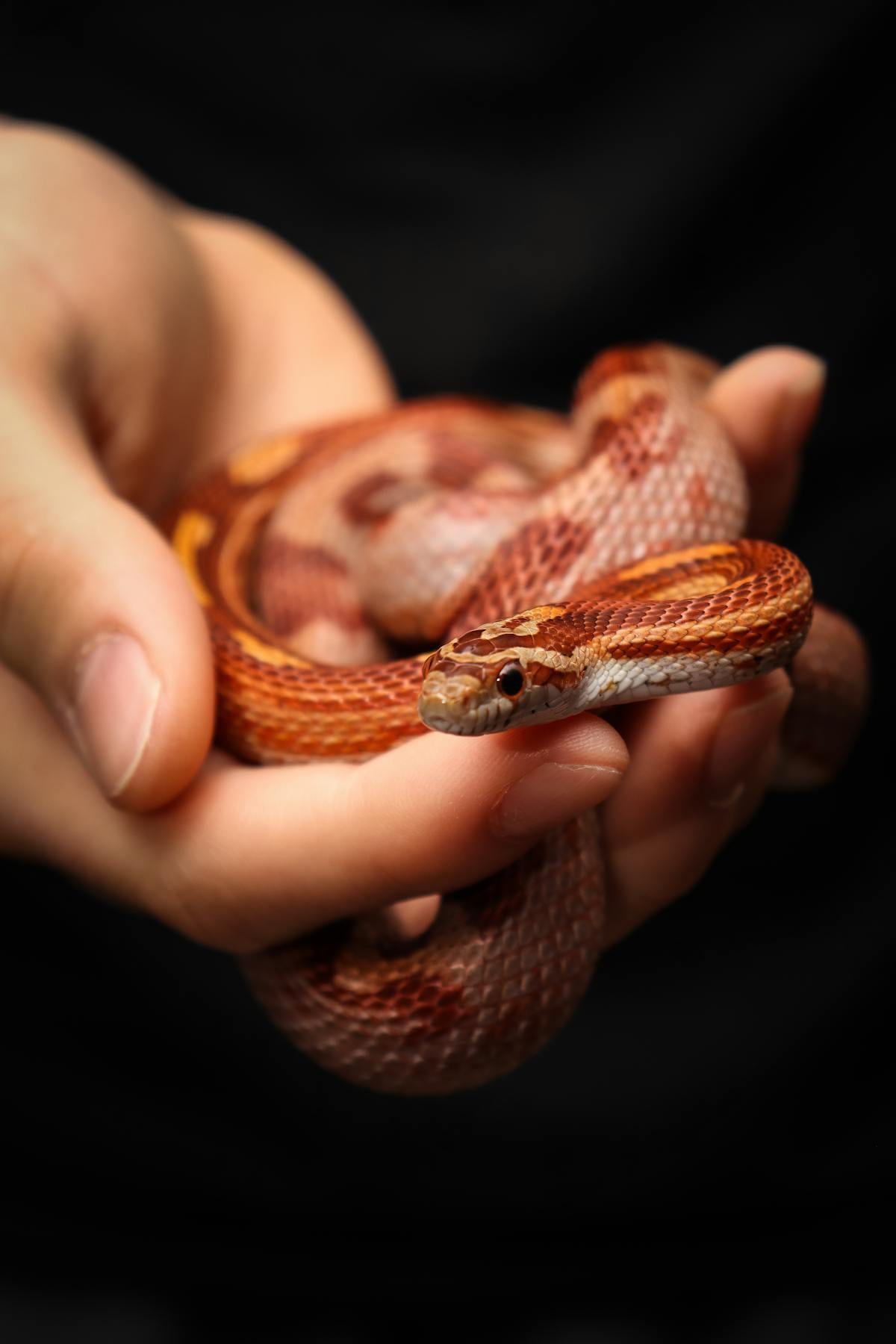
The handling shot. Corn snakes move through and around hands in a way that photographs well. Let your snake explore your hands and forearms while someone else photographs from the side. The snake’s head investigating and looking around makes for good frames.
The face close-up. Corn snake faces are elegant: the pointed snout, the round eyes, the tongue flick if you catch it. Macro mode at close range catches all of it.
Taking it outside. A short outdoor session works if the space is secure, fenced or walled with no gaps, no other pets around, and you keep a hand on the snake the entire time. Natural light shows true morph color better than any indoor setup does. What doesn’t work: setting a corn snake on the grass and stepping back for the wide shot. They’re fast, motivated, and a “just for a second” walk to reposition the phone is exactly how corn snakes end up in a neighbor’s yard.
Community platforms. r/cornsnakes and the many corn snake Facebook groups have active birthday and hatch day communities. The morph identification and hatch day post format is: a clear top-down or side photo, the morph name(s), the hatch date and current age, and typically one personality note about the snake.
Birthday Handling Session
Corn snakes are the community’s most-recommended beginner snake precisely because they handle well with regular positive interaction. Most corn snakes that are handled consistently from juvenile age become genuinely comfortable with human contact.
The birthday handling session can be longer than the usual 20 to 30 minutes if the snake is showing calm behavior. Corn snakes explore. They investigate bookshelves, they look around corners, they stick their heads into shirt collars. All of this is normal curious behavior, not a sign the snake is trying to escape.
If your snake is hiding, that’s not a bad sign. Corn snakes lean crepuscular to nocturnal, so vanishing into a hide for most of the day is normal behavior, not a birthday snub. Before assuming something’s off, check the temperature gradient: 85°F on the warm end, 72 to 75°F on the cool end, with a hide available on each side. A snake with nowhere comfortable to sit on the cool side will camp in the warm hide around the clock.
Watch for stress signals. Tail rattling (corn snakes rattle their tails when threatened, like a dry rattlesnake imitation), musking (releasing a foul-smelling secretion), or striking at your hand. Any of these means the session should end.
Don’t handle in shed. Pre-shed corn snakes have reduced visibility and are more defensive. The milky-blue eye period is the clearest indicator. Wait until the eyes clear and the shed is complete before the birthday handling session.
Birthday Enrichment
Corn snakes are active and curious. They use enrichment more actively than most snake species.
Supervised room exploration. In a secured room (doors closed, gaps sealed, no other pets) a corn snake given floor time will explore thoroughly and with visible intent. This is genuinely engaging for both the snake and the keeper. Watch them work through the room systematically.
New enclosure items. A new piece of cork bark, a new hide location, a different configuration of climbing branches. Corn snakes will investigate everything changed in their environment.
A puzzle feeder. Some keepers hide the prey item inside a cardboard tube or a layered hide to make the snake “hunt” for it. This is enrichment that simulates natural foraging behavior. The birthday is a good occasion to try this if you haven’t.
An escape audit. Corn snakes have earned their reputation as escape artists, and the birthday is as good an occasion as any to check the enclosure for gaps: around the lid hinges, where the lid meets the body, any hairline crack in the back panel. A corn snake can squeeze through a shockingly small opening. Lid clips or a proper lock are the community standard, not an overreaction.
How Long Do Corn Snakes Live?
In captivity with proper care, corn snakes regularly live 15 to 20 years. Some have reportedly reached 25 years. This is a long birthday list. A properly cared-for corn snake is a decades-long relationship.
Snake Birthday Supplies
Snake birthdays: enrichment and enclosure upgrades are the practical gifts:
- REPTIZOO Reptile Hide Multi-Level Hideout, hook-mounted hide that also works as a climbing ledge.
- Reptile Hide with Coconut Moss, humid hide option for snakes that need a moisture gradient.
- Cork Bark for Snake Enclosure, natural cork bark as birthday enclosure enrichment.
Sources
- VCA Hospitals: Corn Snakes as Pets
- ASPCA Animal Poison Control: People Foods to Avoid Feeding Your Pets
For the ball python comparison: Ball Python Birthday Party Ideas
For the general exotic pet birthday framework: Pet Birthday Party Guide
- You
- Your pets
- Confirm