
Cat Birthday Party Favor Ideas That Cats Will Actually Use
Cat party favors that work: why silvervine beats catnip, which treats travel, what toys are size-safe, the string rule that sends cats to surgery, and budgets from $2 to $15 a guest.
As an Amazon Associate we earn from qualifying purchases.
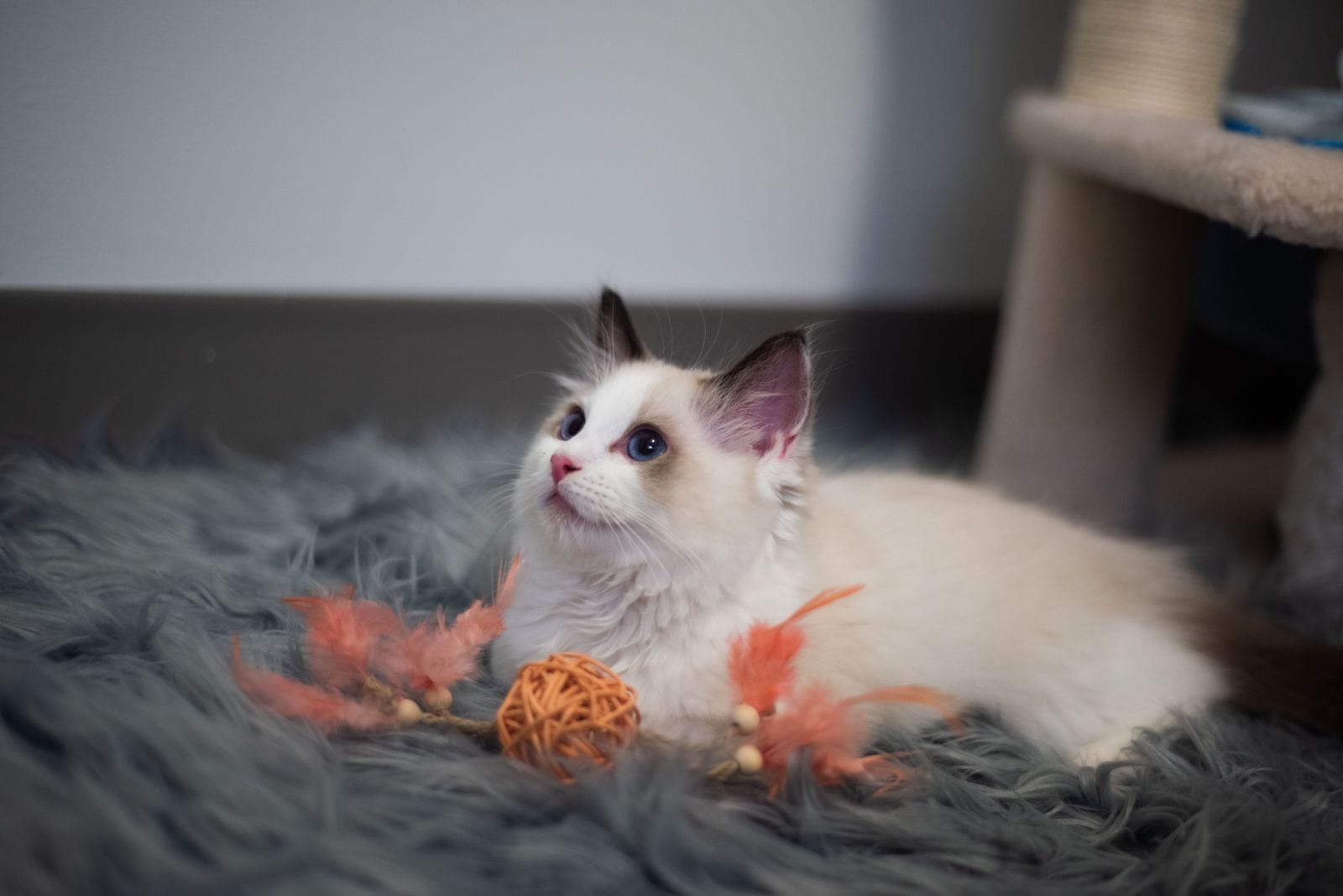
A cat party favor is a small bag with one silvervine or catnip toy, one single-ingredient treat, and nothing with a string on it. Silvervine is the better pick: in a 100-cat study, 79% responded to it against 68% for catnip, and it worked on 71% of the cats catnip failed.
That’s the short version. The long version is mostly about who the favors are really for, because a cat birthday party usually has no cat guests at all.
Who Are Cat Party Favors Actually For?
Three scenarios, and they need completely different bags.
Your own cats. The most common case by a mile. There are no guest cats, because inviting strange cats into a cat’s home is a genuinely bad idea and every cat person knows it. The “favors” are the birthday cat’s own haul, plus a matching one for each housemate cat so nobody starts a resource dispute over the new toy. If you live with three cats, you make three bags. Multi-cat birthdays covers the politics.
Friends’ cats, sent home with the humans. This is the version that looks like a dog party favor. Human guests come over, admire the cat, eat cake, and take a small bag home to their own cat. Nobody’s cat has to travel. This is the correct format and it’s the one worth putting effort into.
A rescue or cat cafe fundraiser. Volume, sealed packaging, allergy labels visible. Different rules, mostly the same contents.
What you almost never do is hand a favor bag to a cat at the party. A cat at a party with strangers is under the bed. Leave the bag by the food bowl and let her find it after everyone leaves.
What Should Go In a Cat Favor Bag?
Two items and a card. Any more and you’re building a gift basket.
The first item is a plant toy, and here’s where most cat favor guides get it wrong by defaulting to catnip.
Sebastiaan Bol and colleagues tested 100 domestic cats on four plants and published the results in BMC Veterinary Research in 2017. Silver vine (Actinidia polygama, sold as matatabi) got a positive response from 79% of cats. Catnip got 68%. Tatarian honeysuckle managed 53% and valerian root 47%. The number that matters for a favor bag is this one: of the 31 cats that did not respond to catnip, 22 responded to silver vine. That’s 71% of the catnip refusers, salvaged by a different plant.
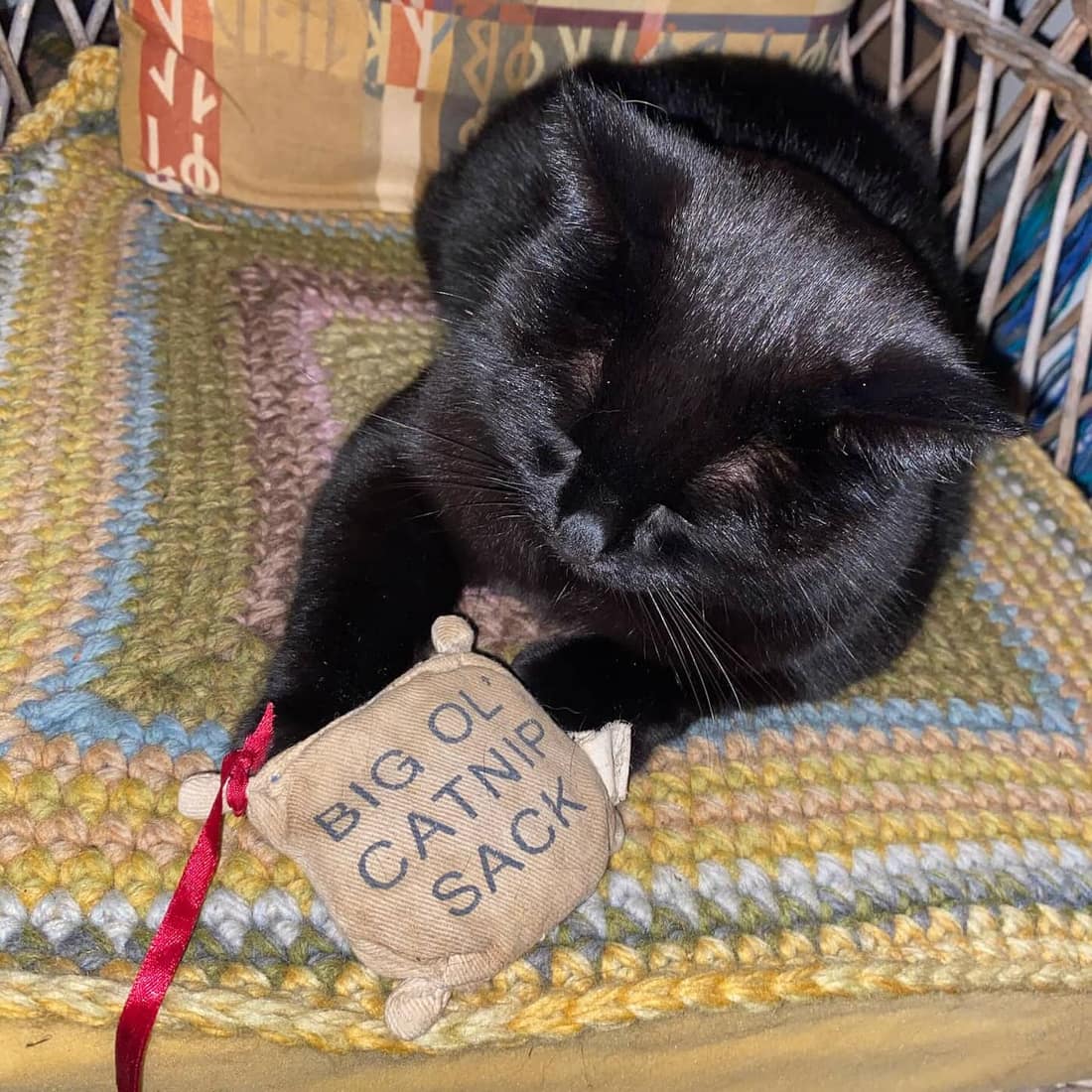
So if you’re filling bags for cats you’ve never met, silvervine sticks are the higher-percentage play. They’re dried vine chew sticks, cheap in bulk, and cats gnaw them rather than just rolling on them. Catnip is still fine, and VCA’s own line is that “catnip is harmless for most cats and can add a lot to their enrichment.” Put both in if the budget allows and let the receiving cat vote.
The split is thought to be genetic, with an autosomal dominant pattern proposed in the literature. Either way it’s fixed. A cat who ignores catnip isn’t broken and isn’t going to learn to like it.
The second item is a treat. The card is a note with the cat’s name and, if you made anything, an ingredient list.
Which Treats Travel Well as Favors?
Sealed, single ingredient, and nothing that needs refrigeration between your house and theirs.
Freeze-dried single-ingredient treats. The best category. Freeze-dried chicken breast, minnows, salmon, or beef liver, one ingredient, shelf stable, and the receiving human can read the label in two seconds. A 1 oz pouch runs about $6 to $11 and splits into four or five favor portions.
Lickable purée tubes. The squeeze tubes are the single most reliably exciting thing you can put in a cat favor bag. They’re individually sealed, they cost roughly $0.50 to $0.80 each in a multipack, and the cat gets a hand-fed experience out of it rather than a bowl.
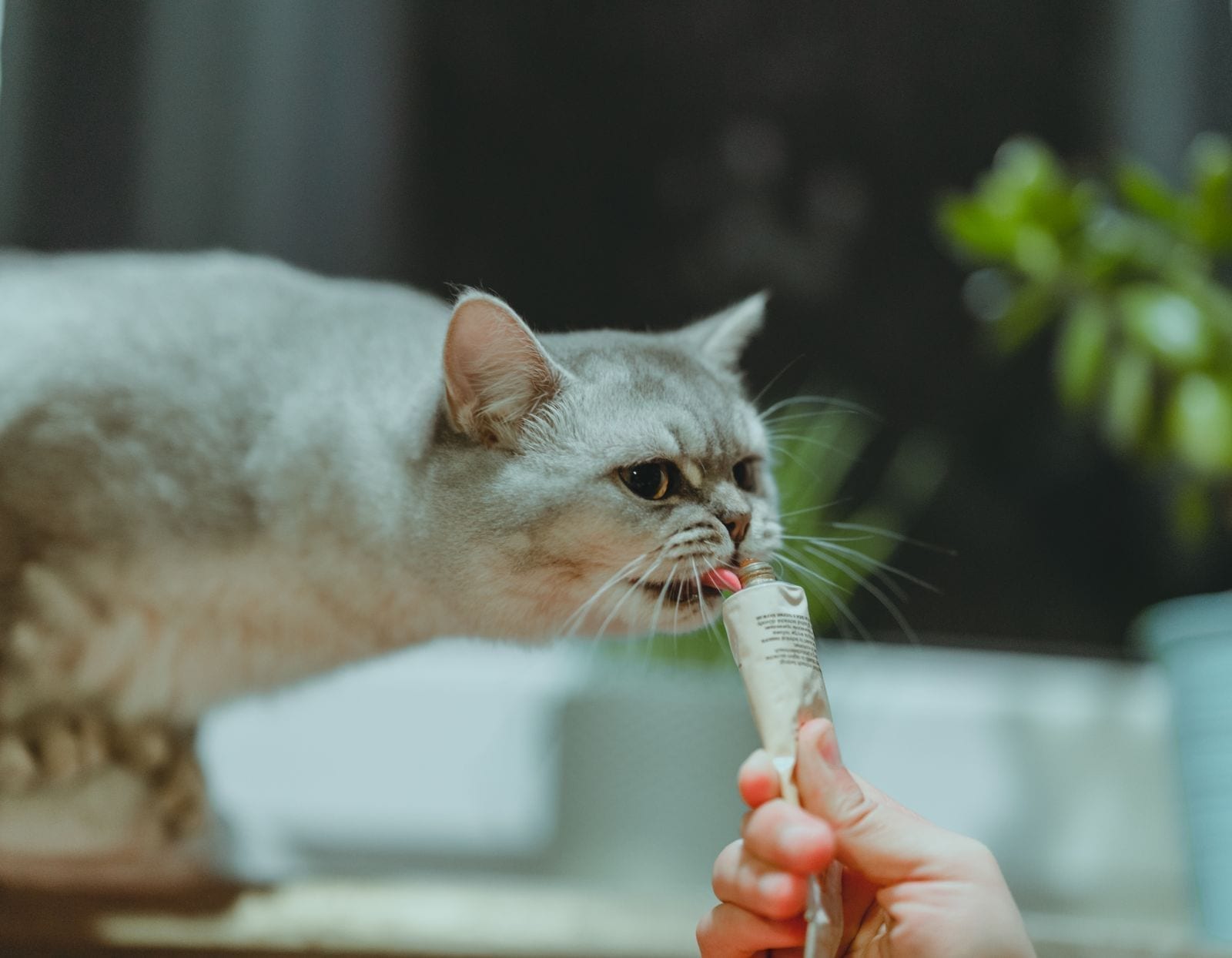
Commercial crunchy treats in a sealed bag. Fine, unremarkable, and the safest thing to give a cat with an owner you don’t know well.
What does not travel: anything homemade and perishable. A cat cake made of shredded chicken and cream cheese is a great birthday cake and a terrible favor, because it sits in someone’s tote bag for three hours. Serve that at the party. The recipe is in cat birthday treats.
And skip anything sugary or “birthday cake flavored” that leans on frosting. Cats can’t taste sweet at all. Li and colleagues published the genetics of it in PLoS Genetics in 2005: cats carry a 247 base pair deletion in Tas1r2, one of the two genes that build the sweet receptor, which leaves it as an unexpressed pseudogene. The sweetness in a novelty cat cupcake is doing precisely nothing for the cat. Commercial birthday-themed cat treats that use a meat base are a different story and work fine.
Portion note: treats should stay around 10% of the cat’s daily calories, so a favor bag holding four days of treats is a favor bag with instructions on it.
What Toys Work as Favors?
Cheap, small, replaceable, and safe to leave with an unsupervised cat. That last requirement rules out most of the toy aisle.
Springs. Plastic coil springs are the most underrated cat toy in existence. They cost about eight cents each in a 60 pack, they skitter unpredictably on hard floors, and cats bat them under the fridge forever. Perfect favor: two per bag.
Toy mice. The default, and still good. Look for stitched-on features rather than glued-on plastic eyes and noses, which come off.
Kicker toys. A long stuffed toy the cat can grab with the front paws and rabbit-kick with the back. This is the one favor that gets used daily for months. Around $8 to $12, so it’s the splurge item.
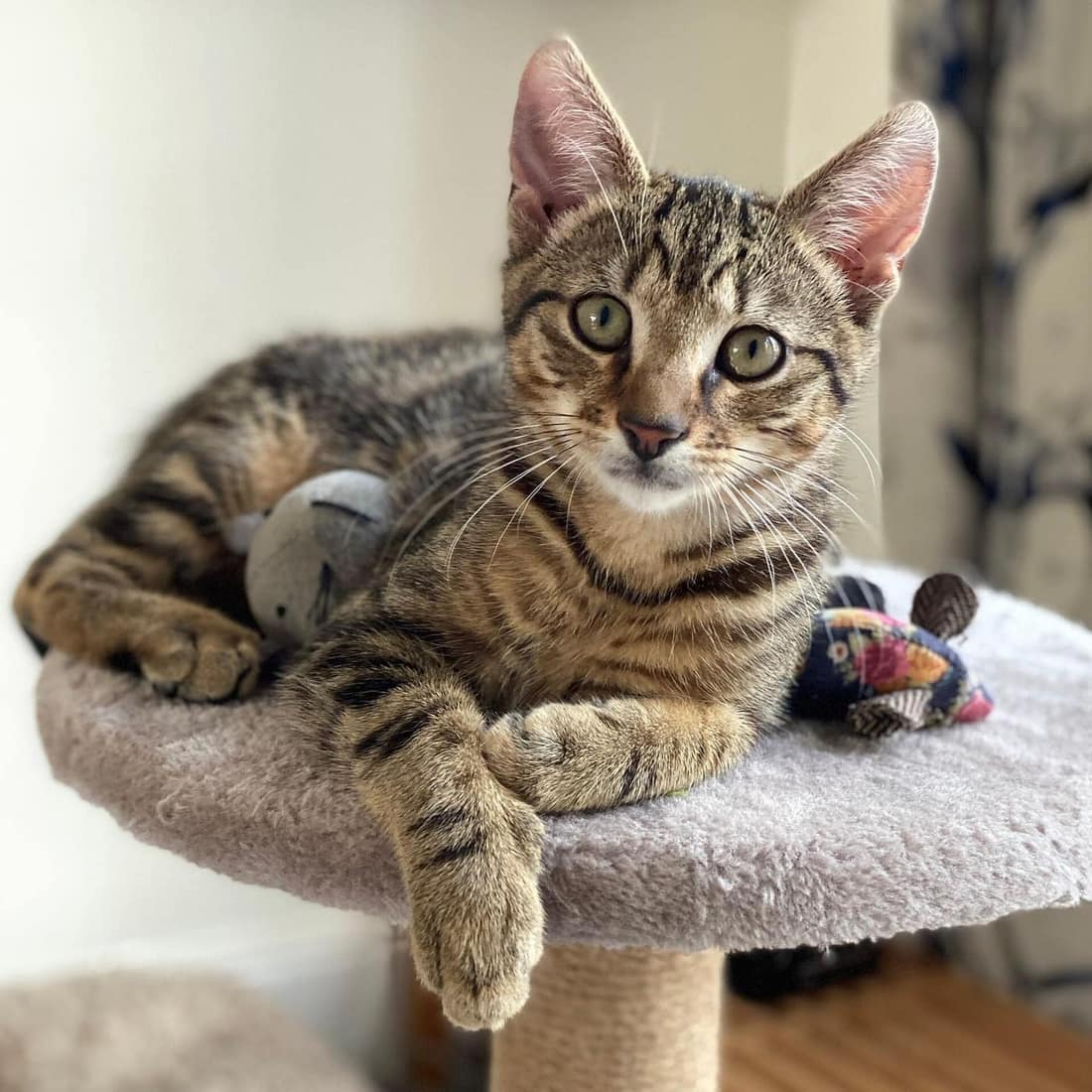
Rattan or seagrass balls. Woven natural-fiber balls, light enough to bat across a room, chewable, and they cost under a dollar each in a multipack.
Not a food puzzle. Puzzle feeders are excellent long-term enrichment and a weak favor. Cats are the one species that has been tested and found not to prefer working for food: Mikel Delgado’s team at UC Davis ran seventeen indoor cats through ten thirty-minute trials with a puzzle and an open tray side by side, and the cats ate more from the tray. If you want to give a puzzle, give it as a gift with an explanation, not as a party favor.
A wand toy is the one thing worth handing to the human rather than the cat. It’s an interactive toy and it needs the person at the other end. If you’re picking one thing that produces the most play in the receiving house, that’s it, and our cat birthday toy roundup covers what holds up.
What Should Never Go In a Cat Favor Bag?
One item matters more than everything else on this list.
No string, ribbon, yarn, tinsel, or elastic hair ties. Not as a toy, not as bag decoration, not tied around the handle. This is not the same caution as the dog version, where the concern is a swallowed squeaker. In cats it’s a specific surgical emergency called a linear foreign body, and VCA describes the mechanism plainly: one end lodges, often at the base of the tongue, the free end trails down the gut, and the intestine bunches up along it while the string saws at the lining. VCA calls intestinal perforation the most significant possible complication. The treatment is an exploratory laparotomy, sometimes with the intestine opened in several places, and one to three days in hospital afterward.
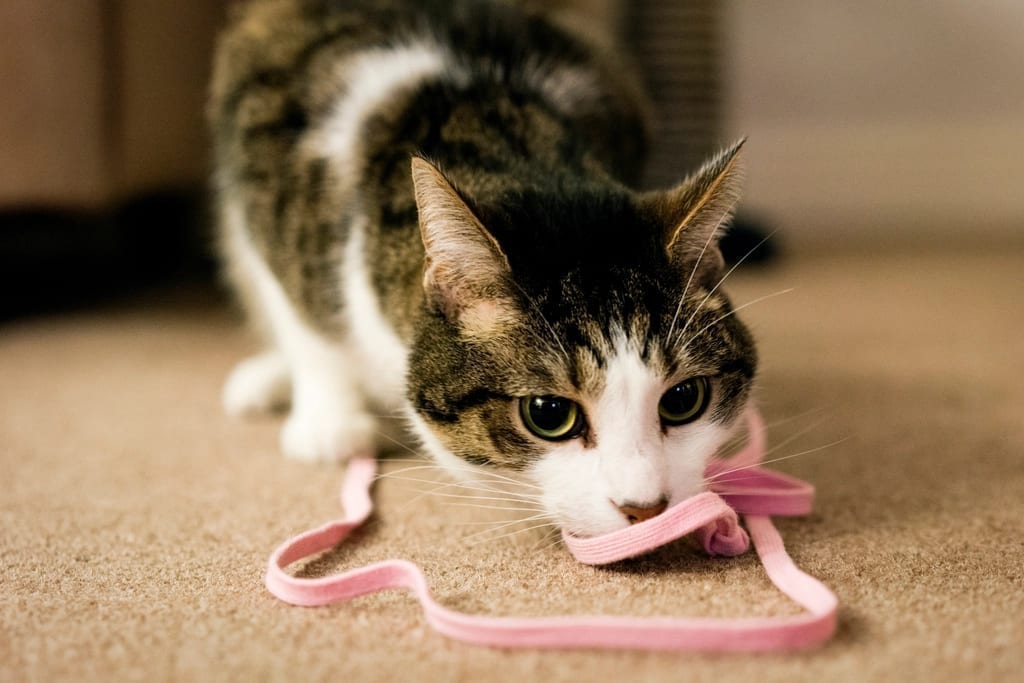
So the packaging is where dog favor habits become dangerous. Tie the bag shut with a paper tag and a sticker. Never a ribbon bow.
The rest of the do-not-include list:
- Loose feathers and glued-on parts. Fine on a wand you supervise, not fine loose in a bag.
- Toys smaller than a ping pong ball for a household with a large cat or a kitten who swallows things.
- Anything with a bell that can detach. Check that it’s crimped inside, not glued on.
- Human food. Onion and garlic are worse for cats than for dogs per the ASPCA, and they’re in almost every savory human snack. Chocolate, grapes, raisins, alcohol and xylitol are on the same list.
- Essential oils and scented sachets. Cats metabolize many of them poorly. Not a favor.
- Milk. The saucer-of-milk image is a century of bad advertising. Most adult cats are lactose intolerant.
What’s the Cheapest Favor That Still Feels Like Something?
Two springs and a silvervine stick in a paper bag, about $0.35 a guest, and cats do not care that it was cheap.
If you want the honest ranking by value delivered per dollar:
| Favor | Cost per guest | How long the cat engages |
|---|---|---|
| Plastic spring toys, 2 per bag | $0.15 | Months, sporadically |
| Silvervine stick | $0.30 | 10 to 20 minutes per session, reusable |
| Woven rattan ball | $0.70 | Weeks |
| Purée treat tube | $0.60 | 2 minutes, and they remember it |
| Plush toy mouse | $1.20 | Days to weeks, until it goes under the couch |
| Freeze-dried treat portion | $1.50 | 1 minute |
| Kicker toy | $9.00 | Months, daily |
Three budgets, assembled:
Under $2 a guest: two springs, one silvervine stick, one sealed treat portion, kraft bag, handwritten tag.
$4 to $6 a guest: the above plus a plush mouse and a purée tube.
$10 to $15 a guest: a kicker toy, a silvervine stick, a purée tube, and a small bag of freeze-dried single-ingredient treats. This is a real gift and it’s appropriate when the guest list is three people you actually know.
How Do You Package a Cat Party Favor?
Small kraft bags, folded over, with a paper tag. That’s it, and the reason is the ribbon rule above.
A 4.5 by 2.5 by 6 inch kraft bag holds a favor for a cat exactly. Bigger bags look empty. Cellophane works too and shows off the contents, but cellophane fragments are chewable, so tape it rather than tying it and tell the receiving human to open it away from the cat.
Write the receiving cat’s name on the tag. It takes ninety seconds for a party of six and it’s the difference between a favor and a handful of stuff.
For the birthday cat herself, put the haul in an open cardboard box on the floor. The box is not packaging. The box is the best item in it.
What Do You Give the Human Guests?
Something, because at a cat birthday party the humans are the actual guests.
The version that works: a small print of the cat, or a sticker of her face, or a photo card with her name and the date. It costs a few dollars, it goes on a fridge, and it’s a better souvenir than a bag of candy. If you’re feeling ambitious, print the same photo every year and people will start collecting them.
That’s the real structural difference between this and a dog party. Dog party favors go home with dogs who came to the party. Cat party favors go home in a human’s bag to a cat who was never invited anywhere.
Cat Favor Supplies Worth Buying
Prices move; check current pricing before ordering. Buy the toys in bulk packs, which is where the per-guest math works.
- Luystoka Silvervine Sticks, 30 pack, the matatabi chew sticks from the study above. Under a dollar a stick, and they work on cats catnip does nothing for.
- INABA Churu Lickable Purée Cat Treats, the sealed tube format. One per bag.
- ISMARTEN Cat Spring Toys, 60 pack, the cheapest genuinely good favor on this page.
- PureBites Chicken Breast Cat Treats, 1.09 oz, one ingredient, freeze-dried, easy to portion.
- Vital Essentials Freeze-Dried Minnows, for the cat who has met every chicken treat on the market.
- TTcat Curly Plush Kicker Toy with Catnip and Silvervine, the splurge favor, and the one that gets used every day.
- Temptations Birthday Cat Treats, meat-based rather than sugar-based, which is the only way a birthday-themed cat treat makes sense.
- qiqee Mini Kraft Gift Bags, 100 pack, 4.5 x 2.5 x 6 inch, the right size so the bag doesn’t look half empty.
For the rest of the party, cat party supplies covers decorations and setup, what cats can eat at a party has the full food list, and cat birthday party ideas has the formats that work for a cat who tolerates about twelve minutes of celebration. If your cat came from a shelter, cat Gotcha Day is the other date worth marking.
Assemble the bags the night before, put them somewhere with a closed door, and check the count in the morning. A cat will find them.
Sources
- Bol S, Caspers J, Buckingham L, et al. “Responsiveness of cats (Felidae) to silver vine (Actinidia polygama), Tatarian honeysuckle (Lonicera tatarica), valerian (Valeriana officinalis) and catnip (Nepeta cataria).” BMC Veterinary Research, 2017;13:70, doi.org/10.1186/s12917-017-0987-6
- VCA Animal Hospitals, Linear Foreign Body in Cats, vcahospitals.com/know-your-pet/linear-foreign-body-in-cats
- Li X, Li W, Wang H, et al. “Pseudogenization of a Sweet-Receptor Gene Accounts for Cats’ Indifference toward Sugar.” PLoS Genetics, 2005;1(1):e3, journals.plos.org
- Delgado M, Han B, Bain MJ. “Domestic cats (Felis catus) prefer freely available food over food that requires effort.” Animal Cognition, 2021, link.springer.com
- ASPCA Animal Poison Control Center, People Foods to Avoid Feeding Your Pets, aspca.org
- VCA Animal Hospitals, What Is Catnip and How To Grow Your Own, vcahospitals.com
- You
- Your pets
- Confirm