
Cat Birthday Party Decorations That Survive Contact With an Actual Cat
Cat birthday party decorations that actually work: what a cat will destroy, what a cat will fear, what's a genuine safety hazard, and how to decorate around real feline behavior.
As an Amazon Associate we earn from qualifying purchases.
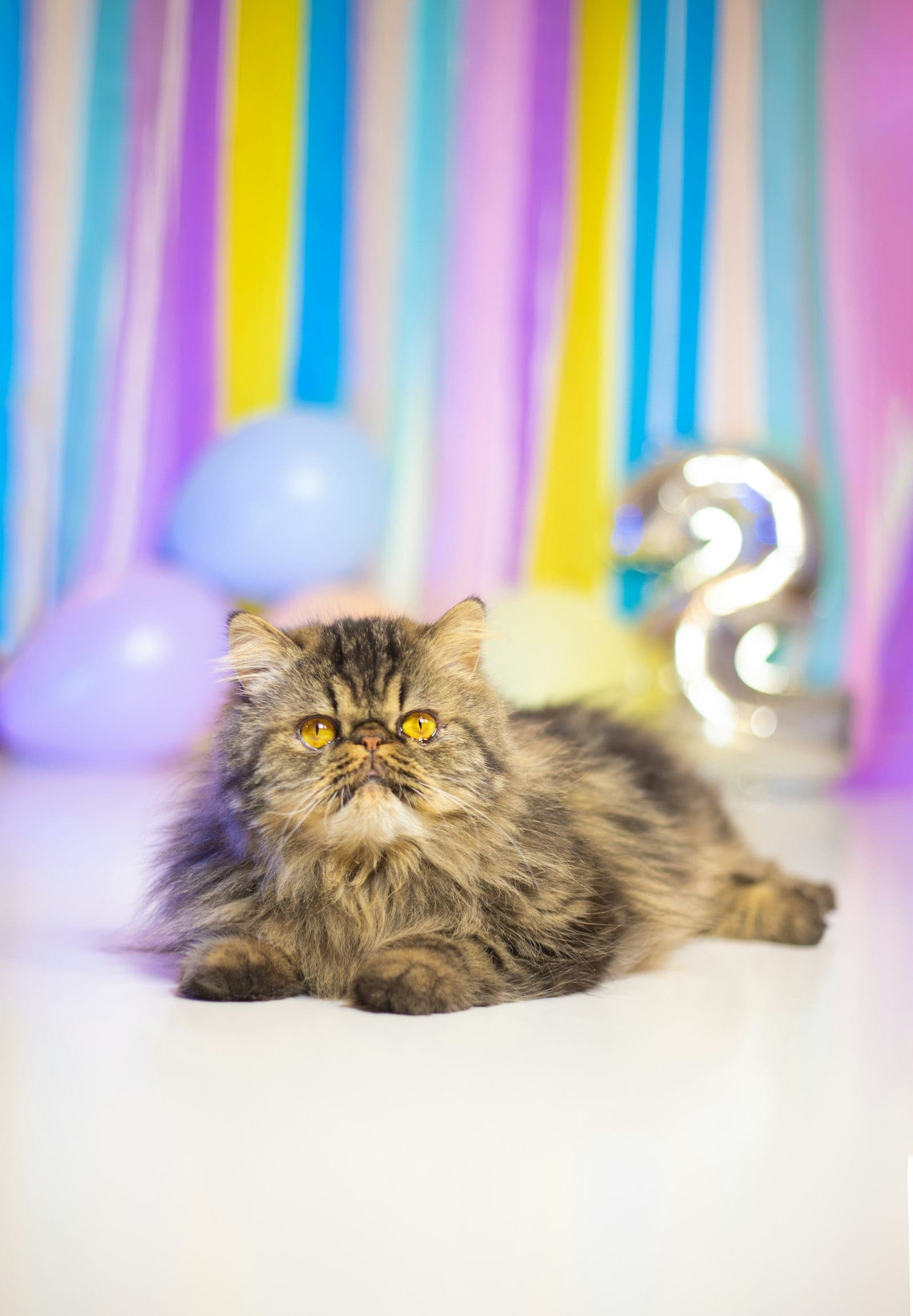
A dog destroys decorations by dragging them to the floor and chewing. A cat destroys decorations by finding the one you thought was unreachable and proving you wrong. Different animal, different physics, different failure points. This guide is built around what actually happens when real decorations meet a real cat: what gets climbed, what gets batted off a shelf, what gets ignored completely, and which items are a genuine trip to the emergency vet rather than just a mess. For the broader party framework, including food and the overall vibe a cat will actually tolerate, see Cat Birthday Party Ideas.
The Physics Problem: Cats Don’t Just Reach, They Arrive
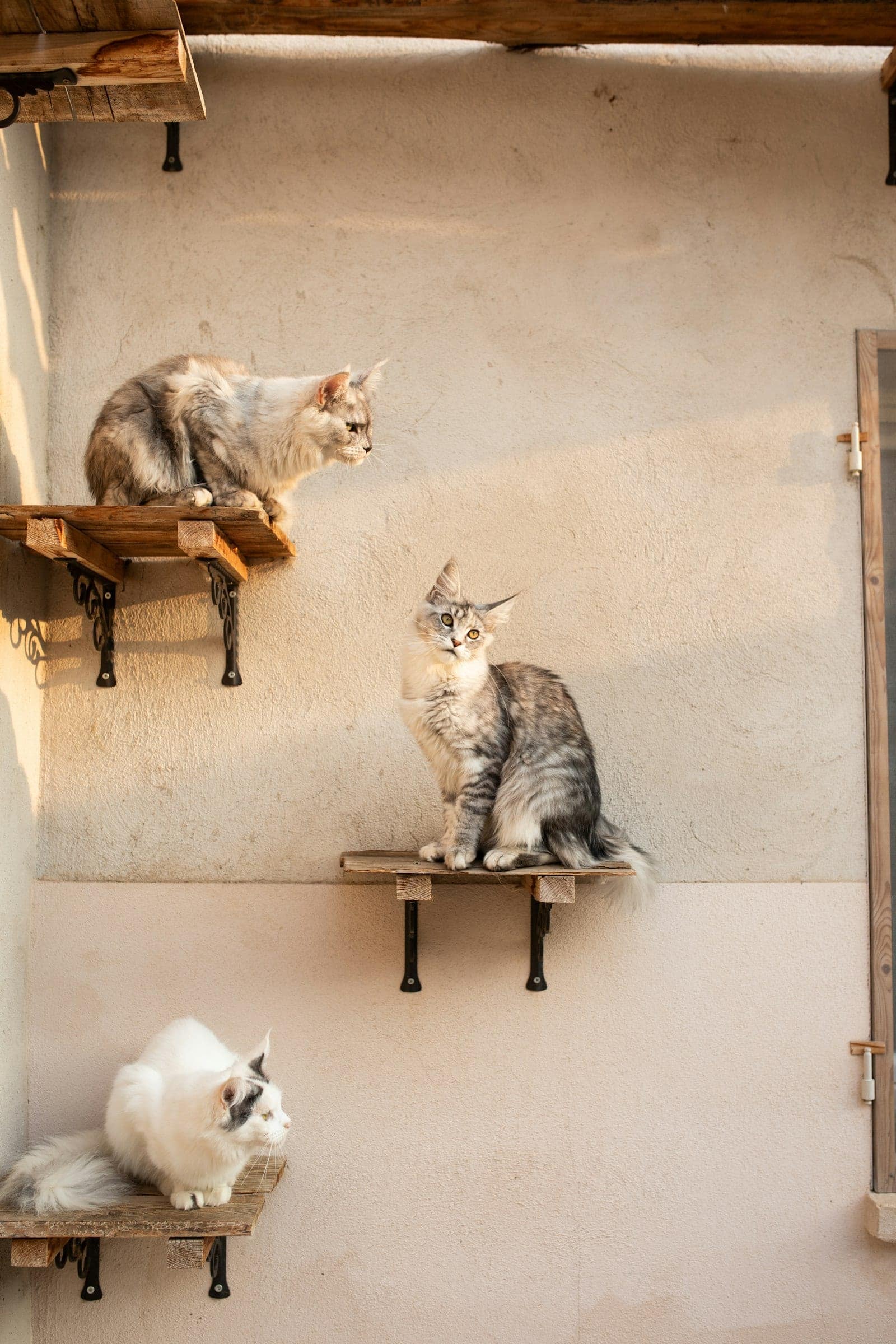
The single biggest mistake in cat party decorating is borrowing the dog logic: hang it high and call it safe. Height alone doesn’t work on a cat the way it works on a dog, because a cat’s default mode of interacting with a room is vertical. A dog’s reach is a function of standing on its hind legs or jumping straight up for a second. A cat’s reach is a function of anything within jumping distance of anything else: a chair to a counter, a counter to a shelf, a shelf to the top of a doorframe. An adult cat can clear roughly five to six feet from a standing jump, and that’s before factoring in furniture as stepping stones.
The Ohio State University Indoor Pet Initiative frames this as a basic feature of cat behavior rather than a quirk: cats seek elevated space because it lets them observe their surroundings and feel secure doing it. That instinct doesn’t turn off for a party. If there’s a new, interesting, dangling object in the room, a cat’s first move is often to find the highest available approach to it, not to walk up and sniff it from the floor the way a dog would.
Practical translation: “high on the wall” is not automatically “out of reach” in a home with cat trees, bookshelves, or a curious cat willing to launch off the back of the couch. Check the actual jump path from every piece of furniture in the room before you decide something is safe. If a banner is 7 feet up but there’s a bookshelf 4 feet away that gets a cat to 6 feet, you haven’t solved the problem, you’ve built a launch pad.
The Hazard That’s Genuinely Different for Cats: String, Ribbon, and Tinsel
This is the section that matters most, and it’s not really about “decoration survival,” it’s about a real medical emergency.
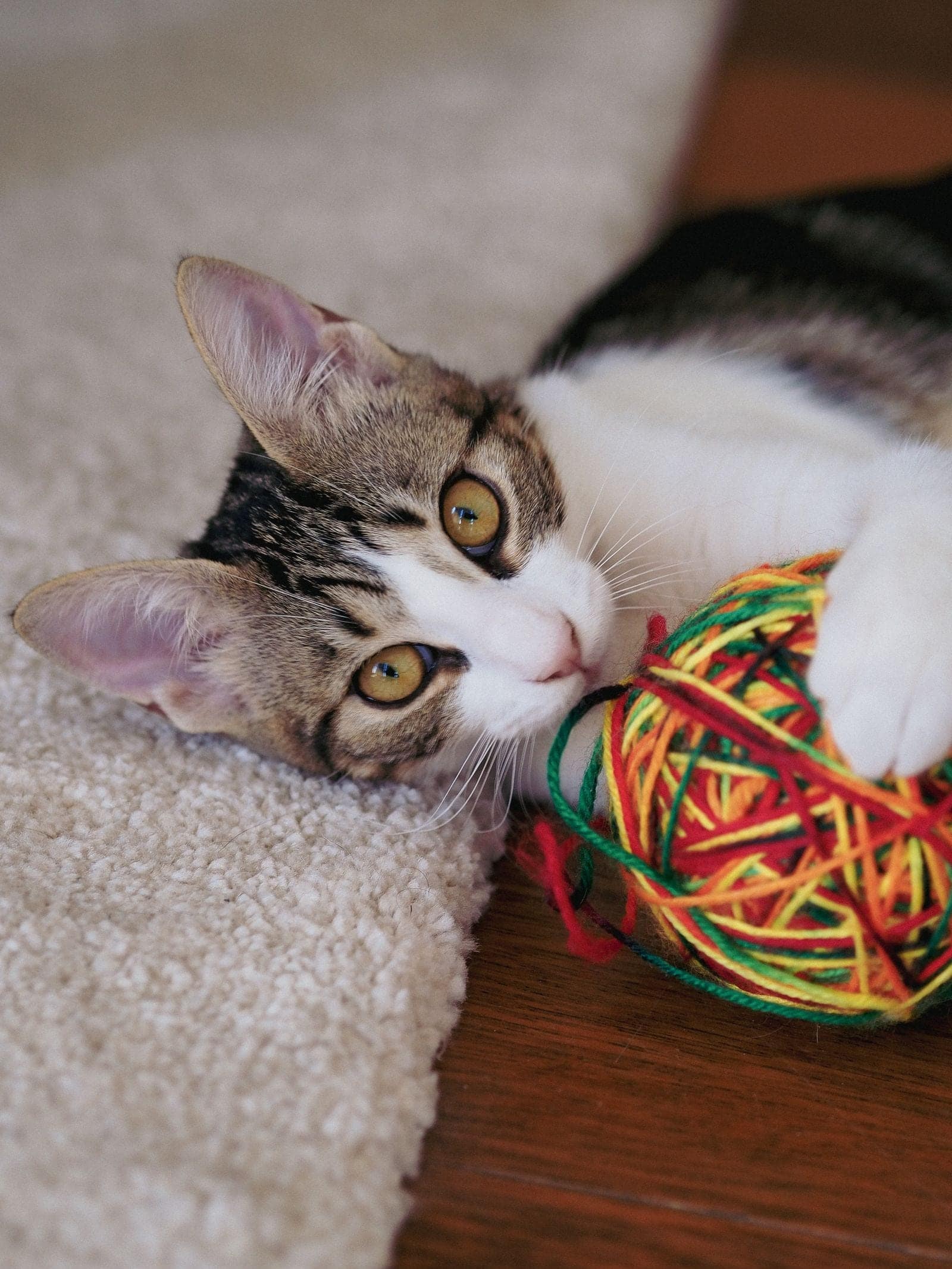
Cats are drawn to string, ribbon, curling ribbon, tinsel, and yarn specifically because these materials move and catch light in ways that mimic prey. A cat batting at a piece of ribbon isn’t misbehaving, it’s running its full predatory sequence on the closest available target. The problem is what happens if that ribbon gets swallowed.
According to VCA Animal Hospitals, a swallowed linear object like string, ribbon, thread, or tinsel can anchor at one end, often under the tongue or in the stomach, while the rest trails into the intestines. As the intestines try to move the material along through normal peristalsis, they bunch and fold around it, and the material can saw through the intestinal wall, causing perforation and peritonitis, a life-threatening abdominal infection. This is not a “monitor and see” situation. It’s an emergency exploratory surgery situation, with 1-3 days of hospitalization afterward if the cat survives the first 72 hours.
The ASPCA’s own holiday safety guidance is direct about this specific to cats: “Kitties love tinsel as it’s sparkly, light-catching and easy to bat around and carry in their mouths,” and ingestion “can lead to an obstructed digestive tract, severe vomiting, dehydration and possible surgery.” Their recommendation is to skip tinsel entirely and decorate with something else. They flag the same risk for confetti strings, curling ribbon on gift wrap, and yarn.
What this means for a cat birthday party, specifically:
Never use curling ribbon on balloons, gifts, or favor bags where a cat has floor access. If you’re wrapping a gift for a human guest, keep it in a room the cat can’t enter until it’s opened, or skip the ribbon and use tape.
Skip tinsel garland entirely. It’s the single most-cited cat hazard in ASPCA’s own materials, and there’s no safe height for it once a piece breaks off and drifts to the floor, which tinsel does constantly.
Watch confetti and paper streamers with any stringy component. Standard paper streamers are lower-risk, but anything advertised as “curling” or with an attached string or ribbon tail should be treated the same as tinsel.
If a cat does ingest string, ribbon, or tinsel, don’t pull on any visible end. Pulling can worsen the internal damage. Call your vet or the ASPCA Animal Poison Control Center at (888) 426-4435 immediately.
This one is worth repeating because it’s easy to underestimate: this is more dangerous for cats than for dogs specifically because of how cats hunt and play. A dog with a piece of ribbon in its mouth is usually chewing and dropping it. A cat is stalking, batting, and often trying to eat the “prey” outright, string included.
Balloons: The Item That Splits Every Cat Down the Middle
Balloons are the least predictable decoration at a cat party because cat reactions to them run in two completely opposite directions, and you often don’t know which one you’ve got until the balloon is already in the room.
Some cats are frightened of balloons, and it’s not random. Mylar and latex both generate static electricity that can give a cat a small shock on contact, the material makes unpredictable, jerky movements when air currents hit it, and a popped balloon produces a sudden loud noise, none of which reads as “toy” to a startled cat. A cat that’s never been exposed to balloons before may bolt, hide, or avoid the room entirely for the rest of the party.
Other cats treat a mylar balloon as the best toy in the house. The crinkly, reflective material and the way it catches air and light hits the same sensory triggers as a crinkle toy, a category of cat toy built specifically around that sound because it mimics the rustle of prey moving through leaves or grass. A confident, playful cat may bat, chase, and “hunt” a floating mylar balloon for the entire party.
There’s no way to predict which reaction you’ll get from a cat who hasn’t been around balloons before, so treat the first balloon in the room as a test, not a centerpiece. Introduce it early, at a distance, and watch the response before building the rest of your setup around it. If your cat is worried, remove it immediately, don’t wait for them to “get used to it” during their own birthday party. If your cat is delighted, a single mylar balloon on a weighted, non-string ribbon anchor (not curling ribbon, a flat weighted base) can become the whole party.
Latex balloons carry an extra risk regardless of temperament: if popped and chewed, latex fragments are a choking and digestive hazard, same as with dogs. Skip latex for any party with a cat present. Foil/mylar balloons, kept off the floor and away from claws, are the safer of the two options if you want a balloon at all. If your cat has a known noise sensitivity or history of anxiety, skip balloons entirely and lean on the crinkle-toy alternative below, which delivers the same sensory payoff without the risk of a startling pop.
What Actually Survives (and What Your Cat Will Probably Enjoy)
A birthday banner mounted flush to the wall, above any furniture-assisted jump path. Same logic as a dog party, with the added step of checking what’s climbable nearby. A banner on a bare wall with no adjacent shelf, bookcase, or tall furniture within jumping range will survive the whole party untouched.
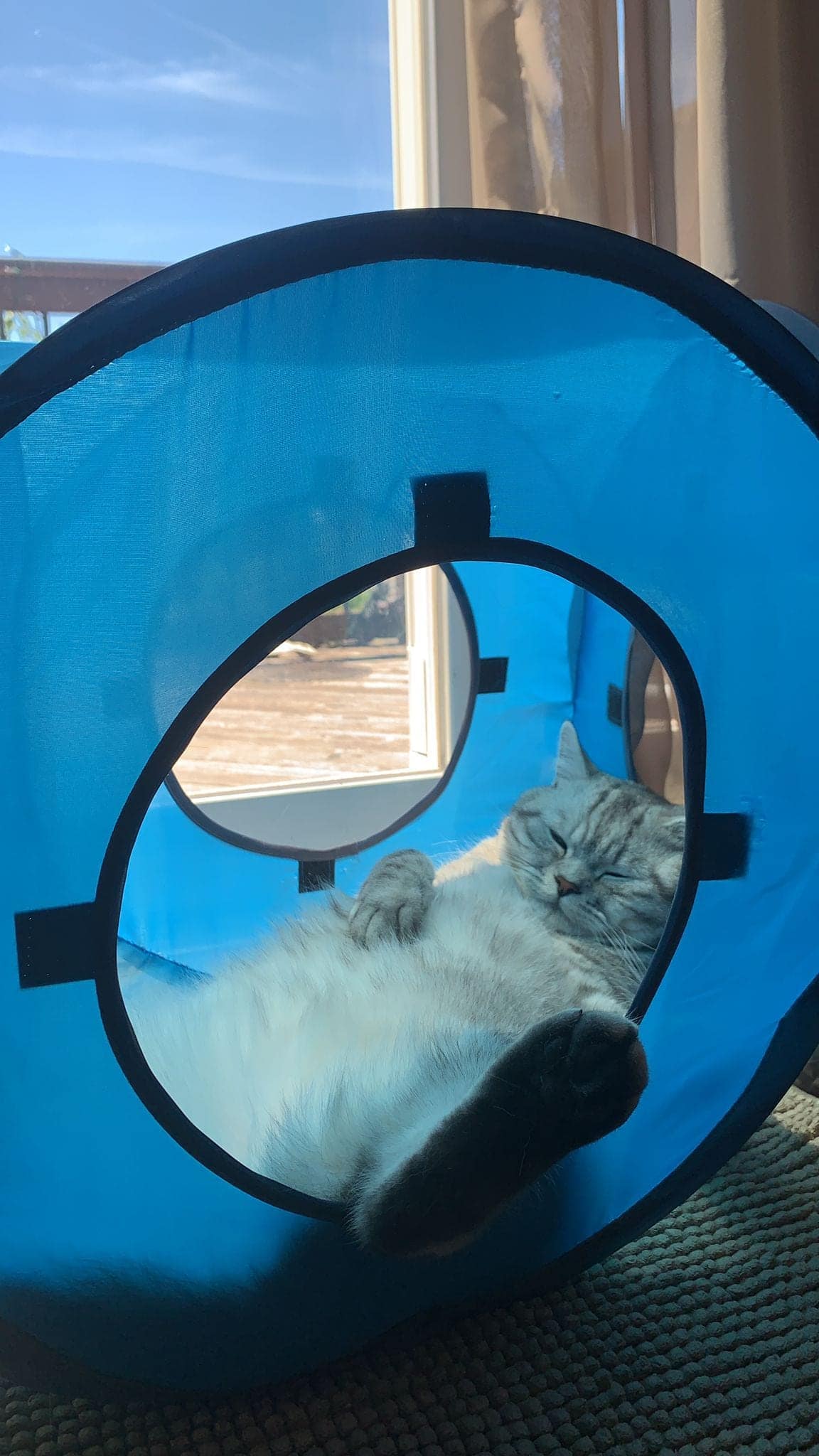
A cardboard box with tissue paper or a birthday banner tucked inside it. This does double duty as both a decoration and the single most reliable cat-engagement device available. Cats are drawn to enclosed spaces regardless of how plain the box is, and a “birthday box” with soft paper inside gives you a guaranteed photo of your cat actually participating in the decor, rather than ignoring it from across the room.
Paper streamers without a string or curling-ribbon component, hung at cat-batting height (roughly 3-4 feet). These will get shredded, and that’s fine. Plain crepe-paper streamers don’t carry the same linear-foreign-body risk as curling ribbon or tinsel because they tear into short pieces rather than pulling free as one long strand, but keep an eye on the pieces on the floor afterward and pick them up before they become a chew toy.
A crinkle ball or crinkle toy instead of, or alongside, a mylar balloon. These are purpose-built around the same crinkle-sound appeal as a mylar balloon but without the static shock, the sudden-pop risk, or the unpredictable drifting movement that spooks nervous cats. Several are made from food-grade acetate rather than true foil, specifically marketed as a lower-risk alternative to mylar toys.
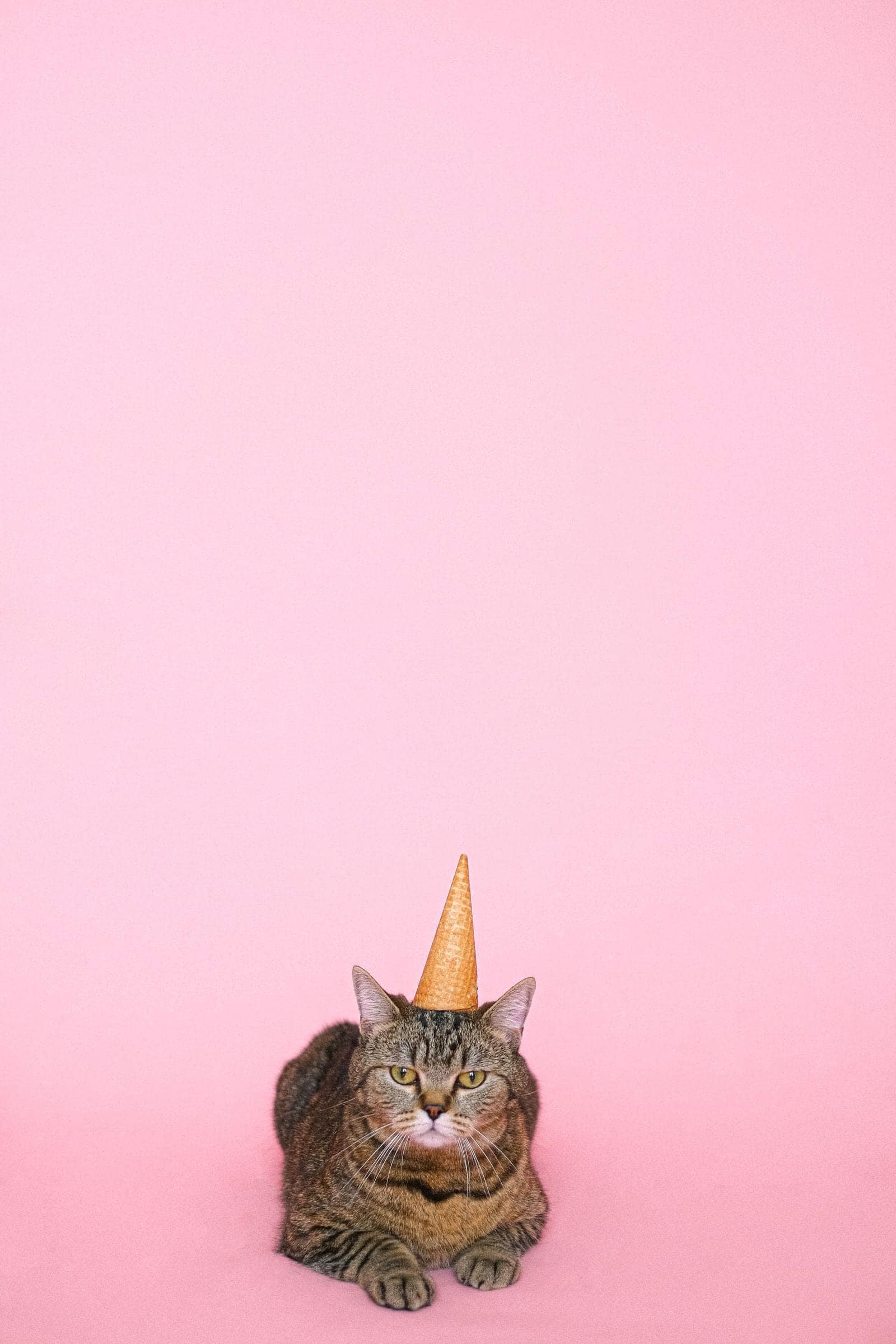
A soft felt party crown or bandana, not a rigid hat. Rigid party hats with a chin strap tend to come off within seconds and can genuinely stress a cat who dislikes head pressure. A soft crown with a stretch elastic, or a bandana tied loosely, gets you a longer photo window with less resistance.
Tablecloths, plates, and the cake itself, kept at counter height. Cats investigate edges more than they raid full surfaces the way dogs do, so a properly set table at standard counter or table height is reasonably safe territory for your themed color scheme, plates, and cake stand.
What to Skip Entirely
Tinsel, in any form, at any height. Covered above, but worth its own line: there’s no acceptable placement for tinsel in a home with a cat present. It sheds, it drifts to the floor, and the ASPCA specifically recommends against it for this exact reason.
Curling ribbon on anything a cat can reach, including gift wrap, balloon tails, and favor bags. Use flat ribbon, tape, or skip ribbon altogether on anything within cat territory.
Latex balloons. Choking and digestive hazard if popped and chewed, plus the sudden-pop noise is a guaranteed stress trigger for at least some cats at the party.
Anything with loose, dangling small parts (charms, bells on a string, fringe) at any height a cat can reach through furniture-assisted jumping. If it dangles and it’s small enough to swallow, assume it’ll be tested.
A rigid photo backdrop or prop stand with no weighted base. Cats jump onto things humans wouldn’t expect, including a leaning foam board backdrop. Weight the base or clip it flush to a wall instead of leaning it.
The Photo Setup That Actually Works for Cats
Getting a good photo of a cat near your decorations is a different exercise than getting one of a dog. Dogs will hold a pose near a treat. Cats respond to movement more than food in the moment, so the trick is a wand toy or a piece of string (supervised, human-held, not left within reach) waved just above and behind the camera lens. Your cat tracks the movement, looks toward the camera, and you get the shot in the same window their attention is caught.
The other approach, and often the better one, is patience: set the scene, put the banner up, get the cake or treat plate in frame, and wait for your cat to settle into the space on their own terms. A cat who arrives at the setup voluntarily photographs better than one being coaxed into position, and it usually only takes a few minutes once the room is quiet.
For the full room-by-room approach to setting up a cat party space, including where to put the food, the photo zone, and an exit route your cat can retreat to, the indoor cat party setup guide covers layout in more depth. If you’re planning around a multi-cat household, the decoration calculus changes again: separate resource zones matter more than any single decoration choice, which the multi-cat birthday guide walks through. And if the celebration is for a senior cat, lower-effort, lower-stimulation decorating (skip the balloons, keep the crown optional) tends to go over better, covered in the senior cat birthday guide.
The Box Is Still the Best Decoration You’ll Buy for Free
If there’s one decoration that outperforms everything on this list, it’s a plain cardboard box with something soft inside it. It costs nothing, it requires no safety check, and cats reliably investigate it faster than a store-bought prop. Put the birthday banner or a scrap of tissue paper inside a box in the middle of the party space, and you’ve built both a decoration and the activity in one move. It also solves the “what if my cat hides from the party entirely” problem, because a box the cat chooses to sit in still reads as “birthday cat, present and accounted for” in every photo, even if they never touch anything else you set up.
Decorations Worth Buying
A cat party decoration budget goes further than a dog party budget because you need fewer, smaller items. Here’s what actually holds up:
- EXPAWLORER Cat Birthday Party Supplies, cake hat, bandana, and flag banner decorations in one set. The soft-construction pieces outlast the rigid ones.
- Jumbo Cat Crinkle Ball, the mylar-balloon alternative for cats who want the crinkle sound without the static shock or sudden-pop risk.
- Cat Birthday Banner Decorations, search results for wall-mounted fabric and paper banners in the 6-7 foot hanging range.
- Cat-Safe Wand Toy for Photos, the tool that gets your cat looking toward the camera instead of at the treat.
For the treat and cake side of the table, the cat birthday treats guide covers what’s actually safe to serve, and the cat party supplies guide has the full breakdown of what’s worth buying beyond decorations.
As an Amazon Associate we earn from qualifying purchases.
Sources
- ASPCA: Holiday Safety Tips
- VCA Animal Hospitals: Linear Foreign Body in Cats
- The Ohio State University Indoor Pet Initiative: Why Cats Need Perches
- ASPCA Animal Poison Control: (888) 426-4435
- You
- Your pets
- Confirm