
Box Turtle Birthday Party Ideas: Celebrating Your Eastern or Three-Toed Turtle
Box turtle birthday ideas from keepers who know the species: the birthday feast with safe omnivore foods, outdoor time in natural conditions, the photo session, and why box turtle care in captivity matters so much.
As an Amazon Associate we earn from qualifying purchases.
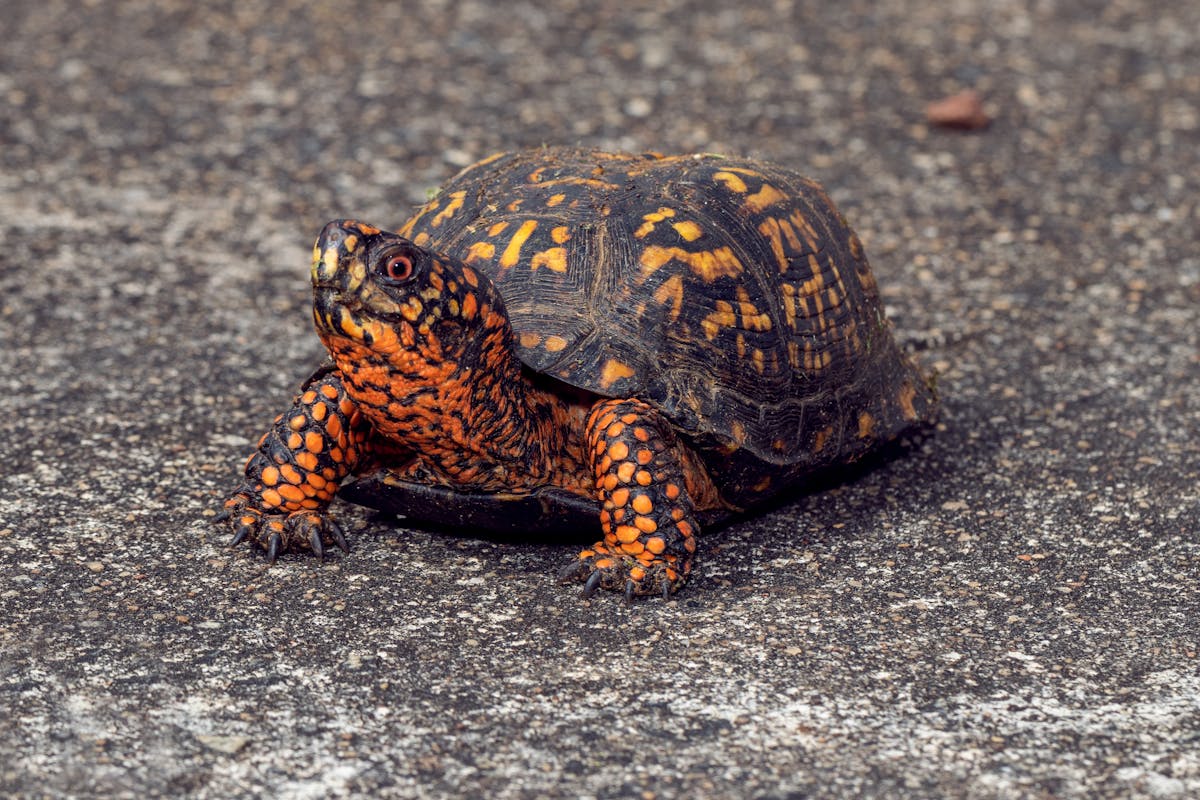
Box turtles are one of the few turtle species genuinely suited to keeping in a home environment. Eastern box turtles (Terrapene carolina) and three-toed box turtles (Terrapene carolina triunguis) are the most commonly kept. The birthday celebration is a varied omnivore feast, some outdoor exploration time in a safe yard environment, and a photo session that captures the distinctive high-domed shell that makes box turtles visually unlike any other chelonian kept as a pet. Box turtles also have individual personalities that long-term keepers describe clearly, which makes the birthday post more personal than most reptile content.
When to Mark the Day
Box turtles hibernate, or in warmer climates just slow way down, for months every winter. Most keepers don’t bother trying to throw a party during that stretch. Instead they mark the first feeding after hibernation and the first warm outdoor session of the year, the turtle’s actual return to the world. That’s the birthday. It moves with the weather, not a date on a calendar, and that’s fine.
The Birthday Feast: What Box Turtles Eat
Box turtles are true omnivores. In the wild they eat insects, earthworms, berries, mushrooms, leafy plants, and carrion. The captive diet should reflect this variety.
Earthworms. The most consistently accepted food by most box turtles. Nightcrawlers from a pesticide-free bait supplier are the ideal protein component of the birthday feast.
Dubia roaches, crickets, mealworms. Insect protein is a natural and appropriate part of the box turtle diet. Crickets and roaches gut-loaded with greens before offering pass that nutrition to the turtle. Mealworms are high fat and should be supplementary.
Fruit. Berries are the community’s most-recommended fruit component: strawberries, blueberries, raspberries, blackberries. Watermelon is accepted. Some box turtles have strong fruit preferences. Bananas are accepted but high sugar. Keep fruit to a reasonable portion of the meal. Per ASPCA guidance, avoid avocado and any stone fruit pits.
Mushrooms. Wild box turtles frequently eat mushrooms, including species that are toxic to mammals. Do not offer wild mushrooms you’ve foraged. Plain grocery-store mushrooms (button, cremini) are safe and usually accepted.
Leafy greens and vegetables. Collard greens, dandelion greens, mustard greens, squash. Dark leafy greens are more nutritious than light ones.
What to avoid. Avocado (toxic per ASPCA). High-oxalate foods in large quantities (spinach). Anything with preservatives or artificial additives. Wild-caught insects (pesticide risk). Raw meat in significant quantities (salmonella risk and not appropriate for the captive diet).
Calcium supplementation. Dust feeders with calcium powder every few feedings. UVB lighting or outdoor sun exposure is important for vitamin D3 synthesis. The Tortoise Trust’s box turtle care guide outlines the supplementation approach clearly.
Appetite dips are normal. Box turtles eat less in late fall and early spring, right around the hibernation window, and some go off food for a few days after handling or an enclosure change. If refusal drags on outside that window and the turtle is losing weight, that’s a vet visit, not a wait-and-see.
Outdoor Time for the Birthday
Box turtles do best with regular outdoor access in appropriate weather. The birthday celebration in warm, sunny weather should include supervised outdoor time in a securely fenced yard or pen.
Box turtles are good at finding gaps in fencing and digging under walls. Secure your outdoor space before the birthday. A properly secured outdoor area in warm weather (above 70°F, access to both sun and shade) is the ideal birthday environment.
Foraging. A box turtle in an outdoor space with natural vegetation will forage on its own. This is the most enriched feeding behavior possible. Let the turtle explore. Watch from a respectful distance.
The mud bath. Box turtles soak in shallow water and mud puddles regularly. A shallow dish of clean water or a slightly muddy spot in the yard is a genuine birthday amenity for the turtle.
Temperature monitoring. Box turtles cannot tolerate extreme heat. On hot days (above 90°F), limit outdoor time and ensure shade is available. On cool days (below 65°F), indoor warming is more appropriate than outdoor time.
City yards work fine. A secure, pesticide-free yard in an urban setting is just as good as a rural one, provided it’s fenced and supervised. The real risk in town is treated lawns: keep a box turtle away from any grass or plants hit with herbicide or pesticide, yours or a neighbor’s, and never let one roam somewhere you can’t watch.
A Note on Box Turtle Ethics
All box turtles sold in the US, with very limited exceptions, were either wild-caught or are first-generation offspring of wild-caught individuals. Taking box turtles from the wild is illegal in most states and has contributed to significant population declines. If you have a box turtle, know where it came from and don’t release captive box turtles into the wild (they can carry diseases that spread to wild populations).
Long-term captive box turtles that have been in captivity for many years, or those acquired legally from licensed breeders, are appropriate as pets. The birthday is a good occasion to reflect on the animal’s history and the commitment to proper long-term care.
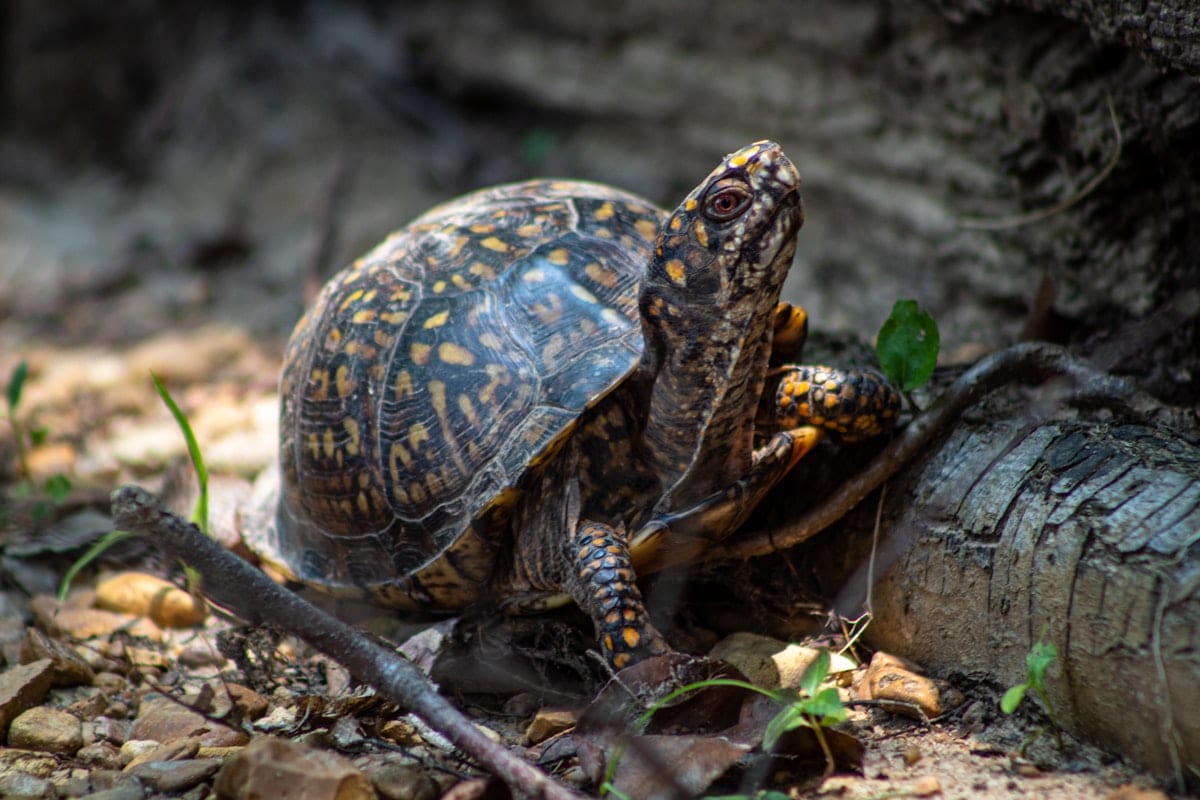
The Birthday Photo Session
Box turtles have one of the most distinctive visual profiles in the chelonian world: the high-domed shell that can close completely, the orange and brown shell pattern (variable by individual), and the bright orange or red markings on the face and legs.
The closed-shell portrait. When a box turtle fully retracts and closes its shell, the result is a near-perfect oval shape. This is the most characteristic box turtle pose and photographs well from above or from the side.
The alert face. When the turtle is relaxed and eating, it extends its head and shows the bright facial markings. A face-on shot at ground level, with the turtle mid-forage or mid-eating, captures this well.
The scale shot. A hand or a common object next to the turtle for scale. Box turtles vary significantly in size (4 to 7 inches typically) and a size comparison photo shows this.
Year-over-year tracking. A consistent annual top-down photo of the shell shows the pattern evolution and the turtle’s growth. Box turtles grow slowly and the changes are subtle, making the year-by-year comparison particularly satisfying as a documentation project.
How Long Do Box Turtles Live?
Box turtles are known for exceptional longevity. Captive specimens have been documented living 50 to 100+ years. A wild-caught adult box turtle may already be decades old when it comes into captivity. The birthday is a genuine milestone for an animal that can outlive multiple human generations.
Party Supplies
- Reptile Calcium Powder Supplement, for dusting feeders per the Tortoise Trust’s supplementation schedule.
- UVB Reptile Lighting Fixture, supporting vitamin D3 synthesis alongside outdoor sun time.
- Shallow Reptile Soaking Dish, a genuine birthday amenity for a species that mud-bathes and soaks regularly.
Sources
- Tortoise Trust: Box Turtles
- VCA Hospitals: Box Turtles
- ASPCA Animal Poison Control: People Foods to Avoid Feeding Your Pets
For the Russian tortoise birthday (similar small terrestrial turtle): Russian Tortoise Birthday Party Ideas
For the red-eared slider (aquatic): Red-Eared Slider Birthday Party Ideas
- You
- Your pets
- Confirm